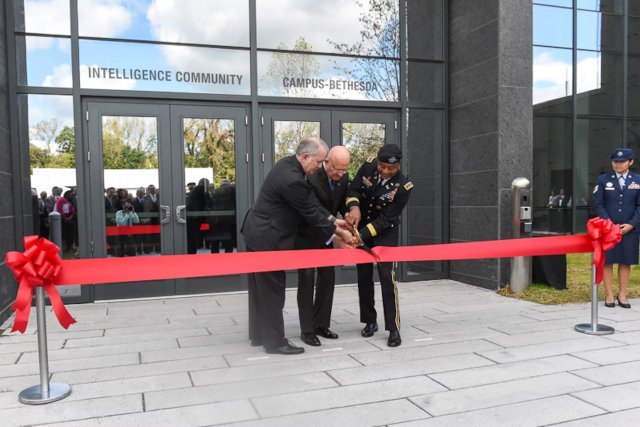
The Intelligence Community Campus is one of the most important but least publicly understood government facilities connected to the U.S. intelligence world. Officially known as Intelligence Community Campus-Bethesda, or ICC-B, it is located in Bethesda, Maryland, and serves as a secure, collaborative campus for intelligence professionals in the Washington National Capital area. The facility was designed to support coordination, education, training, and information-sharing across parts of the U.S. Intelligence Community.
- What Is the Intelligence Community Campus?
- Why Was the Intelligence Community Campus Created?
- Where Is the Intelligence Community Campus Located?
- History of the Intelligence Community Campus
- Purpose of the Intelligence Community Campus
- Key Facts About Intelligence Community Campus
- What Agencies Use the Intelligence Community Campus?
- Why the Intelligence Community Campus Matters
- Intelligence Community Campus and Education
- Security and Public Access
- Architecture and Design of the Campus
- Common Misunderstandings About the Intelligence Community Campus
- Real-World Example: Why Collaboration Matters
- Tips for Researching the Intelligence Community Campus
- Frequently Asked Questions
- Conclusion
Unlike public university campuses or ordinary federal office buildings, the Intelligence Community Campus is not a tourist destination or open public facility. Its purpose is professional, strategic, and security-focused. It helps bring intelligence personnel into a shared environment where agencies can work more effectively together while still protecting classified information and national security operations.
This guide explains what the Intelligence Community Campus is, why it exists, where it is located, what its role is, and what key public facts are known about it.
What Is the Intelligence Community Campus?
The Intelligence Community Campus generally refers to Intelligence Community Campus-Bethesda, a secure federal campus at 4600 Sangamore Road in Bethesda, Maryland. Public government sources describe its purpose as developing a collaborative intelligence community campus for the relocation of roughly 3,000 intelligence professionals in the Washington National Capital area.
The campus is connected to the broader mission of the U.S. Intelligence Community, which includes agencies and offices responsible for collecting, analyzing, and sharing intelligence to support national security decisions. According to the Office of the Director of National Intelligence, the U.S. Intelligence Community includes 18 organizations, including ODNI, CIA, DIA, NSA, NGA, NRO, and intelligence elements from major federal departments and military services.
In simple terms, ICC-B is a place built to help intelligence professionals work together more efficiently. It is not meant to replace every intelligence agency headquarters. Instead, it provides a shared campus environment where selected offices, programs, training functions, and collaborative activities can operate in a secure setting.
Why Was the Intelligence Community Campus Created?
The modern purpose of the Intelligence Community Campus is tied to the post-9/11 push for stronger intelligence integration. After the September 11 attacks, one of the major lessons for the U.S. government was that intelligence agencies needed better coordination and stronger information-sharing systems.
The campus was developed to support that idea. Public project descriptions explain that ICC-B was designed to promote collaboration among intelligence professionals and provide a secure environment where agencies could work more closely together.
Before this shift, many intelligence functions were spread across different agencies, buildings, and command structures. That separation could make communication harder. A shared campus helps reduce barriers by creating a physical space where people from different intelligence backgrounds can interact, train, and coordinate.
This does not mean sensitive intelligence is freely shared with everyone on campus. Intelligence work still follows strict access rules, clearance requirements, and need-to-know principles. However, the campus supports a broader culture of cooperation, which is important in national security work.
Where Is the Intelligence Community Campus Located?
The Intelligence Community Campus-Bethesda is located at 4600 Sangamore Road, Bethesda, Maryland. The site is in the Washington National Capital region, close to many federal agencies, military commands, policy offices, and national security institutions.
Its location matters because Washington, D.C., and the surrounding Maryland and Virginia region form the center of U.S. federal decision-making. Intelligence agencies often need to coordinate with policymakers, defense officials, law enforcement, diplomats, and national security staff. A campus near this ecosystem makes collaboration more practical.
The National Intelligence University also identifies its main campus as being located on Intelligence Community Campus-Bethesda, showing the site’s role in intelligence education and professional development.
History of the Intelligence Community Campus
The site now known as Intelligence Community Campus-Bethesda has a long federal history. Before becoming ICC-B, the property was associated with mapping, geospatial intelligence, and defense-related functions.
Public historical summaries state that the site was once connected to the Army Map Service and later to organizations such as the Defense Mapping Agency and the National Geospatial-Intelligence Agency. The campus was eventually transformed after the National Geospatial-Intelligence Agency moved major operations to the Fort Belvoir area in Virginia.
The modern renovation and redevelopment of the campus began after the property was transferred for intelligence community use. Government and project sources describe the redesign as a major effort to create a secure, modern, collaborative workplace rather than a collection of older, isolated government buildings.
A public DIA article reported that the campus was unveiled in 2015 as a state-of-the-art facility intended to support a collaborative IC campus for up to 3,000 intelligence professionals.
Purpose of the Intelligence Community Campus
The main purpose of the Intelligence Community Campus is to improve collaboration, coordination, and professional development across the intelligence community.
In practical terms, that purpose includes several important goals.
First, the campus supports intelligence integration. Modern threats do not usually fit into one neat category. Cyberattacks, terrorism, foreign influence operations, counterintelligence risks, weapons proliferation, and geopolitical crises can involve many agencies at once. A collaborative campus helps professionals share expertise more effectively.
Second, the campus supports secure work environments. Intelligence professionals often handle classified or sensitive information. A campus like ICC-B is designed around security needs while still allowing modern office, training, and coordination functions.
Third, the campus supports education and training. The presence of National Intelligence University functions at ICC-B shows that the campus is not only about daily operations. It also contributes to long-term workforce development, helping intelligence professionals improve their knowledge, leadership skills, and analytic abilities.
Finally, the campus supports interagency communication. Intelligence problems often require analysts, security specialists, policymakers, military personnel, and technical experts to work from the same information picture. The campus gives selected groups a shared environment where that kind of communication can happen more naturally.
Key Facts About Intelligence Community Campus
The most widely referenced Intelligence Community Campus is Intelligence Community Campus-Bethesda, also called ICC-B.
It is located at 4600 Sangamore Road in Bethesda, Maryland. Public government sources describe the campus as a collaborative facility for roughly 3,000 intelligence professionals in the Washington National Capital area.
The campus is associated with the Office of the Director of National Intelligence, which oversees and coordinates the U.S. Intelligence Community. ODNI explains that the Intelligence Community includes 18 organizations across independent agencies, defense agencies, military services, and federal departments.
The site has roots in earlier mapping and geospatial intelligence work. It was formerly connected to the National Geospatial-Intelligence Agency and predecessor mapping organizations before being redeveloped for broader intelligence community use.
The campus was publicly unveiled as a modernized facility in 2015. The DIA described it as a state-of-the-art campus created to develop a collaborative IC environment.
Architecture and construction sources describe ICC-B as a major modernization project, with secure office space, redesigned buildings, and sustainability features. The Design-Build Institute of America describes the campus as a 750,000-square-foot facility designed to promote collaboration among intelligence community personnel.
What Agencies Use the Intelligence Community Campus?
Publicly available information does not list every office or function operating at the Intelligence Community Campus, and that is expected because intelligence facilities often limit operational details.
However, public sources have connected ICC-B with offices and organizations such as the Office of the Director of National Intelligence, the Defense Intelligence Agency, the National Counterintelligence and Security Center, and the National Intelligence University. The National Intelligence University states that its main campus is located on ICC-B in Bethesda.
It is important to avoid assuming that every intelligence agency has a major permanent presence there. The Intelligence Community Campus is best understood as a shared, secure, collaborative facility used for selected intelligence community functions, not as a single headquarters for the entire intelligence system.
Why the Intelligence Community Campus Matters
The Intelligence Community Campus matters because national security work depends heavily on coordination.
In the past, one of the biggest criticisms of intelligence work was that agencies sometimes had important pieces of information but did not connect them quickly enough. The post-9/11 national security environment placed more emphasis on intelligence integration, shared analysis, and cross-agency awareness.
ICC-B reflects that shift. It is a physical example of a larger strategy: bringing people, knowledge, and missions closer together while maintaining security. The campus supports the idea that intelligence is not only about collecting secrets. It is also about turning information into useful insight for decision-makers.
For example, a cyber threat may involve foreign intelligence, military networks, private-sector infrastructure, law enforcement concerns, and diplomatic consequences. No single office can fully understand every angle alone. A collaborative campus can help experts from different backgrounds coordinate faster and think more broadly.
Intelligence Community Campus and Education
One of the most important public-facing facts about the Intelligence Community Campus is its connection to intelligence education.
The National Intelligence University describes its main campus as being on ICC-B in Bethesda. NIU’s role is to provide intelligence education for national security professionals, helping them develop analytic, strategic, and leadership skills.
This educational role is important because intelligence work changes constantly. New technologies, global threats, data tools, cyber risks, and geopolitical shifts require continuous learning. A campus that combines professional activity with education can help strengthen the intelligence workforce over time.
In this way, the Intelligence Community Campus is not only a workplace. It is also part of the professional development pipeline for people serving in intelligence-related roles.
Security and Public Access
The Intelligence Community Campus is a secure federal facility. That means public access is limited, and visitors should not treat it like a normal office campus, museum, or public government building.
Although some general information about ICC-B is publicly available, operational details are intentionally limited. This is normal for intelligence-related facilities. Public sources may describe the campus location, design purpose, construction history, and broad mission, but they do not provide sensitive information about classified activities, personnel movement, or internal security procedures.
For readers researching the campus, the safest and most responsible approach is to rely on official public sources such as ODNI, DIA, USACE, National Intelligence University, and other government or recognized institutional pages.
Architecture and Design of the Campus
The Intelligence Community Campus-Bethesda redevelopment is notable because it transformed an older government site into a modern collaborative environment.
The Design-Build Institute of America describes ICC-B as a 750,000-square-foot campus for ODNI that offers a secure environment intended to promote collaboration.
Architecture sources describe the project as a combination of renovation, expansion, and new construction. Public project listings have also associated the campus with LEED Silver certification, showing that sustainability and energy efficiency were part of the design conversation.
This matters because intelligence facilities must balance security with functionality. Older secure buildings were often closed off, rigid, and difficult to adapt. Modern intelligence workplaces need secure technology, flexible collaboration areas, training spaces, and efficient infrastructure. ICC-B represents that newer model.
Common Misunderstandings About the Intelligence Community Campus
One common misunderstanding is that the Intelligence Community Campus is the headquarters of the entire U.S. Intelligence Community. That is not accurate. The U.S. Intelligence Community is made up of 18 organizations, many of which have their own headquarters and facilities.
Another misunderstanding is that the campus is open to the public because it has the word “campus” in its name. In this case, “campus” means a group of buildings and facilities organized for a shared professional purpose. It does not mean a public college campus.
A third misunderstanding is that all details about the campus should be publicly available. Because the facility supports intelligence work, many details are restricted for security reasons. Responsible articles should focus on verified public facts rather than speculation.
Real-World Example: Why Collaboration Matters
Imagine a situation where analysts are tracking a foreign cyber group. One agency may understand the technical malware. Another may understand the foreign government behind it. A third may track financial networks. Another office may focus on counterintelligence risks inside the United States.
If those groups work separately, the full picture may take longer to form. But if they can coordinate through shared systems, joint meetings, secure collaboration spaces, and common training, the government can respond more effectively.
That is the larger idea behind facilities like the Intelligence Community Campus. They are built to make intelligence work less isolated and more connected.
Tips for Researching the Intelligence Community Campus
When researching the Intelligence Community Campus, use the full name Intelligence Community Campus-Bethesda or the abbreviation ICC-B. These terms usually produce more accurate results than searching only for “intelligence campus.”
Prioritize official sources. Good sources include ODNI, DIA, USACE, National Intelligence University, and recognized architecture or construction organizations that worked from public project information.
Be careful with unofficial claims. Because intelligence facilities attract speculation, some online content may exaggerate or misrepresent what happens there. Publicly verified facts are more reliable than anonymous claims or dramatic theories.
Also, remember that limited information does not automatically mean something suspicious. Secure government facilities often disclose only what is appropriate for public knowledge.
Frequently Asked Questions
What is the Intelligence Community Campus?
The Intelligence Community Campus usually refers to Intelligence Community Campus-Bethesda, a secure federal campus in Bethesda, Maryland, designed to support collaboration among U.S. intelligence professionals.
Where is the Intelligence Community Campus located?
It is located at 4600 Sangamore Road in Bethesda, Maryland, in the Washington National Capital region.
Is the Intelligence Community Campus open to the public?
No. It is a secure federal facility connected to intelligence community work. Public access is limited, and sensitive operational details are not publicly disclosed.
Why was the Intelligence Community Campus created?
It was created to support intelligence collaboration, integration, training, and secure work for intelligence professionals. Public sources describe its purpose as developing a collaborative IC campus for roughly 3,000 intelligence workers.
Is the Intelligence Community Campus part of ODNI?
Public project sources identify ICC-B as an ODNI-related campus designed to support intelligence community collaboration. ODNI is responsible for leading and coordinating the broader U.S. Intelligence Community.
Does National Intelligence University operate there?
Yes. National Intelligence University states that its main campus is located on Intelligence Community Campus-Bethesda.
Conclusion
The Intelligence Community Campus is a key part of the modern U.S. intelligence landscape. Located in Bethesda, Maryland, Intelligence Community Campus-Bethesda was developed to support secure collaboration, professional education, and intelligence integration across selected parts of the U.S. Intelligence Community.
Its importance comes from more than its buildings. The campus represents a broader national security lesson: intelligence work is strongest when agencies can share knowledge, coordinate quickly, and train professionals for complex modern threats.
For anyone researching the topic, the most important point is to separate verified public facts from speculation. Based on public sources, the Intelligence Community Campus is best understood as a secure, modern, collaborative federal campus built to strengthen intelligence coordination while protecting sensitive national security work.