When it comes to lifting vehicles or heavy loads, choosing the right tool can make all the difference in safety, efficiency, and convenience. The debate around Airbag Jack vs Hydraulic Jack is especially relevant for mechanics, off-road enthusiasts, and DIY car owners who want the best solution for their needs.
- What Is an Airbag Jack?
- What Is a Hydraulic Jack?
- Airbag Jack vs Hydraulic Jack: Key Differences
- Advantages of Airbag Jacks
- Disadvantages of Airbag Jacks
- Advantages of Hydraulic Jacks
- Disadvantages of Hydraulic Jacks
- Which One Is Better for Off-Road Use?
- Which One Is Better for Garage Work?
- Safety Considerations
- Cost Comparison
- Real-World Scenario Comparison
- FAQs: Airbag Jack vs Hydraulic Jack
- Conclusion: Airbag Jack vs Hydraulic Jack
In this detailed guide, we’ll break down how each jack works, their advantages and drawbacks, and which one is better depending on your situation. Whether you’re stuck in mud or working in your garage, this comparison will help you make an informed decision.
What Is an Airbag Jack?
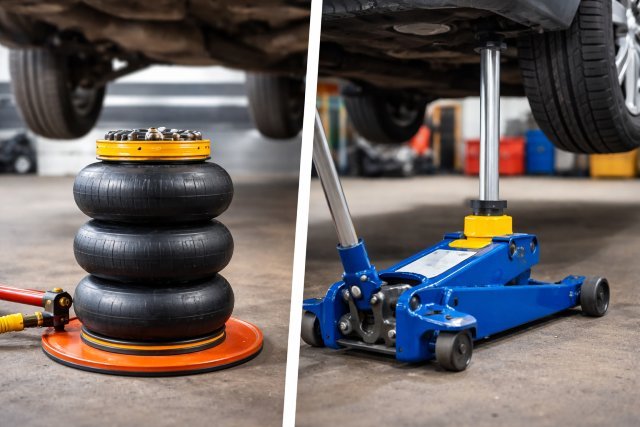
An airbag jack, also known as a pneumatic jack, is a lifting device that uses compressed air to raise a vehicle. It typically consists of a reinforced rubber or fabric bag that inflates when air is pumped into it.
Airbag jacks are often powered by an air compressor or vehicle exhaust system. As the bag inflates, it lifts the vehicle smoothly from the ground.
Key Features of Airbag Jacks
Airbag jacks are lightweight and easy to store, making them popular among off-road drivers. They can lift vehicles quickly and are particularly useful on soft or uneven terrain where traditional jacks struggle.
Their wide base provides stability on sand, mud, or snow, which is why they are frequently used in recovery situations.
What Is a Hydraulic Jack?
A hydraulic jack uses fluid pressure to lift heavy loads. It operates based on Pascal’s Law, where force applied to a confined fluid is transmitted equally in all directions.
There are two main types of hydraulic jacks:
- Bottle jacks
- Floor jacks
Hydraulic jacks are widely used in workshops, garages, and industrial settings due to their precision and lifting power.
Key Features of Hydraulic Jacks
Hydraulic jacks are known for their strength and reliability. They can lift extremely heavy vehicles with minimal effort and provide controlled lifting and lowering.
They are generally more durable than airbag jacks and require less external equipment to operate.
Airbag Jack vs Hydraulic Jack: Key Differences
Understanding the difference between these two tools is essential before deciding which one suits your needs.
Lifting Mechanism
Airbag jacks rely on compressed air, while hydraulic jacks use fluid pressure. This fundamental difference affects how each performs in various environments.
Airbag jacks inflate quickly and lift vehicles almost instantly. Hydraulic jacks, on the other hand, require manual pumping but offer more controlled lifting.
Ease of Use
Airbag jacks are extremely simple to use. You connect them to an air source, and they inflate automatically. This makes them beginner-friendly.
Hydraulic jacks require some effort, especially manual pumping. However, they offer greater precision, which is important for mechanical work.
Portability
Airbag jacks are compact and lightweight. They can easily fit in your car trunk, making them ideal for travel and emergencies.
Hydraulic jacks, especially floor jacks, are heavier and bulkier. While bottle jacks are more portable, they still weigh more than airbag alternatives.
Stability
Airbag jacks have a wide base, which provides stability on uneven terrain. However, they may feel less secure on hard surfaces.
Hydraulic jacks are more stable on flat, solid ground. Their rigid structure ensures better balance during lifting.
Lifting Capacity
Hydraulic jacks typically have higher lifting capacities. Many models can lift several tons, making them suitable for trucks and heavy-duty vehicles.
Airbag jacks also have impressive lifting power but are generally used for lighter vehicles or specific conditions like off-road recovery.
Advantages of Airbag Jacks
Airbag jacks offer unique benefits that make them ideal for certain scenarios.
They excel in off-road conditions. If your vehicle is stuck in sand or mud, an airbag jack can lift it without sinking further. This is a major advantage over traditional jacks.
They are also quick to operate. In emergency situations, speed matters, and airbag jacks can lift a vehicle in seconds.
Another benefit is their lightweight design. Carrying an airbag jack in your vehicle is easy, and it doesn’t take up much space.
According to off-road recovery experts at , pneumatic lifting tools are particularly effective in soft terrain where standard jacks fail.
Disadvantages of Airbag Jacks
Despite their advantages, airbag jacks have some limitations.
They require an external air source, such as a compressor or exhaust system. Without it, the jack cannot function.
They are also less precise. For mechanical repairs, where accuracy is important, airbag jacks may not be the best choice.
Durability can also be a concern. Sharp objects or rough surfaces can damage the airbag material.
Advantages of Hydraulic Jacks
Hydraulic jacks remain the most widely used lifting tools for a reason.
They provide excellent lifting power and can handle heavy loads with ease. This makes them ideal for garages and professional workshops.
They also offer precise control. You can lift and lower a vehicle gradually, which is essential for maintenance tasks.
Hydraulic jacks are durable and long-lasting. With proper maintenance, they can serve for years without issues.
Organizations like highlight the efficiency of hydraulic systems in lifting heavy loads due to their ability to multiply force.
Disadvantages of Hydraulic Jacks
Hydraulic jacks are not perfect.
They are heavier and less portable, especially floor jacks. This makes them less convenient for travel.
They also struggle on soft or uneven ground. Without a solid base, they can sink or become unstable.
Maintenance is another factor. Hydraulic fluid leaks or air in the system can affect performance.
Which One Is Better for Off-Road Use?
If you frequently drive off-road, the choice is clear.
Airbag jacks are better suited for rough terrain. Their wide base prevents sinking, and their quick operation makes them ideal for recovery situations.
Imagine being stuck in deep sand. A hydraulic jack would likely sink under pressure, while an airbag jack would lift your vehicle effortlessly.
For off-road enthusiasts, an airbag jack is often considered an essential tool.
Which One Is Better for Garage Work?
For garage and workshop use, hydraulic jacks are the better option.
They provide stability and precision, which are crucial for tasks like changing tires or repairing suspension systems.
Hydraulic floor jacks are especially popular among mechanics because they allow easy access under the vehicle.
If your primary use is maintenance, a hydraulic jack is the more practical choice.
Safety Considerations
Safety should always be a top priority when using any lifting tool.
Airbag jacks can be unstable if not positioned correctly. It’s important to ensure the surface is clear of sharp objects and the jack is centered properly.
Hydraulic jacks require proper placement under designated lifting points. Using jack stands is essential to prevent accidents.
According to safety guidelines from organizations like OSHA, never rely solely on a jack to support a vehicle during repairs.
Cost Comparison
Airbag jacks are generally more expensive due to their specialized design and materials.
Hydraulic jacks are available in a wide range of prices, making them accessible for both beginners and professionals.
If budget is a concern, hydraulic jacks offer better value for money.
Real-World Scenario Comparison
Consider two different situations.
In the first scenario, you are on a road trip and your car gets stuck in mud. An airbag jack would be the ideal solution because it can lift the vehicle without sinking.
In the second scenario, you are in your garage replacing brake pads. A hydraulic jack would provide the stability and control needed for safe and efficient work.
These examples highlight how the best choice depends on your specific needs.
FAQs: Airbag Jack vs Hydraulic Jack
Which is safer, an airbag jack or a hydraulic jack?
Hydraulic jacks are generally safer for maintenance work due to their stability and precision. However, both tools are safe when used correctly with proper precautions.
Can an airbag jack lift heavy vehicles?
Yes, many airbag jacks can lift several tons. However, they are best suited for lighter vehicles and off-road conditions.
Do hydraulic jacks require maintenance?
Yes, hydraulic jacks require periodic maintenance, including checking fluid levels and ensuring there are no leaks.
Is an airbag jack worth it?
If you frequently drive off-road or need a portable lifting solution, an airbag jack is definitely worth considering.
Conclusion: Airbag Jack vs Hydraulic Jack
Choosing between Airbag Jack vs Hydraulic Jack ultimately comes down to your specific needs and usage.
If you need a lightweight, portable solution for off-road recovery or emergency situations, an airbag jack is the better choice. It excels in soft terrain and offers quick lifting when you need it most.
On the other hand, if you’re looking for a reliable tool for garage work, heavy lifting, and precise control, a hydraulic jack is the clear winner. Its durability and stability make it indispensable for mechanical tasks.
In many cases, the best approach is to have both tools. This way, you’re prepared for any situation, whether you’re working in your garage or exploring off-road trails.