If your wheels look dull, brown, or permanently “dirty,” you’re usually not looking at normal road grime. You’re looking at brake dust — tiny metal-heavy particles that bond to clear coat and bake on with heat. The fastest fix is using the right Alloy Wheel Cleaner (not just soap), paired with the correct technique so you lift contamination without hazing, staining, or etching the finish.
- What an alloy wheel cleaner actually does (and why car shampoo often fails)
- Why wheels lose shine so quickly: brake dust + heat + clear coat
- Types of Alloy Wheel Cleaner (and when to use each)
- How to choose the best Alloy Wheel Cleaner for your wheels
- The fastest way to restore factory shine (pro method, minimal risk)
- Quick comparison: which cleaner restores shine fastest?
- Real-world scenario: “My wheels look clean but not shiny”
- How often should you use an Alloy Wheel Cleaner?
- Safety tips that protect your wheels (and your hands)
- Best practices to keep the factory shine longer
- FAQs
- Conclusion: restore shine fast, safely, and keep it that way
There’s also a practical reason to clean wheels regularly: brake and tire wear are part of non-exhaust particulate emissions, which researchers and agencies increasingly track as a major source of traffic-related particles.
Below is a detailed, step-by-step guide to choosing the best cleaner type, using it safely on modern clear-coated alloys, and keeping that factory shine for longer.
What an alloy wheel cleaner actually does (and why car shampoo often fails)
A quality wheel formula is designed to break the “three-layer problem” on wheels:
- Oily road film (traffic film, rubber, grime)
- Mineral deposits (water spots, salt residue)
- Brake dust contamination (metal particles — especially iron — embedded in clear coat)
Basic car shampoo is great at surfactants and light dirt, but it’s usually too gentle for bonded brake dust. Studies of brake wear particles consistently report significant metal content (commonly iron and copper among others), which helps explain why wheels discolor and feel rough even after washing.
That’s why many “pro-level” wheel routines separate the job into two products: a general wheel cleaner for grime, and an iron remover for bonded fallout.
Why wheels lose shine so quickly: brake dust + heat + clear coat
Wheels sit next to the hottest, dirtiest parts of your car. Every drive adds:
- Heat cycling: Warm wheels open the pores of the clear coat (microscopically), making it easier for contamination to lodge in.
- Particle impact: Brake dust lands and sticks while the wheel is warm.
- Time: Weeks of buildup become months, and months turn into a “permanent” brown haze.
Public health agencies and research groups have also highlighted that non-exhaust emissions (brakes/tires/road dust) are a growing share of traffic particulates as tailpipes get cleaner.
The takeaway for detailing is simple: the longer you wait, the more likely you’ll need stronger chemistry (or polishing) to restore shine.
Types of Alloy Wheel Cleaner (and when to use each)
pH-neutral alloy wheel cleaner (safest “default”)
A pH-neutral, acid-free formula is the best everyday choice for most modern wheels, especially clear-coated OEM alloys. It’s less likely to stain or dull finishes when used correctly, and it’s ideal for routine maintenance washes.
Many wheel manufacturers and wheel-care guides warn against harsh acidic or highly alkaline products on clear coat because they can damage or weaken the protective layer over time.
Alkaline wheel cleaners (strong on traffic film)
Alkaline options excel at oily grime and heavy road film. They can be very effective, but you need to follow dwell time carefully and avoid letting the product dry on the surface — especially in sun or on hot wheels.
Acid-based wheel cleaners (fastest on neglected wheels, highest risk)
Acid cleaners can cut through heavy mineral deposits and severe contamination quickly, but they’re also the most likely to etch, stain, or haze sensitive finishes if misused. If you’re not 100% sure of your wheel finish (bare aluminum, polished lip, anodized sections, aftermarket coatings), avoid acids unless you’re experienced and can test a small area first.
For clear-coated wheels, many care guides explicitly recommend avoiding harsh acidic/high-alkaline chemistry to protect the coating.
“Color-changing” iron removers (the shine-restorer for bonded dust)
These target iron contamination from brake dust that has embedded into the clear coat. They’re often the missing link between “clean” and “factory shiny.” If your wheel still feels rough after washing, iron remover is usually why.
How to choose the best Alloy Wheel Cleaner for your wheels
Start with three questions:
1) Are your wheels clear-coated?
Most modern factory alloys are clear-coated. If you’re unsure, assume they are and treat them gently.
2) What’s the contamination level?
- Light dust (washed weekly): pH-neutral wheel cleaner may be enough.
- Brown haze + rough texture: add an iron remover step.
- Severe neglect + crusted deposits: you may need decon + clay + polishing (or professional detailing).
3) Do you want speed or maximum safety?
For most people, pH-neutral wheel cleaner + iron remover is the sweet spot for speed, safety, and consistent results.
The fastest way to restore factory shine (pro method, minimal risk)
Step 1: Work in the shade and cool the wheels
Spraying chemicals on hot wheels is a common cause of staining and streaks. Rinse first and ensure the wheel surface is cool to the touch. This also helps prevent cleaners from drying too fast.
Step 2: Pre-rinse thoroughly (this saves time later)
Use a strong stream of water to knock off loose grit. This reduces the chance of scratching when you agitate with a brush.
Step 3: Apply your Alloy Wheel Cleaner and let it dwell
Mist the product evenly, focusing on barrels (inner wheel) and behind spokes where grime bakes on. Let it dwell per label instructions — usually 1–3 minutes.
Important: Never let the cleaner dry on the wheel.
Step 4: Agitate with the right brushes
Use:
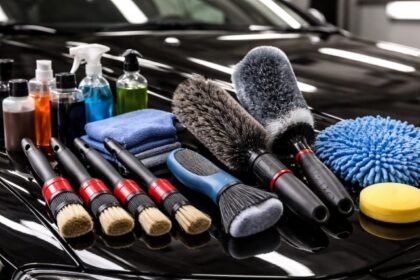
- A soft face brush for spokes
- A barrel brush for inner rims
- A small detailing brush for lug nuts and crevices
This is where your time savings come from: good agitation means less chemistry and fewer повтор washes.
Step 5: Rinse, then use an iron remover if needed
If you still see speckling or feel roughness, apply iron remover. It often reacts and changes color as it dissolves iron contamination (follow product instructions). Rinse thoroughly after the reaction completes.
Step 6: Spot-check, then re-clean only where necessary
If certain areas still look brown, they may be:
- Tar spots
- Water spots/mineral deposits
- Heavily embedded brake dust
At that point, treat specifically (tar remover for tar, water spot remover for minerals, second iron pass for embedded metal).
Step 7: Dry the wheels (yes, it matters)
Drying prevents water spots and reveals whether any haze remains. A dedicated microfiber towel for wheels is ideal.
Quick comparison: which cleaner restores shine fastest?
| Wheel condition | Fastest safe approach | What to avoid |
|---|---|---|
| Weekly maintenance | pH-neutral wheel cleaner | Strong acids “just because” |
| Brown haze, rough feel | Wheel cleaner + iron remover | Letting product dry |
| Neglected, caked grime | Strong wheel cleaner + agitation + iron remover | Aggressive acids on unknown finishes |
| Water spots/minerals | Mineral remover (spot treat) + seal | Scrubbing dry deposits |
(When in doubt, err on safer chemistry — clear coat damage is slower to fix than brake dust.)
Real-world scenario: “My wheels look clean but not shiny”
This is extremely common. Here’s what’s happening:
You removed surface dirt, but bonded contamination remains embedded in the clear coat. A normal wash makes the wheel look “less dirty,” but the finish still appears muted because light is scattering off tiny deposits.
In many cases, a single iron-removal step restores most of the shine immediately — no polishing required — because it dissolves iron particles that are literally stuck in the coating.
How often should you use an Alloy Wheel Cleaner?
For daily drivers:
- Use a gentle wheel cleaner every 1–2 weeks (or whenever you wash the car).
- Use iron remover monthly or when wheels feel rough / look brown.
- If you drive aggressively, commute in heavy traffic, or park near construction dust, you may need iron remover more often.
Given what agencies note about brake/tire wear as ongoing particle sources, regular cleaning also prevents heavy buildup that requires harsher chemicals later.
Safety tips that protect your wheels (and your hands)
- Wear nitrile gloves; brake dust can contain metals such as copper and zinc depending on pad composition.
- Avoid using harsh chemistry on hot wheels; work in shade and don’t let product dry.
- Use separate tools for wheels (brushes/towels) so you don’t cross-contaminate paint with wheel grit.
Best practices to keep the factory shine longer
Apply wheel protection (sealant or ceramic)
A wheel sealant or ceramic coating reduces how strongly brake dust bonds, making future cleaning dramatically faster. Many wheel-care guides recommend protective products for clear-coated wheels to simplify maintenance.
Adjust your technique
If you clean wheels last, your wash water is dirty and your towels are loaded. Cleaning wheels first (or using dedicated tools) prevents micro-marring and keeps gloss higher.
Consider brake pad choice
Some regions regulate or monitor brake pad composition (notably copper content) due to environmental concerns, and research continues into the impacts of brake-wear particles.
You don’t need to change pads just for detailing — but it explains why some cars dust more than others.
FAQs
What is the best Alloy Wheel Cleaner for factory wheels?
For most factory clear-coated alloys, a pH-neutral Alloy Wheel Cleaner is the safest everyday option. If the wheel still looks brown or feels rough after cleaning, add an iron remover step to dissolve embedded brake dust particles.
Can alloy wheel cleaner damage rims?
Yes — if it’s too acidic/alkaline for your wheel finish, used on hot wheels, or allowed to dry. Many wheel-care guides recommend avoiding harsh chemicals on clear-coated wheels to prevent damage to the clear coat.
How do I remove brown stains from alloy wheels?
Brown staining is often bonded brake dust (iron). Clean first with wheel cleaner, then use an iron remover. If staining remains, you may need targeted mineral removal or light polishing for etched areas.
Do I need to scrub hard to get shine back?
Usually no. The goal is smart chemistry + gentle agitation. Excessive scrubbing increases the chance of micro-marring, which reduces gloss.
How long should I let wheel cleaner sit?
Typically 1–3 minutes, depending on the product. Never let it dry. Always follow the label and work in shade for consistent results.
Conclusion: restore shine fast, safely, and keep it that way
A great-looking wheel isn’t just “washed” — it’s decontaminated. The fastest way to get back that crisp, reflective OEM look is using the right Alloy Wheel Cleaner for grime, then adding an iron-removal step when brake dust has bonded into the clear coat. Finish with protection (sealant or ceramic) and your future washes become quicker, safer, and noticeably more satisfying.
If you want, tell me your wheel type (gloss black, machined face, matte, chrome, aftermarket) and how dirty they are, and I’ll recommend the safest cleaner type and a simple maintenance schedule for your use case.