Why Your Address Book Matters More Than Ever
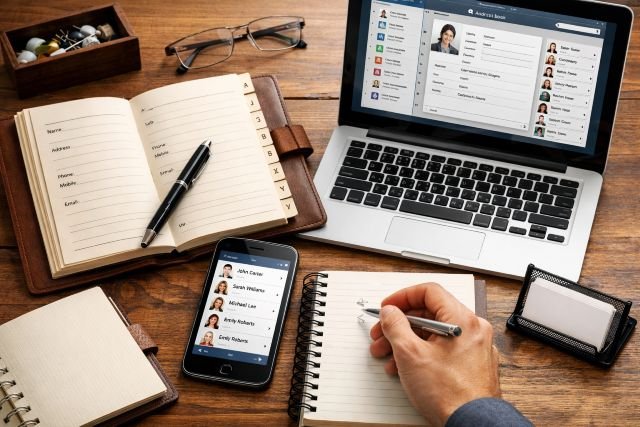
An address book used to be a simple list of names, phone numbers, and maybe a home address. Today, it has become something far more valuable: a living relationship system that helps people and organizations stay connected, communicate efficiently, and protect opportunities. Whether you are organizing family contacts or running a business, your address book is often the first place you look when you need to reach someone quickly.
- Why Your Address Book Matters More Than Ever
- What Makes an Address Book “Best” for Personal and Business Use?
- Best Address Book Method for Everyday Personal Use: Phone Address Book
- Best Address Book Method for Multi-Device Sync: Cloud Address Book
- Best Address Book Method for Lightweight Business Tracking: Spreadsheet Address Book
- Best Address Book Method for Frequent Networking: Contact Management Apps
- Best Address Book Method for Serious Business Use: CRM Systems
- The Best Option for Most People: A Hybrid Address Book System
- Address Book Organization Strategy That Works With Any Method
- Contact Decay and Duplicate Contacts: The Hidden Reason Address Books Fail
- Security and Privacy: Protecting Your Personal and Business Address Book
- How to Choose the Best Address Book Method for Your Needs
- FAQ: Best Address Book Methods
- Conclusion: Make Your Address Book a System, Not a Storage Dump
The problem is that most people don’t truly have an address book system. They have contact chaos. Some contacts live in the phone, some in email, others in messaging apps, and many are buried inside spreadsheets, invoices, or social platforms. Over time, duplicates multiply, phone numbers change, emails become outdated, and the same person gets saved under multiple versions of their name. In business, this leads to lost leads, broken follow-ups, and poor customer experience.
The reality of data decay makes this even more urgent. HubSpot references Marketing Sherpa research showing that B2B data can decay at about 2.1% per month, which equals roughly 22.5% per year. That means nearly one in five contacts could become inaccurate annually if you don’t maintain your database.
What Makes an Address Book “Best” for Personal and Business Use?
The best address book method is not necessarily the one with the most features. It is the one that matches how you actually live and work. A strong address book should centralize contact information, reduce duplicates, and keep your details accessible across devices. It should also support easy updating, fast searching, and safe backups.
For business use, the best address book method also needs structure and context. It must store company and role information, track interactions, and make follow-ups simple. For personal use, it should prioritize speed, simplicity, and reliability while still keeping your contact list clean and searchable.
When you evaluate any address book method, ask one core question: Will I still trust this system in six months? If not, the method will eventually fail.
Best Address Book Method for Everyday Personal Use: Phone Address Book
Most people rely on the built-in address book on their smartphone, such as iPhone Contacts or Google Contacts. This method remains one of the best for personal use because it is always available, integrates with calling and messaging, and is easy to search.
However, phone-based address books often become cluttered because saving contacts is usually done quickly and without structure. Many people save someone as “Ali electrician” or “Hina office” and then forget who they are later. That might work in the short term, but it becomes confusing over time, especially when you have hundreds or thousands of contacts.
The key to making this method work long-term is adding context at the time of saving the contact. If you consistently add a full name and a label such as “vendor,” “friend,” or “client,” your phone-based address book becomes dramatically more useful and searchable.
Best Address Book Method for Multi-Device Sync: Cloud Address Book
A cloud-based address book such as Google Contacts, iCloud Contacts, or Outlook Contacts is one of the best options for anyone who uses multiple devices. Cloud systems automatically sync contact changes across phones, laptops, and tablets. This prevents the frustrating problem of losing contacts when changing phones or switching devices.
Cloud address books also make exporting and backups much easier, which is essential for both personal and business users. If you ever need to move from one system to another, cloud contact storage is typically more compatible and portable than device-only methods.
The weakness of cloud address books is that they still rely on user discipline. If you import contacts from multiple sources or sync accounts without cleanup, you can end up with duplicate and messy records. But when combined with simple tagging and regular maintenance, a cloud address book becomes one of the most powerful and reliable contact management foundations.
Best Address Book Method for Lightweight Business Tracking: Spreadsheet Address Book
Spreadsheets such as Google Sheets or Microsoft Excel remain one of the most flexible address book methods for business use, especially for small teams and freelancers. The value of a spreadsheet address book comes from customization. You can create columns for company, job title, lead source, interaction history, and last contacted date. That structure makes it easier to see your pipeline and organize professional contacts.
Spreadsheets are also shareable and collaborative. Teams often use spreadsheets during events, campaigns, and outreach projects because they are simple, fast, and familiar.
The downside is that spreadsheets are not integrated with email, calls, or messaging platforms, and they require manual updating. Without a routine, a spreadsheet address book becomes outdated quickly. Also, spreadsheets are not built to prevent duplicates, so contact hygiene becomes the user’s responsibility. If you choose this method, the most important habit is setting a consistent update schedule.
Best Address Book Method for Frequent Networking: Contact Management Apps
If you frequently meet new people, attend events, or manage many new connections, dedicated contact management apps can become your best address book intake system. Many of these apps allow business card scanning, quick tagging, and contact enrichment, helping you capture details accurately without typing everything manually.
This category is growing because more professionals are shifting toward scanning and digital intake. Research shows that the business card scanning software market grew from $1.83 billion in 2023 to $2.19 billion in 2024, highlighting how common these tools have become in professional workflows.
This method works best when used as an intake layer rather than a permanent storage system. A good approach is scanning a card, tagging the contact immediately, and then transferring the cleaned contact into your core cloud address book or CRM.
Best Address Book Method for Serious Business Use: CRM Systems
Once your address book includes clients, leads, vendors, and partners, you need more than a contact list. You need a CRM, which stands for Customer Relationship Management system. A CRM is the best address book method for business use because it doesn’t just store contact details. It stores relationship history, follow-up actions, deal stages, notes, and communication records.
The modern CRM market is strongly cloud-driven. Grand View Research reports that cloud deployment accounted for 58.2% of CRM market revenue share in 2024, which shows how businesses increasingly prefer CRM systems that are accessible anywhere and integrated into daily workflows.
A CRM becomes essential when multiple people need access to contacts, when follow-ups must be consistent, and when relationships need tracking over time. The biggest advantage is continuity. If an employee leaves, the business does not lose the relationship history because everything is stored centrally.
The downside is that CRMs require setup, consistent usage, and ongoing maintenance. If a team treats a CRM as an “extra tool” rather than the main system, adoption fails. But if implemented correctly, a CRM becomes the best long-term address book method for organizations.
The Best Option for Most People: A Hybrid Address Book System
For most individuals and small businesses, the best approach is a hybrid address book method. A hybrid system combines different tools for different types of contacts. For example, your cloud address book can serve as the master system for everyday use. Your spreadsheet can serve as a project-based tracker for outreach campaigns. Your CRM, if needed, can serve as the structured system for clients and business relationships.
The biggest mistake people make is using multiple tools without a clear “master system.” In a hybrid approach, you must decide which system is the source of truth. Everything else supports it, but does not compete with it. Once you establish that rule, hybrid contact management becomes powerful and sustainable.
Address Book Organization Strategy That Works With Any Method
No matter which address book method you choose, organization determines success. A strong structure prevents confusion, duplication, and future cleanup headaches.
Start with consistent naming. If you save someone as “Ayesha,” and later save them again as “Ayesha Marketing,” you will create duplicates. Standardize your naming method so every entry is predictable.
Next, use categories. Most cloud address books allow labels or tags. These are essential because they make searching easier and help you segment contacts. This matters for business workflows such as follow-ups, outreach, and client updates. It also matters for personal use when you need to filter emergency contacts, family, or service providers quickly.
Then add context. A note such as “met at conference” or “prefers WhatsApp” turns a basic address book into a relationship tool. Context is what separates a contact list from a usable long-term system.
Finally, build a maintenance habit. A quick monthly review to merge duplicates and update details can keep your address book reliable for years. This is critical because contact data decays over time, and research shows that annual decay rates can be significant.
Contact Decay and Duplicate Contacts: The Hidden Reason Address Books Fail
Most people assume their address book becomes messy because they “add too many contacts.” In reality, it fails because the system allows duplication and does not force updates.
Duplicates happen when contacts are imported from multiple sources, such as Gmail, WhatsApp, LinkedIn exports, and device syncs. Over time, one person can appear multiple times with slight differences, which creates confusion and wasted time.
Data quality experts consistently identify duplication as one of the most disruptive problems in contact databases, because it leads to inaccurate communication, repeated outreach, and broken segmentation.
The easiest fix is to choose one master system, then commit to regular cleanup. Without that rule, even the most advanced CRM becomes messy.
Security and Privacy: Protecting Your Personal and Business Address Book
An address book is not just convenience data. It is sensitive information, especially in business. Losing a contact list means losing relationship value. Leaking it means exposing private details.
The safest address book systems are those that include encryption, role-based access controls, and secure cloud backups. CRMs typically provide better security layers for business contact management than spreadsheets or phone-only contact lists.
For personal users, security begins with two-factor authentication and avoiding device-only storage. For business users, security includes limiting access, controlling exports, and ensuring contacts are stored in a central system rather than in employees’ personal devices.
How to Choose the Best Address Book Method for Your Needs
The fastest way to choose is to match your method to your contact complexity.
If your address book is mainly personal, use a cloud address book with your phone as the interface. If you handle both personal and professional contacts, combine a cloud address book with basic tagging and occasional spreadsheet tracking for projects. If you run a business with clients and multiple team members, a CRM becomes the best address book method because it supports relationship history, accountability, and structured follow-ups.
Your goal is not perfection. Your goal is long-term usability.
FAQ: Best Address Book Methods
What is the best address book method for most people?
For most people, the best address book method is a cloud-based address book such as Google Contacts or iCloud Contacts because it syncs across devices, supports backups, and can be organized with labels.
What is the best address book for small business use?
The best address book method for small business use is a CRM because it stores contact details, company information, notes, and interaction history in one place, helping teams maintain consistent follow-ups.
Why do address books become outdated?
Address books become outdated because people change phone numbers, emails, and jobs. Research cited by HubSpot references annual B2B contact decay rates of around 22.5%, meaning databases need regular updates to stay accurate.
How do I stop duplicate contacts in my address book?
To stop duplicates, choose one master address book system, standardize naming rules, and run monthly cleanup sessions to merge repeated entries and update missing fields. Duplication is widely recognized as a major data quality issue in contact databases.
Conclusion: Make Your Address Book a System, Not a Storage Dump
A well-managed address book is one of the most practical tools you can build for personal and professional life. It protects relationships, prevents lost opportunities, and saves time daily. The best address book method depends on how complex your contact needs are, but the winning approach always includes one master system, clear organization, and regular maintenance.
For personal users, cloud-based address books provide the best balance of simplicity and reliability. For professionals and small businesses, spreadsheets can work temporarily, but a CRM becomes the best long-term business address book because it stores relationship context and team-accessible history. For most people, a hybrid system that combines cloud storage, structured intake, and periodic cleanup is the best way to keep your address book clean and useful.
Your address book is not just a list. It is a relationship asset. Treat it like one, and it will stay valuable for years.