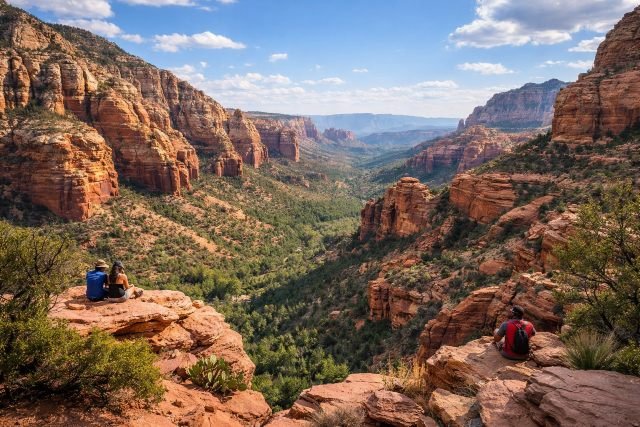
If you’re searching for a Sedona hike that combines iconic red rock scenery with shady canyon calm, the boynton canyon trail deserves a top spot on your list. What makes it especially memorable is its variety. The hike begins in a classic Sedona landscape where sandstone spires rise above the desert vegetation, then gradually transitions into a forested canyon where the light softens and the trail feels more secluded.
- Boynton Canyon Trail Overview: Distance, Difficulty, and Time Needed
- Where Is Boynton Canyon Trail? Trailhead Location, Parking, and Pass Requirements
- What Makes the Boynton Canyon Trail Special?
- Best Viewpoints on Boynton Canyon Trail
- Insider Route Map Strategy: The Best Way to Hike It
- Best Time to Hike Boynton Canyon Trail
- What to Bring for a Smooth Boynton Canyon Trail Hike
- Common Questions About Boynton Canyon Trail
- Responsible Hiking: How to Keep Boynton Canyon Beautiful
- Conclusion: Boynton Canyon Trail Is Worth It
It’s also a flexible hike that fits different styles of travelers. Some people hike it purely for the scenic canyon walk, while others treat it as the base route to reach the Boynton Vista overlook or Subway Cave, two of the area’s most photographed detours.
In this guide, you’ll learn where the best viewpoints are, where to get your best photos, how to choose the right route variation, and how to hike it safely while avoiding the most common mistakes that cause frustration on this trail.
Boynton Canyon Trail Overview: Distance, Difficulty, and Time Needed
Most reputable trail resources list the boynton canyon trail at around 6.1 miles round trip, with about 900 to 940 feet of elevation gain, which places it in the moderate category for the average hiker.
Mileage can vary slightly depending on whether you follow the Boynton Vista spur, attempt the Subway Cave detour, or track your hike through a GPS app. For most hikers, total time ranges from about 2.5 to 4 hours, and longer if you stop frequently for photos or explore the detours.
This is not an overly steep hike, but it does include rocky stretches and uneven ground, especially deeper into the canyon. That means it’s best approached with proper shoes, plenty of water, and a little extra time so you don’t feel rushed.
Where Is Boynton Canyon Trail? Trailhead Location, Parking, and Pass Requirements
The Boynton Canyon Trailhead sits in the Dry Creek Road area, roughly 8 miles northwest of Uptown Sedona. It’s accessed by paved roads and is considered one of the more convenient trailheads in the area, which also explains why it fills quickly during busy seasons.
Parking typically requires a Red Rock Pass or an America the Beautiful Pass, as this is part of the Red Rock Country fee program. If you’re visiting Sedona for multiple hikes, buying a pass ahead of time can make your trip smoother and reduce last-minute stress at trailhead kiosks.
For the best experience, the simplest crowd-avoidance move is arriving early. On weekends and during peak travel months, this trailhead can reach capacity quickly, which can add unwanted friction to an otherwise peaceful hike.
What Makes the Boynton Canyon Trail Special?
Many Sedona hikes offer spectacular views, but the boynton canyon trail stands out because it delivers multiple environments in a single route. Early on, you get towering red rock formations that feel dramatic and close. As you continue, the landscape shifts into a greener, quieter canyon corridor, which feels more shaded and cool compared to many exposed Sedona trails.
What truly elevates the experience is that the main trail acts as the gateway to two of Sedona’s most sought-after add-ons. The Boynton Vista spur is known for panoramic views and vortex associations, while Subway Cave is one of the most iconic photo spots in the area. Multiple hiking guides and trail resources explicitly recommend these detours as the highlights most travelers should consider.
Best Viewpoints on Boynton Canyon Trail
The Boynton Spires: The Early “Wow” Moment
Within the first portion of the boynton canyon trail, the rock formations are the star. The Boynton Spires rise sharply above the trees and form a dramatic skyline that looks different depending on the time of day. This is one of the best places to take wide scenic shots that show Sedona’s scale. Morning light often produces cleaner contrast and less haze, which helps your photos look crisp without heavy editing.
Boynton Vista Trail Overlook: The Most Famous View
One of the top reasons people hike the boynton canyon trail is to reach the Boynton Vista Trail overlook. This viewpoint is accessed via a spur, and it opens into a wide panorama that captures mesas, buttes, and distant canyon layers. It’s frequently referenced in vortex discussions and is widely considered one of the classic Sedona overlooks due to its expansive framing.
Even if vortex lore isn’t your thing, the view itself is worth the detour. It’s one of the best “big horizon” moments on the hike, and it’s ideal for wide-angle photography.
The Inner Canyon Corridor: The “Hidden Sedona” Feeling
As you go deeper into the canyon, the trail becomes more immersive. The forest thickens, the canyon walls appear higher, and the atmosphere shifts into something quieter and more sheltered. The Forest Service describes Boynton Canyon as one of the scenic canyon experiences in the region, and this part of the hike is where that claim becomes very real.
Photographically, this section shines when the light is soft. Cloudy days or early morning shade can create a calm mood that feels very different from Sedona’s typical bright red rock look.
Subway Cave Detour: The Signature Photo Spot
Subway Cave has become one of the most searched-for photo locations tied to the boynton canyon trail, and it’s not hard to understand why. The opening frames the canyon like a natural window, creating a dramatic composition that looks cinematic even on a phone camera.
However, it’s important to understand that Subway Cave typically involves informal paths and route-finding. It’s a destination best attempted by hikers who feel confident navigating beyond the main tread and who are committed to leaving no trace. If you decide to go, use a reliable offline map and avoid widening social paths by stepping off durable surfaces.
Insider Route Map Strategy: The Best Way to Hike It
One reason visitors love the boynton canyon trail is that it can be customized depending on your goals. If you want a straightforward scenic hike without extra navigation challenges, the standard out-and-back on the main trail is ideal. It gives you the full canyon transition and a satisfying, moderate workout without any route complexity.
If your priority is the best viewpoint for the least extra effort, the most efficient upgrade is to add the Boynton Vista spur. This detour is widely documented in trail resources, and it gives a “Sedona postcard view” without adding major mileage.
If you’re hiking mainly for photography and want the most iconic shot, Subway Cave becomes the big goal. This is where the “insider route map” approach matters, because confusion usually comes from trying to find the detour late in the hike when you’re tired or when the area is crowded.
A smart sequence that works for most hikers is starting early, doing Boynton Vista first while the light is best, continuing into the canyon for the full experience, and only attempting Subway Cave if you have enough time and energy left. Earth Trekkers is one of the most referenced guides that explains combining Boynton Canyon with Subway Cave, which makes it a strong external support source for this route logic.
Best Time to Hike Boynton Canyon Trail
The most comfortable hiking seasons for the boynton canyon trail tend to be spring and fall when temperatures are milder and light conditions are excellent for photos. Late fall often has particularly pleasant midday hiking conditions, while early spring offers longer daylight windows.
In terms of time of day, early morning is consistently the best choice. You’ll avoid trailhead parking issues, you’ll experience cooler temperatures, and you’ll find fewer people at the overlook and cave detours. If you’re chasing warm-toned red rock photos, late afternoon can also be beautiful, but it comes with a higher chance of crowds and tighter timing if sunset approaches quickly.
What to Bring for a Smooth Boynton Canyon Trail Hike
Even though the boynton canyon trail is moderate, hikers underestimate it when they assume all Sedona hikes are short and easy. The combination of elevation gain, rocky tread, and desert dryness can surprise people who show up with minimal water or poor footwear.
A good hiking shoe with grip will make the rocky stretches more comfortable and reduce slip risk. Hydration is non-negotiable in Sedona’s climate. Also, if you plan to attempt Subway Cave, download an offline map and keep your phone battery protected, because constant GPS use can drain power faster than expected.
These recommendations align with practical guidance from official trail descriptions and experienced route guides, especially for moderate hikes in Red Rock Country.
Common Questions About Boynton Canyon Trail
Is Boynton Canyon Trail hard?
The boynton canyon trail is considered moderate. It’s about 6.1 miles round trip with close to 900–940 feet of elevation gain, and it includes some rocky sections that can feel more challenging than the elevation suggests.
How long does Boynton Canyon Trail take?
Most hikers finish in 2.5 to 4 hours. If you add Boynton Vista or Subway Cave, you should plan extra time for route-finding, breaks, and photos.
Is there a vortex on Boynton Canyon Trail?
Many resources associate vortex experiences with the Boynton Vista Trail overlook. People often visit that spur specifically because it’s frequently mentioned among Sedona’s prominent vortex areas.
Can beginners do Boynton Canyon Trail?
Yes, beginners can complete it, especially if they pace themselves, bring enough water, and start early. If you’re not ready for the full trail, doing the Vista overlook spur as a primary goal is a great way to still get a high-impact Sedona experience without pushing too far.
Is Subway Cave part of Boynton Canyon Trail?
Subway Cave is commonly reached via a detour connected to the Boynton Canyon route, but it typically involves informal paths and route-finding. It’s best approached carefully with navigation support and a strong leave-no-trace mindset.
Responsible Hiking: How to Keep Boynton Canyon Beautiful
Because the boynton canyon trail is easy to access and extremely popular, it experiences heavy use. Official land management sources emphasize how access and popularity can accelerate wear, which is why staying on trail and avoiding shortcuts matters so much.
The best way to protect the trail is simple: stick to established paths, don’t cut switchbacks, pack out everything you bring, and avoid creating new social trails around popular detours. The cave and overlook areas are particularly sensitive because repeated off-trail wandering can quickly widen paths and damage vegetation.
Conclusion: Boynton Canyon Trail Is Worth It
If you want a Sedona hike that feels both iconic and immersive, the boynton canyon trail delivers. It gives you classic red rock spires early, a peaceful canyon corridor deeper in, and optional detours that can transform the hike into a true highlight of your trip. The Boynton Vista Trail overlook is the easiest way to upgrade the experience with a panoramic viewpoint, while Subway Cave offers one of Sedona’s most recognizable photo opportunities for hikers who are comfortable with route-finding.
The best way to enjoy it is to start early, move at a steady pace, and treat the views as the destination rather than rushing to the turnaround point. With the right timing and a smart route strategy, Boynton Canyon becomes the kind of hike that stays in your memory long after you leave Sedona.