If your car key battery is dead, you’re dealing with one of the most common modern car issues. Key fobs have become essential for unlocking, locking, and starting vehicles, which means even a mildly drained battery can disrupt your daily routine. The good news is that almost every solution is simple, fast, and easy to do at home. This guide explains the signs of a weak fob battery, how to replace it yourself, what type of battery you need, and how to troubleshoot problems even after inserting a new one.
- Signs Your Car Key Battery Is Dead
- Quick Fixes You Can Try at Home
- How to Replace a Car Key Battery
- What Battery Does Your Car Key Use?
- Why Car Key Batteries Die Quickly
- Can You Start Your Car with a Dead Key Battery?
- Key Fob Not Working After Battery Replacement?
- When to Replace the Entire Key Fob
- Frequently Asked Questions
- Conclusion
Signs Your Car Key Battery Is Dead
When the car key battery is low, you may notice that the fob’s range becomes shorter, requiring you to stand closer to the vehicle for it to respond. It might also work inconsistently, unlocking your car one moment and failing the next. Some vehicles display dashboard warnings such as “Key Battery Low,” while others simply stop detecting the key altogether, especially with push-to-start systems. Delays in locking or unlocking and intermittent functionality are also strong indicators that your battery is failing.
Quick Fixes You Can Try at Home
If your key fob suddenly stops working, you still have a few reliable ways to access or start your vehicle. Many key fobs include a hidden mechanical key inside, allowing you to manually unlock your door. Most push-start vehicles also allow you to start the engine by pressing the brake and holding the key fob directly against the start button, which activates a low-frequency backup reader. Some manufacturers include emergency key slots in discreet areas like the steering column or center console, enabling you to start the car even with a dead battery. In situations where the battery is extremely weak, pressing the buttons more firmly may temporarily help, although this is not a long-term solution.
How to Replace a Car Key Battery
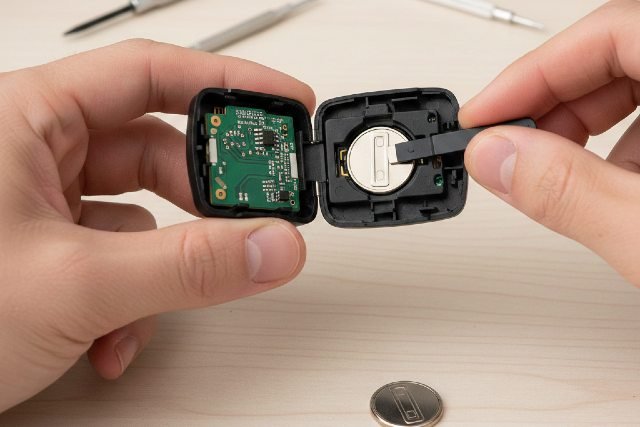
Replacing the battery in a key fob is straightforward and only takes a few minutes. Begin by identifying the correct battery size, usually found in the owner’s manual, on the old battery, or on the automaker’s website. Most car key fobs use coin-cell batteries such as CR2032 or CR2025. After gathering your new battery, use a flathead screwdriver to gently pry open the fob along the seam or access slot. Some models have a visible notch specifically for this purpose. Once open, carefully remove the old battery and take note of its orientation, as the positive and negative sides must face the correct direction. Avoid touching the flat surface of the new battery to prevent transferring oils from your hands, which can reduce battery life. Insert the battery, close the fob until it clicks securely, and then test all functions including locking, unlocking, trunk release, and push-start detection.
What Battery Does Your Car Key Use?
Different vehicle brands use different key battery types. Toyota, Ford, Chevrolet, and Nissan commonly rely on CR2032 batteries. Honda alternates between CR2032 and CR2025 depending on the model. Mercedes-Benz key fobs typically use CR2025, while BMW often uses rechargeable batteries sealed inside the fob, which may require dealership assistance. If you’re unsure, checking your owner’s manual remains the most accurate method.
Why Car Key Batteries Die Quickly
A car key battery may drain faster than expected for several reasons. If you leave the fob too close to your car — such as hanging it near the garage door or placing it on a table next to the vehicle — the constant communication between the key and the car accelerates battery depletion. Tight pockets or crowded backpacks may also press the fob’s buttons unintentionally, leading to rapid drain. Cheap, generic batteries often have lower life expectancy compared to high-quality brands, while extreme heat or cold affects battery performance and lifespan. Over time, an aging key fob with worn internal components may also cause the battery to work harder, reducing how long each replacement lasts.
Can You Start Your Car with a Dead Key Battery?
In most modern vehicles, you can still start the car even if the key battery is completely dead. Automakers include a backup, low-frequency reader that allows the vehicle to detect the fob at close range. This means that holding the key fob directly against the start button or placing it in the designated emergency slot usually enables the vehicle to recognize it. Once the engine is running, the key battery is no longer required until you turn the car off and attempt to start it again.
Key Fob Not Working After Battery Replacement?
If your key fob fails to work even after installing a new battery, several issues might be responsible. The battery may have been inserted incorrectly, with the positive and negative sides reversed. In some cases, the battery doesn’t make strong enough contact with the internal metal prongs, and slightly adjusting these connectors may help restore power. It’s also possible that the new battery is defective or low quality, so switching to a well-known brand may solve the issue. A few vehicle models require the key fob to be reprogrammed after battery replacement; in these cases, the instructions will usually be outlined in the owner’s manual or available through the dealership. Water or moisture inside the key fob may damage internal components, and if the circuit board has failed, the key may need to be replaced entirely.
When to Replace the Entire Key Fob
Although most issues stem from a simple battery problem, there are times when replacing the entire key fob becomes necessary. If the buttons are severely worn, the housing is cracked, internal components are damaged, or the fob no longer communicates with the car even after installing a fresh battery, it may be time for a new one. Water damage or excessive wear can permanently affect circuitry, and older key fobs — especially those over seven to ten years old — may develop internal failures. Dealership replacements tend to cost more, but local locksmiths or certified automotive key specialists often provide more affordable options.
Frequently Asked Questions
How long does a car key battery last?
Most car key batteries last between two and four years depending on usage, environmental conditions, and battery quality.
How much does it cost to replace a car key battery?
The battery itself usually costs between two and eight dollars. Dealerships may charge additional labor fees, sometimes up to fifty dollars.
Can a car key battery die suddenly?
Yes. Extreme temperature changes or an already weak battery can cause sudden failure.
Does storing my key fob near the car drain the battery?
Yes. If the fob is kept close to the vehicle, it stays in constant communication with the system, increasing battery usage.
Can I drive with a dead key battery?
Once the car is started, the engine will continue running even if the key battery has no power. However, you may not be able to restart the vehicle after turning it off.
Conclusion
A car key battery dead situation may feel inconvenient, but it’s one of the easiest vehicle issues to resolve at home. With a small coin-cell battery and a few minutes of your time, you can restore full functionality to your key fob, avoid dealership fees, and prevent unexpected lockouts. Recognizing early signs of battery failure and replacing the battery every few years will help you avoid future problems and keep your key fob working reliably. If you encounter issues even after replacement, a simple reprogramming or inspection can often solve the problem. For more help with car electronics or troubleshooting, feel free to ask.