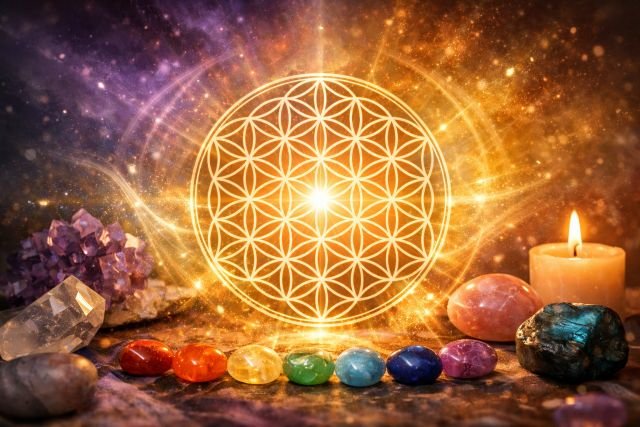
The flower of life is one of the most popular sacred geometry symbols in modern spirituality and wellness communities. It is formed by evenly spaced overlapping circles arranged in perfect symmetry, and many people interpret it as a representation of unity, creation, and interconnectedness. Across modern healing and energy practices, the flower of life is used as a meditation focus, a visual anchor for intention setting, and a symbolic design believed to support energetic harmony.
- Flower of Life Meaning
- A Brief History of the Flower of Life
- Why the Flower of Life Feels Healing
- How to Use the Flower of Life for Healing and Energy
- Flower of Life Meditation for Healing and Energy
- Using the Flower of Life for Intention Setting and Manifestation
- Using the Flower of Life as a Crystal Grid Base
- Flower of Life Energy Cleansing in Your Home or Workspace
- Flower of Life Water Charging
- Breathwork and Flower of Life Visualization
- Coloring or Drawing the Flower of Life for Stress Relief
- What the Flower of Life Can and Can’t Do
- A Simple Daily Flower of Life Healing Routine
- Common Mistakes to Avoid When Using the Flower of Life for Energy Healing
- FAQ: Flower of Life for Healing and Energy
- Conclusion: How to Use the Flower of Life for Healing and Energy
While many energy-related claims are spiritual and not always measurable by science, research does support the idea that structured, symmetrical geometric patterns can promote calm and reduce anxiety, especially when used as part of mindfulness practices. Studies on mandalas, which function similarly as symmetric and repeating patterns, show measurable benefits related to anxiety reduction and emotional regulation.
Flower of Life Meaning
The flower of life is a sacred geometry symbol made of overlapping circles that forms a symmetrical flower-like pattern. It is commonly used as a spiritual symbol representing connection, creation, and balance, and many people use it in meditation, energy rituals, and healing practices.
A Brief History of the Flower of Life
Many sources describe the flower of life as ancient, and circle-grid patterns do appear across different historical contexts. However, researchers and historians point out that the term “Flower of Life” became widely popular through the modern New Age movement, especially from the 1990s onward. This doesn’t mean the symbol lacks value, but it does mean that some origin stories shared online can be overstated or difficult to confirm.
The most useful perspective is to treat the flower of life as a symbolic tool that supports focus and meaning rather than relying solely on unverified historical narratives. Whether you view it as ancient wisdom or modern sacred design, what matters most is how you use it in your daily practice.
Why the Flower of Life Feels Healing
Many people report that the flower of life feels calming, grounding, or energizing. This can be understood through both spirituality and psychology. From a psychological perspective, symmetry and repetition are known to create a soothing experience for the brain. Similar to mandalas, the flower of life can draw your attention away from mental noise and into a stable visual structure, which supports mindfulness and emotional regulation.
Research has shown that engaging with structured geometric patterns, especially through coloring or focused attention, can reduce anxiety. One well-known randomized study found that coloring mandalas reduced anxiety more effectively than unstructured coloring. More recent research also explores how mindfulness and enjoyment contribute to this effect.
From a symbolic viewpoint, the flower of life is often treated as a pattern representing wholeness and harmony. When people meditate on it, they associate it with personal balance, inner healing, and spiritual alignment. Even when the “energy” aspect remains subjective, the nervous-system benefits of calm focus are real and meaningful.
How to Use the Flower of Life for Healing and Energy
Using the flower of life for healing is not about doing something complex. It’s about creating a consistent, intentional practice that supports calm, clarity, and emotional stability. Most people use it through meditation, visualization, intention setting, mindful art, or spiritual rituals that reinforce wellbeing.
Flower of Life Meditation for Healing and Energy
One of the simplest ways to use the flower of life is through meditation. Begin by placing a printed flower of life symbol in front of you or opening an image on your phone. Sit comfortably and breathe slowly, allowing your attention to settle into the center of the pattern. As you gaze gently at the design, let your eyes relax rather than forcing concentration. Many people use affirmations during this practice, such as “I return to balance” or “I choose healing.” You can do this for five minutes or extend it to fifteen.
This method works because it anchors your attention in a stable structure. When attention becomes steady, the nervous system often shifts from stress response into calm regulation. Over time, this can support emotional resilience and reduce mental restlessness.
Using the Flower of Life for Intention Setting and Manifestation
Intention setting is another common way to work with the flower of life. The symbol acts as a visual container for your intention, helping you focus more clearly on what you want to feel, heal, or strengthen. You can write a simple intention such as “I release anxiety,” “My body restores itself,” or “I feel peaceful and supported.” Place it beneath the flower of life symbol and spend a few minutes visualizing your intention spreading through the circles like light.
From a practical wellness perspective, intention setting strengthens mental clarity and reinforces positive behavior. It functions similarly to affirmations used in cognitive-behavioral practices, where repetition helps reshape emotional patterns over time.
Using the Flower of Life as a Crystal Grid Base
Many people use the flower of life as a base for crystal grids because its geometric structure provides a balanced foundation for arranging stones. While the energy properties of crystals are not scientifically proven, the ritual itself can be psychologically powerful. It creates focus, meaning, and repetition, which are linked to habit-building and emotional wellbeing.
To begin, place a center crystal in the middle of the flower of life. Then arrange supporting stones evenly around it at symmetrical points in the pattern. Sit with the grid for a few minutes and set a clear intention. People often leave grids in place for a day or several days, using them as a reminder of healing goals and emotional balance.
Flower of Life Energy Cleansing in Your Home or Workspace
Another practical method is placing the flower of life symbol in areas where you want calm energy. Many people place it in meditation corners, bedrooms, therapy spaces, or on desks to create a sense of grounding. In interior wellness design, symbolic art can influence mood simply by creating a peaceful visual atmosphere.
In daily life, the flower of life can function like a “calm anchor.” When you see it repeatedly, your brain begins associating it with stillness and balance, similar to how a familiar calming image can lower stress. This conditioning effect is subtle but powerful over time.
Flower of Life Water Charging
Water charging is popular in spiritual communities, and many people place a glass bottle of water on the flower of life symbol for a short time while setting an intention. If you do this, it’s important to keep the practice safe. Use clean containers, avoid leaving water exposed for too long, and treat it as a mindful ritual rather than a medical method.
The value here comes from ritual and intention. When you drink the water, you reinforce a healing mindset, which supports calm and positive emotional framing.
Breathwork and Flower of Life Visualization
Breathwork paired with visualization is one of the most effective ways to use the flower of life for emotional balance. Begin by looking at the symbol and breathing slowly. As you inhale, imagine light entering the center. As you exhale, imagine it expanding outward through each circle until the entire pattern feels filled with calm. Continue for a few minutes.
Breathwork reduces stress by shifting your physiology. When you combine it with a visual structure like the flower of life, your mind becomes less likely to wander into anxious thoughts, making the practice more effective.
Coloring or Drawing the Flower of Life for Stress Relief
This method has the strongest research support because it connects directly to studies on mandalas. Coloring symmetrical shapes can reduce anxiety, increase mindfulness, and create a flow state. A randomized study found that mandala coloring reduced anxiety more than free-form coloring. A systematic review and meta-analysis also evaluated mandala coloring effects on state anxiety and concluded it can be helpful for adults.
If you want to use the flower of life for healing in a grounded, evidence-friendly way, coloring it regularly is an excellent choice. Over time, this becomes a simple self-care practice that can support emotional resilience.
What the Flower of Life Can and Can’t Do
The flower of life can support healing indirectly by helping you regulate emotions, focus your mind, and create consistent mindfulness routines. It can help reduce anxiety when used like mandala meditation or coloring. It can also strengthen spiritual connection and provide psychological comfort through symbolism and ritual.
However, it should not be treated as a replacement for medical care, therapy, or professional treatment. If you are experiencing serious anxiety, trauma, or physical illness, the flower of life is best used as a supportive practice alongside appropriate care. This balanced approach strengthens credibility and ensures you use spiritual tools safely and effectively.
A Simple Daily Flower of Life Healing Routine
A daily routine works best when it is short enough to stay consistent. Begin with slow breathing while gazing at the flower of life symbol. Then repeat a calming affirmation, such as “I am safe and steady.” After that, visualize your energy becoming calm and balanced as if it’s moving through the circles. End by writing a one-line gratitude note in a journal. Doing this daily builds emotional stability through repetition and reinforces a healing mindset.
Common Mistakes to Avoid When Using the Flower of Life for Energy Healing
One of the biggest mistakes is expecting immediate transformation. Like meditation and breathwork, the benefits build over time. Another mistake is trying too many techniques at once, which leads to inconsistency. Many people also focus too heavily on historical or mystical claims, which can distract from the real value: the daily practice of calm attention and intention. Scholars have noted that much of the popular modern framing of the “Flower of Life” is strongly linked to recent New Age interpretations, which is fine, but it should be understood realistically.
FAQ: Flower of Life for Healing and Energy
What is the flower of life used for?
The flower of life is used for meditation, intention setting, sacred geometry practices, and spiritual rituals. Many people use it to support calm, emotional balance, and energetic alignment.
Does the flower of life really work for healing?
The flower of life can support wellbeing by improving focus, mindfulness, and stress reduction. While spiritual “energy healing” claims are subjective, research on mandalas and structured geometric patterns supports anxiety reduction and mindfulness benefits.
How do you activate the flower of life?
Most practitioners activate it through intention, meditation, visualization, or mindful rituals. The most important factor is consistent attention and meaningful practice.
How do I use the flower of life for protection?
Many people use it by placing it in their space and meditating on grounding and boundaries. Repeating affirmations like “I am protected and grounded” while focusing on the symbol is a common method.
Is the flower of life a religious symbol?
It is not limited to one religion. It is widely used as a sacred geometry symbol and appears across modern spiritual and wellness traditions.
Conclusion: How to Use the Flower of Life for Healing and Energy
The flower of life can be a powerful tool for healing and energy work when used consistently and intentionally. Whether you approach it as sacred geometry, mindfulness support, or spiritual symbolism, the most valuable aspect is how it helps you focus, calm your mind, and reinforce meaningful intentions. Practices such as meditation, breathwork, visualization, and flower of life coloring can support emotional regulation and anxiety reduction, especially when used as part of a daily routine.
When you treat the flower of life as a supportive wellness practice rather than a guaranteed cure, it becomes a sustainable and empowering tool. Over time, it can help you build a calmer inner state, strengthen self-awareness, and create a consistent healing lifestyle rooted in attention, ritual, and balance.