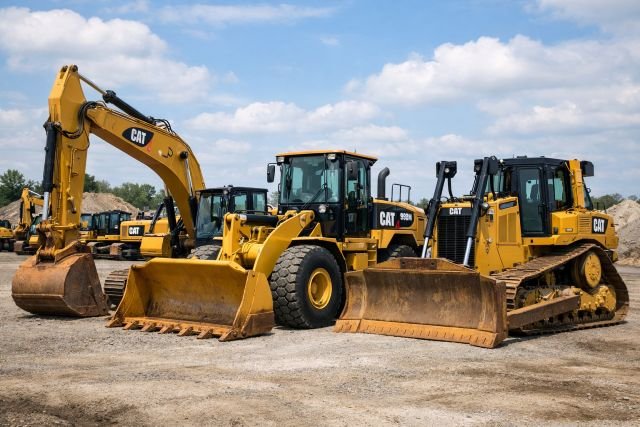
If you’re shopping for sale caterpillar machines, you’re not just choosing a brand. You’re choosing uptime, parts availability, dealer support, and resale strength. The challenge is that two machines with the same model number can be worlds apart in real value depending on hours, maintenance history, and wear items like undercarriage or hydraulics.
- What “for sale caterpillar machines” includes and why it matters
- Used market price benchmarks you can trust
- How to compare Caterpillar models by job type
- Costs that matter more than the asking price
- Condition tiers and what they usually mean in practice
- How to evaluate condition like a pro buyer
- How to negotiate confidently without overpaying
- FAQ for featured snippets
- Conclusion
This detailed guide helps you compare common Caterpillar machine types, understand what drives pricing, evaluate condition like a pro, and negotiate confidently. You’ll also see current market benchmarks from reputable industry sources so you can sanity-check asking prices before you commit.
What “for sale caterpillar machines” includes and why it matters
The phrase “for sale Caterpillar machines” can mean anything from compact skid steers to large dozers and excavators. That category matters because pricing and risk factors differ by machine type. Tracked dozers and compact track loaders are heavily influenced by undercarriage and track wear. Excavators are often judged by hydraulic performance and structural integrity around the boom and stick. Wheel loaders can hide expensive wear in pins, bushings, and driveline components, especially if they’ve lived in abrasive aggregate environments.
A smarter approach is to pick the machine category that matches your most frequent work, then compare models and conditions within that class. That prevents you from overpaying for features you don’t need while missing the condition details that actually determine lifetime cost.
Used market price benchmarks you can trust
Before you compare listings, it helps to anchor expectations using market trend data. Used bulldozer listings averaged about $234,126 in Q4 2023 and about $267,739 in Q4 2024, based on EquipmentWatch trend data summarized by Equipment World. Used wheel loaders averaged about $146,127 in July 2023 and about $155,704 in July 2024 in the same dataset. Used skid steer average prices hovered around the $40,000 level in late 2024 and early 2025 snapshots, with a slight decline reported.
These are not fixed prices for every machine. They’re useful because they keep you from negotiating blindly. If a seller is far above the benchmark, you need a reason like unusually low hours, premium attachments, documented rebuilds, or certified condition. If a seller is far below it, you need to investigate what problem the price is hiding.
How to compare Caterpillar models by job type
Excavators for general construction and utilities
Mid-size excavators are a common “do-everything” choice for trenching, foundations, loading trucks, and utility installation. In this class, buyers often look at the Cat 320 category because it tends to be widely available on the used market, which makes comparisons easier and helps you negotiate more confidently. Caterpillar positions the 320 as a balance of performance and efficiency, with features intended to reduce operating cost.
When comparing excavators, model-year differences matter, but condition matters more. Machines used for heavy trenching in rocky soil may show accelerated wear in pins, bushings, and bucket linkage. Machines used for lighter loading work may have higher hours but less structural stress. Your best comparison metric is not “newer vs older,” but “verified maintenance and wear condition vs unknown history.”
Dozers for site prep, grading support, and pushing
Dozers are often simple to operate but expensive to repair if the wear items are near end-of-life. In used dozers, undercarriage condition can change the economics of the deal. The D6 class is popular in site development because it sits in a practical zone for many contractors: capable enough to move serious material, yet still manageable for transport and general jobsite work.
If you’re comparing two similar dozers, a machine with higher hours but a refreshed undercarriage can be a better value than a lower-hour machine with worn components. It’s also common for sellers to highlight engine hours while glossing over wear measurements. Don’t let that happen. For dozers, hour meters tell only part of the story.
Wheel loaders for production work and yards
Wheel loaders are all about cycles and productivity. That repeated load-carry-dump pattern creates predictable wear, which can be helpful for buyers who inspect carefully. Trend data shows used wheel loader average prices rose from about $146,127 in July 2023 to about $155,704 in July 2024.
In this category, pay close attention to linkage tightness, driveline behavior, and maintenance records for transmission and differential fluids. A wheel loader that lived in aggregate can look great cosmetically while hiding accelerated wear in pins, bushings, and bucket linkage due to dust abrasion and constant cycling.
Skid steers and compact machines for versatility
Skid steers and compact track loaders are popular because attachments expand what one machine can do. The used market also tends to be more approachable, with average used skid steer prices near $40,000 in late 2024 and early 2025 snapshots.
That said, compact equipment can be deceptively expensive when maintenance has been skipped. High-hour machines with neglected greasing and poor hydraulic care can turn into frequent hose failures, weak performance under load, and inconsistent controls. You want consistency more than perfection, especially if your business relies on the machine daily.
Costs that matter more than the asking price
The biggest mistake buyers make is evaluating a listing like a car purchase. Heavy equipment value is dominated by wear components and downtime risk. Caterpillar itself emphasizes that customers evaluate machines by lifetime owning and operating costs, not only purchase price.
Your real cost includes the catch-up maintenance you’ll need in the first 30 to 90 days. It includes transport, inspections, fluids, filters, and inevitable wear items. It also includes opportunity cost. If the machine fails mid-project, lost time and rescheduling can cost more than a monthly payment.
If you’re buying for business use in the U.S., tax treatment can influence the effective cost. IRS Publication 946 provides the authoritative guidance, including Section 179 limits and depreciation rules. For tax years beginning in 2025, the maximum Section 179 deduction is listed as $1,250,000 with a phase-out threshold. This is not tax advice, but it’s a reminder to discuss timing and structure with your accountant.
Condition tiers and what they usually mean in practice
As-is used
As-is listings can be good deals if you have strong mechanical support and you know how to verify condition. The risk is that unknown maintenance history often becomes your problem. A low price is only a bargain when the machine’s expensive systems are healthy.
Dealer-inspected used
Dealer-inspected machines can deliver a better balance of cost and confidence if the seller provides inspection notes and measurable wear data. The best dealer listings include service history, meter verification, and clear disclosure of what has and hasn’t been reconditioned.
Cat Certified Used
Cat Certified Used machines generally carry a premium because they’re presented as a lower-risk purchase path. Caterpillar describes the Certified Used inspection process as intentionally thorough. Dealers commonly describe the inspection as up to a 140-point process before a machine is considered certified, and coverage varies by model and terms.
Certified used can make sense when downtime is costly, when you don’t have in-house maintenance capacity, or when you want stronger documentation and support. It can also be a practical choice for first-time buyers who want fewer surprises.
How to evaluate condition like a pro buyer
Undercarriage and tracks on tracked machines
On dozers and tracked loaders, undercarriage wear is one of the largest value drivers. Don’t settle for vague claims like “good tracks.” Ask for measurements and photos that show real wear. Also watch for uneven wear patterns, which can signal alignment issues or poor operating habits. If you’re shopping for a tracked machine and the seller can’t provide meaningful undercarriage information, you should assume additional cost and negotiate accordingly.
Hydraulics and performance under load
Hydraulics are a major make-or-break system on excavators, loaders, and skid steers. Look for smooth operation, consistent response, and minimal drift. Pay attention to cylinder condition, hose routing, and any signs of leaks that have been “cleaned up” recently. A machine can be washed to look dry, but seepage patterns return quickly during a real inspection and test.
Hydraulic oil condition and filter service history are also important. Clean oil doesn’t guarantee health, but dirty oil is a red flag. If you can access diagnostic or service records, use them.
Pins, bushings, and structural wear
Excess play in pins and bushings reduces precision, increases stress, and often indicates poor greasing habits. On excavators, inspect the stick and boom areas for cracks, weld repairs, and abnormal wear. On wheel loaders, focus on linkage and pivot points because looseness can reduce productivity and signal long-term wear.
A key insight is that structural repairs aren’t always bad. A professional repair with documentation can be acceptable. What’s risky is an undocumented weld in a high-stress area with no explanation.
Engine health and cooling system history
A machine can sound fine and still be at risk if it’s been overheated repeatedly. Inspect the cooling system for staining, mismatched hoses, and signs of chronic leaks. Ask about coolant maintenance and any major cooling component replacements. A “new radiator” might be good, or it might be evidence of past overheating. You want the story and the documentation.
Electronics and monitoring systems
Modern equipment has more sensors and control modules. Fault codes that seem minor can cause real downtime if the machine goes into derate or limp mode under load. If the seller is a dealer, ask whether they can provide a diagnostic report. If the seller is private, a pre-purchase inspection by a qualified technician can pay for itself quickly.
How to negotiate confidently without overpaying
Negotiation works best when it’s evidence-based. Instead of asking for a discount because “it’s old,” tie your offer to measurable condition factors. If the undercarriage is near end-of-life, that should translate into a price adjustment. If there are hydraulic leaks, you should price the repair risk. If the machine has strong service history and wear items were recently refreshed, you should expect less flexibility, but you can still negotiate value through attachments, transport support, or fresh service.
It’s also smart to negotiate on the items that sellers can offer without “losing face.” Many sellers would rather include buckets, couplers, forks, or a thumb than drop the price dramatically. Those extras can have real operational value from day one.
FAQ for featured snippets
What should I check first when buying a used Caterpillar machine?
Start with the expensive systems that most affect downtime and resale: undercarriage on tracked machines, hydraulic performance under load, structural wear around pins and high-stress areas, and documented maintenance history. These factors often matter more than the model year.
Are Cat Certified Used machines worth it?
They can be worth it when you want lower risk and stronger documentation. Caterpillar describes the certified process as thorough, and dealers commonly describe the inspection as up to a 140-point inspection, with coverage varying by terms.
What do used Caterpillar machines cost on average?
It depends on category, size, and condition, but trend benchmarks help. Used bulldozer averages were reported near $267,739 in Q4 2024, wheel loader averages near $155,704 in July 2024, and used skid steers near the $40,000 level in late 2024 and early 2025 snapshots.
Do hours matter more than year?
Not always. Hours matter, but condition and maintenance often matter more. A higher-hour machine with verified service history and refreshed wear items can be a better investment than a lower-hour machine with neglected maintenance and expensive wear near end-of-life.
Conclusion
Buying for sale caterpillar machines is easiest when you treat it as a condition-and-cost problem, not a model-year problem. Use market benchmarks to set expectations, then evaluate each listing based on the big cost drivers: undercarriage wear, hydraulic health, structural integrity, and documented maintenance. If you want fewer surprises, dealer-inspected and certified options may justify the premium by reducing downtime risk and improving transparency.