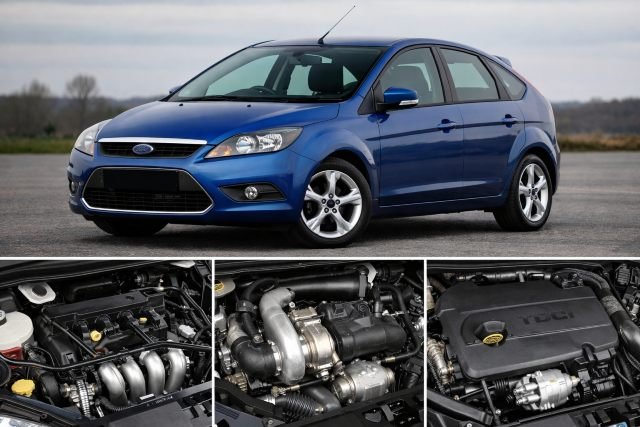
The ford focus mk2 (2004–2011 in Europe) is one of the most popular used hatchbacks thanks to its sharp handling, comfortable ride, and affordable pricing. But the engine you choose can completely shape the ownership experience. Some Focus Mk2 engines offer years of reliable, low-cost motoring, while others can turn into expensive projects if service history is poor or the car has been neglected.
- Ford Focus Mk2 Engine Options
- Best Ford Focus Mk2 Engines
- Worst Ford Focus Mk2 Engines
- Ford Focus Mk2 Petrol vs Diesel: Which Is Better?
- Common Ford Focus Mk2 Engine Problems
- Timing Belt vs Timing Chain in Ford Focus Mk2 Engines
- How to Choose the Best Focus Mk2 Engine for Your Driving Style
- A Practical Ownership Scenario: Why Engine Choice Changes Your Costs
- FAQ: Ford Focus Mk2 Engine Options Explained
- Conclusion: Best & Worst Ford Focus Mk2 Engine Choices
In this guide, you’ll get a complete breakdown of Ford Focus Mk2 engine options, including which engines are generally considered best and worst, what problems to look for, and how to choose the right one for your driving style. We’ll also compare petrol vs diesel, explain timing belt and chain differences, and offer practical buyer tips based on real ownership patterns.
Ford Focus Mk2 Engine Options
Ford offered a broad range of engines in the Focus Mk2 lineup, which is one reason it appeals to so many used car buyers. Petrol engines ranged from 1.4 to 2.0 liters, while diesel choices included the commonly seen 1.6 TDCi and 2.0 TDCi units. A trusted used car reference like Honest John confirms the Focus Mk2 was offered with petrol engines from 1.4 to 2.0 and highlights that the 2.0 petrol uses a timing chain, while smaller petrol engines generally use belts.
On the performance side, the ST and RS models use specialized turbocharged powertrains and require a different ownership mindset because running costs can be significantly higher. Ford service and workshop manuals include detailed specifications for ST/RS engine systems, confirming their complexity compared to standard trims.
It’s important to remember that exact power outputs and engine variants vary by year, market, and facelift. A spec reference database such as UltimateSpecs can help confirm the exact version before purchase.
Best Ford Focus Mk2 Engines
Best Overall Petrol Engine: 2.0 Duratec (Chain-Cam)
For many buyers, the best all-round Focus Mk2 petrol engine is the 2.0 Duratec, largely because it offers good performance without pushing the engine too hard and it benefits from a timing chain design. Honest John specifically notes that the Focus 2.0 petrol engine is chain-cam, which is attractive to used buyers because chains typically avoid routine belt replacement schedules, though they still require proper oil and maintenance to avoid wear.
In real-world driving, the 2.0 feels more relaxed than the smaller 1.4 or 1.6 engines, especially on motorways and when the car is loaded with passengers. It’s also usually less frustrating in daily use because overtakes and hills require less effort.
This engine is best for drivers who want a petrol Focus Mk2 they can keep long-term, especially if they prefer simpler mechanics compared to diesel systems.
Best Fuel Economy Diesel (When Maintained Properly): 1.6 TDCi
The 1.6 TDCi is the most common diesel in the Focus Mk2 range and is often chosen for its excellent fuel economy and good mid-range torque. It can be a great commuter engine when it’s been maintained correctly, especially with frequent oil changes and quality oil.
However, the 1.6 TDCi is also known for turbocharger problems when servicing has been neglected. MotorReviewer specifically highlights turbo failure as one of the most serious concerns on this engine, which is why service history is not optional—it’s essential.
This engine suits high-mileage drivers who do longer journeys and motorway runs. It is less ideal for drivers who only do short city trips because diesel emissions systems and EGR components can suffer when the engine doesn’t warm fully or run long enough.
Best Balanced Petrol Option: 1.6 Ti-VCT
The 1.6 Ti-VCT is a popular middle ground for buyers who want a petrol Focus Mk2 with smoother power delivery than the basic petrol engines but without stepping up to the 2.0. It’s widely available, typically affordable to maintain, and feels more flexible than the 1.4.
MotorReviewer covers the Focus Mk2 engine range and points to general reliability considerations where maintenance consistency strongly affects long-term results.
The 1.6 Ti-VCT makes sense for mixed driving, city use with occasional motorway work, and buyers who want a petrol engine that feels modern enough while staying relatively uncomplicated.
Worst Ford Focus Mk2 Engines
The Highest Repair-Risk Diesel: 1.8 TDCi
The 1.8 TDCi is the diesel that many used buyers approach cautiously. It’s not guaranteed to fail, but it has a reputation for higher repair risk as mileage builds, especially compared to the 1.6 TDCi and 2.0 TDCi engines. It may also be more likely to have been run on a budget and maintained cheaply, which makes buying a “random” example risky.
MotorReviewer’s discussion of Focus diesel engines often emphasizes that the 1.6 TDCi is generally preferred over the 1.8 TDCi in terms of overall ownership experience, supporting the idea that 1.8 TDCi is a more cautious choice.
If you do consider one, it should only be with strong service documentation, a clean cold start, stable idle, and smooth acceleration. Any hesitation, smoke, or inconsistent performance should be treated as a warning sign.
The Least Satisfying Engine for Most Drivers: 1.4 Petrol
The 1.4 petrol is often the least enjoyable Focus Mk2 engine because the Mk2 body is heavier than the earlier Mk1, and the base engine can feel underpowered. This is especially noticeable on motorways, hills, or with passengers. While the 1.4 isn’t necessarily unreliable, it’s a common “regret engine” because it can require constant throttle input to maintain speed, and real-world fuel economy may not be as good as buyers expect.
It makes sense primarily for low-mileage urban drivers who prioritize cheap insurance, a low purchase price, and short commute convenience over performance.
The Most Expensive Ownership Trap (If You’re Not Prepared): ST and RS Engines
The ST and RS versions of the Focus Mk2 are genuinely special cars and can be very reliable when maintained properly. But for a buyer seeking a cheap daily driver, they can become the worst engine choice financially because they come with high fuel consumption, expensive tyres, expensive brakes, and costly repairs if abused or poorly modified.
Ford service documentation for the 2.5 turbo engine systems highlights the specialized nature of these engines and how different they are compared with standard Focus Mk2 engines, reinforcing that ownership costs can be in a different category.
If you want an ST or RS, the engine isn’t the problem—the problem is buying a cheap, modified example without proper inspection or budgeting.
Ford Focus Mk2 Petrol vs Diesel: Which Is Better?
The choice depends on how you drive and how many miles you cover per year. For short journeys, petrol engines are usually safer and more predictable because they avoid diesel-specific issues like turbo sensitivity, EGR clogging, and DPF-related stress on certain variants. For motorway commuters and high-mileage drivers, diesel engines can deliver excellent economy and relaxed cruising.
Honest John’s Focus Mk2 coverage suggests that real-world mpg varies widely, with some reported figures ranging from around 25 mpg to over 60 mpg depending on engine and driving style, showing why usage patterns matter more than brochure numbers.
If you do fewer than roughly 10,000 miles per year and your trips are short, petrol is usually the safer long-term bet. If you do high annual mileage and spend time on motorways, diesel can make strong sense—assuming it’s been maintained properly.
Common Ford Focus Mk2 Engine Problems
Petrol Focus Mk2 engines tend to be simpler and often cheaper to repair. Typical issues include misfires from worn plugs or coils, oil leaks from ageing seals, cooling system wear, and tired engine mounts that cause vibration. These are usually manageable, and the biggest risk factor is neglect rather than the design itself.
Diesel engines can be excellent but have more expensive failure points. Key concerns include turbo wear, injector problems, EGR clogging, and DPF-related trouble depending on engine version and usage pattern. MotorReviewer highlights turbo failure as a major serious issue on the 1.6 TDCi, reinforcing the importance of service history and oil changes.
Timing Belt vs Timing Chain in Ford Focus Mk2 Engines
One of the biggest questions buyers ask is whether the Focus Mk2 uses a timing belt or timing chain. The answer depends on the engine. Honest John specifically notes that the 2.0 petrol is chain-cam, while smaller petrol engines are typically belt-cam.
In practical terms, a belt requires scheduled replacement to prevent catastrophic engine damage, while a chain is typically designed for longer life but still relies on oil quality and servicing. On a used car, both are manageable, but the safest choice is always to verify service history and confirm the belt replacement interval has been followed where applicable.
How to Choose the Best Focus Mk2 Engine for Your Driving Style
If you drive mostly in town, your best bet is usually the 1.6 petrol or 1.6 Ti-VCT. These engines avoid diesel emissions system stress and tend to be easier to maintain. If you drive long distances frequently, the 1.6 TDCi can be one of the best choices because it delivers strong economy and good torque, but only if it has clear evidence of proper servicing.
If your main priority is long-term reliability with decent performance, the 2.0 petrol Duratec is arguably the best all-rounder because it’s chain-driven and doesn’t rely on diesel components that can fail expensively.
If you’re buying purely for excitement and performance, the ST and RS engines are fantastic, but only if you budget for higher running costs and avoid questionable modifications.
A Practical Ownership Scenario: Why Engine Choice Changes Your Costs
Imagine two Focus Mk2 owners. The first buys a 1.6 petrol and uses it mainly for town driving and occasional weekend trips. Their running costs stay predictable, maintenance is straightforward, and there’s less chance of a sudden high-cost failure.
The second owner buys a 1.6 TDCi because they do motorway commuting and want maximum fuel economy. They enjoy low fuel bills and strong torque, but if they skip oil changes or drive mostly short trips, they risk turbo-related costs and EGR problems. That’s why the 1.6 TDCi can be brilliant in the right hands and expensive in the wrong ones.
This is the main lesson of Focus Mk2 ownership: the best engine isn’t universal—it depends on how the car was maintained and how you plan to use it.
FAQ: Ford Focus Mk2 Engine Options Explained
What is the best engine in a Ford Focus Mk2?
For most buyers, the best all-round choice is the 2.0 petrol Duratec because it offers stronger performance, reduced strain compared to small petrol engines, and uses a timing chain.
Is the Ford Focus Mk2 1.6 TDCi a good engine?
Yes, it can be excellent for fuel economy and motorway driving, but it depends heavily on servicing. Turbo failure is a known issue if maintenance is neglected, so service history is critical.
Which Ford Focus Mk2 engine should I avoid?
If you want the lowest-risk ownership, you should approach the 1.8 TDCi cautiously unless it has excellent service records. The 1.4 petrol is also often avoided because it can feel underpowered and may not deliver the fuel savings people expect.
Does the Ford Focus Mk2 have a timing belt or chain?
It depends on the engine. The 2.0 petrol is chain-cam, while smaller petrol engines are generally belt-driven. Always verify service history before buying.
Conclusion: Best & Worst Ford Focus Mk2 Engine Choices
Choosing the right ford focus mk2 engine is the difference between affordable, enjoyable motoring and unexpected repair bills. If you want the best balance of reliability and performance, the 2.0 petrol Duratec chain-cam is often the strongest choice for long-term ownership. If you do high mileage and your driving is mostly motorway, a well-maintained 1.6 TDCi can be a fantastic fuel saver, but it must have a strong service history because turbo failure is a known risk when maintenance is skipped.
The engines that many buyers consider the worst choices depend on your needs. The 1.4 petrol can feel too slow for motorway driving, the 1.8 TDCi can be higher risk without proof of careful servicing, and ST/RS models can become costly if you aren’t prepared for performance-car upkeep.
Ultimately, the smartest Focus Mk2 purchase isn’t just about choosing the “best engine,” but choosing the best-maintained example with clear servicing records, strong cold-start behavior, and a clean test drive.