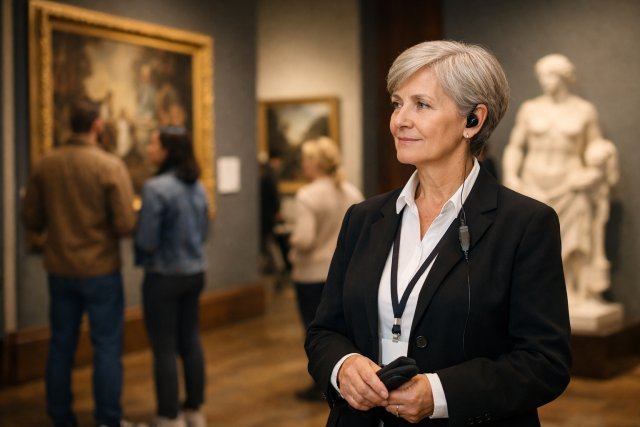
A Museumsaufsicht Job may sound simple at first — standing in a gallery and making sure no one touches the artwork. In reality, it is a professional role that combines security awareness, customer service, communication skills, and calm decision-making. With over 102.9 million museum visits recorded in Germany in 2024 according to the German Museums Association, museums rely heavily on trained supervisory staff to ensure both visitor safety and the protection of valuable collections (Source: German Museums Association).
- What Is a Museumsaufsicht Job?
- Core Responsibilities of a Museumsaufsicht Job
- Skills Required for a Museumsaufsicht Job
- Qualifications and Entry Requirements
- Salary Expectations for a Museumsaufsicht Job
- How to Apply Successfully for a Museumsaufsicht Job
- First Weeks on the Job: What to Expect
- Advantages and Challenges of a Museumsaufsicht Job
- Frequently Asked Questions (FAQ)
- Conclusion: Is a Museumsaufsicht Job Right for You?
This guide explains everything you need to know about a Museumsaufsicht Job, including responsibilities, qualifications, salary expectations, and proven strategies to succeed in your application.
What Is a Museumsaufsicht Job?
A Museumsaufsicht Job (museum attendant or gallery supervisor role) focuses on overseeing exhibition spaces. The position ensures that visitors follow museum rules while enjoying a safe and welcoming environment.
Museum attendants typically work in art museums, history museums, science centers, and special exhibitions. In many institutions, the role overlaps with visitor services and front-desk responsibilities.
According to professional museum service guidelines, supervision staff serve as the “central link” between visitor flow management, security, and the preservation of exhibits (Source: Swiss Museums Association).
In simple terms, a Museumsaufsicht professional maintains order without appearing intrusive.
Core Responsibilities of a Museumsaufsicht Job
While duties vary by institution, most Museumsaufsicht positions include similar responsibilities.
Supervising exhibition rooms is the primary task. You monitor visitor behavior, ensure compliance with rules such as “no touching” or “no flash photography,” and remain alert to potential risks.
Providing visitor assistance is equally important. Guests often ask for directions, information about exhibitions, or clarification on museum policies.
Supporting events and special programs is another common responsibility. During guided tours or evening events, supervision staff help manage crowd flow.
In some cases, attendants may assist at the ticket counter or reception desk.
A real job posting from the State Museum of Natural History Stuttgart highlights typical expectations such as monitoring exhibition spaces, assisting visitors, and supporting events, while also emphasizing communication skills and reliability.
Skills Required for a Museumsaufsicht Job
Success in a Museumsaufsicht Job depends less on formal education and more on practical competencies.
1. Communication Skills
You must be able to address visitors politely yet assertively. When someone violates a rule, your tone matters. The goal is compliance without confrontation.
For example, instead of saying, “You can’t do that,” experienced attendants say, “For conservation reasons, we ask visitors not to touch the artwork. Thank you for understanding.”
This subtle shift prevents escalation.
2. De-escalation Ability
Conflict management is one of the most valuable skills in museum supervision. You may encounter frustrated visitors, loud school groups, or individuals ignoring guidelines.
Remaining calm, using clear language, and knowing when to involve colleagues are essential techniques.
3. Service Orientation
A Museumsaufsicht Job is not purely security-based. Visitor satisfaction plays a key role. Friendly interactions significantly improve the overall museum experience.
According to visitor service research in cultural institutions, positive staff engagement directly influences return visits and visitor satisfaction levels (ICOM – International Council of Museums).
4. Physical Stamina
Most positions require standing and walking for several hours. Comfortable footwear and good endurance are practical necessities.
5. Reliability and Punctuality
Museums operate on tight schedules. Shift work, including weekends and public holidays, is common.
Qualifications and Entry Requirements
One of the advantages of a Museumsaufsicht Job is accessibility. Many institutions hire career changers.
Formal education in museum studies is not usually required. Instead, employers prioritize:
Strong German language skills (often required in Germany)
Basic English proficiency for international visitors
Customer service experience
Experience in security or event supervision (a plus)
Flexibility for weekend shifts
Backgrounds in retail, hospitality, social work, or event management can be particularly beneficial.
Salary Expectations for a Museumsaufsicht Job
Compensation depends on whether the museum is publicly funded or privately operated.
Public institutions in Germany often follow the TV-L (Collective Agreement for the Public Service of the Federal States).
For example, positions classified under E3 TV-L in 2025 range approximately from €2,815 to €3,363 gross per month at full-time levels, depending on experience and pay grade (Source: Official TV-L tables via oeffentlicher-dienst.org).
Keep in mind that many Museumsaufsicht roles are part-time. Additional compensation may apply for weekend or holiday shifts.
Private museums may offer different pay structures.
How to Apply Successfully for a Museumsaufsicht Job
Tailor Your CV Strategically
Instead of focusing solely on your interest in art or culture, highlight experience in:
Customer interaction
Conflict resolution
Responsibility in public environments
Shift-based roles
Employers want proof that you can handle real-life scenarios.
For example, if you worked in retail, emphasize how you handled difficult customers or ensured compliance with store policies.
Write a Strong Cover Letter
Your cover letter should demonstrate situational awareness.
Describe a brief real-world example where you maintained calm in a challenging situation. Show how you balanced friendliness and firmness.
Museums value professionalism combined with emotional intelligence.
Prepare for Common Interview Questions
You may be asked:
“How would you handle a visitor taking flash photography?”
A strong answer includes three steps: friendly reminder, explanation of conservation reasons, and escalation if needed.
“How do you respond to conflict?”
Focus on calm communication, active listening, and teamwork.
First Weeks on the Job: What to Expect
New hires typically receive training in:
Museum policies and emergency procedures
Fire safety and evacuation plans
Communication standards
Exhibition-specific rules
Pay attention to how experienced colleagues address visitors. Tone and timing make a significant difference.
Learning the layout of emergency exits and internal communication systems (such as radios) is essential.
Advantages and Challenges of a Museumsaufsicht Job
The role offers a calm work environment surrounded by art, history, or science. You gain insight into cultural institutions and often enjoy structured schedules.
However, repetitive standing, weekend shifts, and occasional conflict situations can be demanding.
Understanding both sides helps you decide if this career path fits your personality and lifestyle.
Frequently Asked Questions (FAQ)
What does a Museumsaufsicht Job involve?
It involves supervising exhibition spaces, assisting visitors, enforcing museum rules, and supporting events to ensure safety and order.
Do you need formal qualifications?
Not necessarily. Customer service skills, reliability, and communication abilities are usually more important than formal education.
Is it a security job?
Partially. While safety is central, the role strongly emphasizes visitor service and communication.
Is the Museumsaufsicht Job physically demanding?
Yes, it often requires standing and walking for extended periods.
Can career changers apply?
Absolutely. Many museums welcome applicants from retail, hospitality, and other service industries.
Conclusion: Is a Museumsaufsicht Job Right for You?
A Museumsaufsicht Job offers a meaningful opportunity to work in cultural institutions while combining visitor service, security awareness, and communication skills. With millions of museum visits annually in Germany, professional supervision staff play a crucial role in preserving collections and ensuring a positive visitor experience.
If you can remain calm under pressure, communicate clearly, and maintain professionalism throughout long shifts, this position can be both stable and rewarding. By tailoring your CV, preparing for scenario-based interview questions, and demonstrating reliability, you significantly improve your chances of securing a Museumsaufsicht Job.