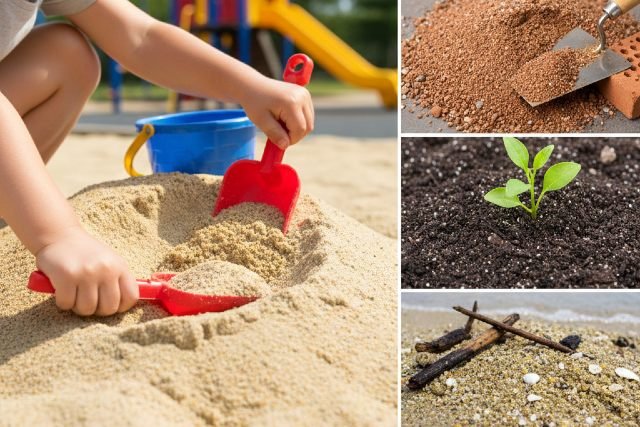
Choosing the right type of sand may seem simple, but when safety, performance, and purpose come into play, the differences become significant. Play sand is not just regular sand in a bag; it is a carefully processed material designed specifically for human contact, especially for children. Understanding how play sand differs from other sands helps homeowners, parents, and contractors make informed decisions.
- What Is Play Sand?
- Why Play Sand Is Different From Other Sands
- Play Sand vs Construction Sand
- Play Sand vs Masonry Sand
- Play Sand vs Utility or Fill Sand
- Texture and Comfort: A Key Advantage of Play Sand
- Is Play Sand Safe for Children?
- Common Questions About Play Sand
- Real-World Example: Playground Safety Upgrade
- Expert Tips for Choosing Quality Play Sand
- Conclusion
This article explores play sand vs other sands, explains what makes play sand unique, and clarifies when and why it should be used instead of alternatives.
What Is Play Sand?
Play sand is a fine-grained, washed, and screened sand specifically manufactured for recreational use. It is most commonly used in sandboxes, playgrounds, and sensory play areas where direct skin contact is expected.
Unlike raw or industrial sand, play sand goes through multiple cleaning stages to remove dust, clay, sharp fragments, and organic debris. The result is a soft, uniform texture that feels comfortable to the touch and is safe for extended use.
Because of this processing, play sand is trusted by schools, childcare centers, and parents for children’s play environments.
Why Play Sand Is Different From Other Sands
The primary difference between play sand and other sands lies in purpose-driven processing. Most sands are produced for structural strength or drainage, not safety. Play sand, on the other hand, is engineered with comfort and risk reduction as top priorities.
Other sands may appear similar visually, but they often contain angular grains, inconsistent particle sizes, or impurities that make them unsuitable for recreational use. Play sand is refined to maintain rounded grains that are gentle on skin and easy to shape.
Play Sand vs Construction Sand
Construction sand, sometimes called concrete sand, is designed to provide strength and stability in building projects. Its grains are coarse and angular, allowing them to lock together when mixed with cement.
These sharp edges make construction sand inappropriate for play. Prolonged contact can cause scratches, irritation, and discomfort, especially for children. Construction sand is also not always thoroughly washed, which means dust and debris may still be present.
This is why construction professionals strongly advise against using it as a substitute for play sand.
Play Sand vs Masonry Sand
Masonry sand is finer than construction sand and is commonly used in bricklaying and mortar applications. While it may feel smoother than concrete sand, it is still not processed with human contact in mind.
Masonry sand can contain fine dust particles that become airborne when dry. According to OSHA, inhalation of respirable silica dust over time can pose health risks in occupational settings. While casual exposure is minimal, play sand is washed specifically to reduce this dust, making it a safer option for children.
Play Sand vs Utility or Fill Sand
Utility sand, also known as fill sand, is the least refined category. It is typically used for trench filling, leveling ground, or as a base material under foundations.
This type of sand often contains mixed grain sizes, clay, and even organic material. Because it is not screened or washed for cleanliness, it poses both safety and hygiene concerns when used in play areas. In comparison, play sand is consistent, clean, and purpose-built for recreational environments.
Texture and Comfort: A Key Advantage of Play Sand
One of the most noticeable differences with play sand is texture. The grains are naturally rounded through washing and screening processes, which removes sharp edges.
This soft texture makes play sand ideal for digging, molding, and building sandcastles. It is gentle on hands, knees, and feet, which is especially important for toddlers and young children who spend long periods sitting or crawling in sand.
Texture also affects usability. Slightly damp play sand holds its shape well, making it perfect for creative play and sensory development activities.
Is Play Sand Safe for Children?
High-quality play sand is considered safe for children when used properly. Reputable manufacturers follow material safety guidelines similar to those outlined by ASTM International and the U.S. Consumer Product Safety Commission.
Play sand is thoroughly washed to remove contaminants and screened to ensure consistent grain size. While most play sand contains naturally occurring silica, it is the airborne dust form that poses health risks. Washed play sand significantly reduces this dust, making it safe for normal play activities.
The CDC notes that environmental risks from sand are primarily associated with untreated natural sources, not commercially processed play sand.
Common Questions About Play Sand
Is play sand the same as sandbox sand?
Yes, play sand and sandbox sand generally refer to the same product. Both are designed for safe recreational use and are processed to remove harmful materials.
Can play sand be used for landscaping?
Play sand can be used decoratively in landscaping, but it is not ideal for structural applications. It lacks the angular grain structure needed for stability under pavers or for proper drainage systems.
How often should play sand be replaced?
Most experts recommend replacing play sand every one to two years. Replacement may be needed sooner if the sand becomes compacted, contaminated, or exposed to moisture for extended periods.
Real-World Example: Playground Safety Upgrade
A municipal park in the United States replaced coarse construction sand with certified play sand in its playground areas. According to a local parks department report, minor skin injuries decreased significantly after the change. Parents also reported higher satisfaction levels, and maintenance staff found the play sand easier to clean and level.
This example demonstrates how choosing play sand over other sands directly improves safety and user experience.
Expert Tips for Choosing Quality Play Sand
When buying play sand, it is important to look for clear labeling that indicates the sand has been washed and screened. Sealed packaging helps prevent contamination during storage and transport. Products labeled as “all-purpose” or “multi-use” should be avoided for children’s play areas, as they are not always processed to the same safety standards.
Storing unused play sand in a dry, covered location also helps maintain cleanliness and extend usability.
Conclusion
When comparing play sand vs other sands, the distinction becomes clear. Play sand is engineered specifically for safety, cleanliness, and comfort, while other sands are optimized for construction, masonry, or utility purposes.
For any environment where children or adults will have direct contact with sand, play sand is the safest and most practical choice. Its soft texture, consistent quality, and careful processing make it fundamentally different from other sands and essential for recreational use.