If you’re chasing clunks, uneven tire wear, or steering that never feels settled, short long arm suspension wear is often the real culprit. A short long arm (SLA), also called double-wishbone suspension, uses an upper control arm that’s shorter than the lower control arm to help manage camber as the wheel moves through its travel. That geometry can improve grip and stability, but it also means that small amounts of looseness in bushings, ball joints, or mounting points can quickly show up as noise, instability, and tire wear.
What is a short long arm suspension?
A short long arm suspension is a double-wishbone layout where the upper control arm is shorter than the lower control arm. This arrangement helps the wheel gain negative camber as the suspension compresses, which can keep the tire’s contact patch more effective in corners. Because the wheel position depends on multiple joints and bushings staying tight, the system is sensitive to wear and impact damage.
Short long arm suspension problems you’ll see most often
Control arm bushing wear and “wandering” alignment
Control arm bushings are one of the most common wear points in an SLA suspension. When they’re healthy, they hold the control arms in a precise position while allowing controlled movement. When they crack, soften, or separate, the arm can shift under braking, turning, or bumps. That shift changes toe and camber dynamically, which is why some vehicles still feel unstable even after a fresh alignment.
You’ll often notice a dull clunk over bumps, vague steering on-center, or a sensation that the vehicle needs constant small corrections on the highway. Tire wear may show up as feathering or rapid inside-edge wear, depending on how toe and camber are being affected.
A practical driveway check is visual first. If you see torn rubber, separation between rubber and sleeve, or fluid leakage from a hydraulic bushing design, it’s time to replace it. A pry bar test can also help. With the wheel safely lifted and supported, gentle leverage on the arm lets you see whether the bushing moves smoothly or “snaps” with excessive travel.
The durable fix is replacing the worn bushings or, in many modern designs, replacing the complete control arm assembly. Either way, plan on an alignment afterward, and ask for a before-and-after printout so you can verify the correction.
Ball joint wear and safety concerns
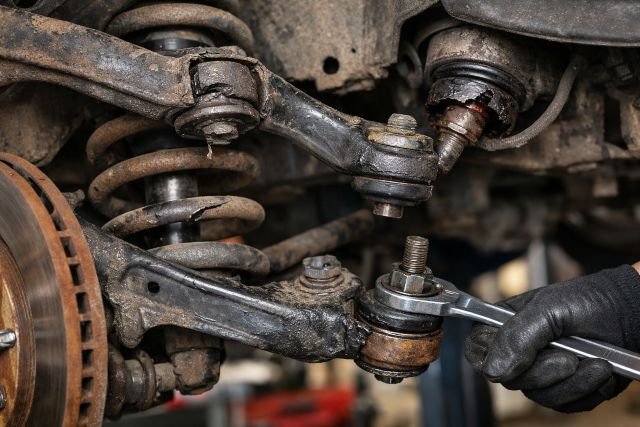
Ball joints allow the steering knuckle to move while supporting vertical and side loads. In SLA setups, both upper and lower ball joints can wear, and when they do, the wheel loses precise control. Early signs often include clunking over bumps, popping sounds during steering, and a loose or vague feel that gets worse over time.
Ball joint wear matters because it can progress to separation in extreme cases, and safety bulletins and recalls regularly treat premature ball joint wear as a crash-risk condition.
To diagnose, you want to check for play while watching the joint, not just shaking the tire and guessing. With the vehicle properly supported, apply movement at the wheel and observe the joint housing and stud area for visible movement or a delayed “click.” Also inspect the dust boot. A torn boot usually leads to grease loss and contamination, which accelerates wear.
Fixing ball joint issues depends on the vehicle. Some designs allow ball joint-only replacement, while others require replacing the entire control arm. After replacement, torque specifications and procedures matter. Some hardware should be torqued at ride height to avoid preloading bushings and creating future issues.
Alignment drift after impacts or component bend
A short long arm suspension can deliver excellent handling because it controls camber change well, but that also means it’s less forgiving of bent parts. A curb strike, pothole hit, or off-road impact can bend a control arm, shift a subframe slightly, or deform a knuckle mounting point. When that happens, alignments can become hard to achieve or hard to keep.
You may notice pulling, a steering wheel that won’t center properly, or tire wear that returns quickly. If the alignment shop struggles to get numbers into spec, or if a correction doesn’t hold, suspect a bent or shifted component rather than blaming the alignment itself.
A reliable approach is to inspect for obvious deformation, compare left and right control arms for symmetry, and look for witness marks that suggest the subframe has moved. Alignment printouts can also provide clues. If caster is dramatically different side-to-side and not easily adjustable in your platform, bent parts or subframe shift are common causes.
Shock and strut wear that mimics suspension looseness
In many SLA front suspensions, the control arms locate the wheel while the strut or shock controls motion. If damping is weak, the wheel can bounce and lose consistent contact with the road over bumps, which feels like instability and can create cupped tire wear that people often confuse with an alignment problem.
If you see scalloped or cupped tread patterns and the vehicle feels floaty after dips or undulations, worn dampers may be a major contributor. Replacing dampers in pairs typically restores control. If ride height changes or components are disturbed during installation, an alignment check afterward is wise.
Engineering references describing SLA/double wishbone setups emphasize the geometry advantages, but stability in real driving still depends heavily on proper damping and tight mounting points.
Sway bar link and bushing noise mistaken for control arm failure
A surprising number of “front end clunks” end up being sway bar end links or sway bar frame bushings. The sound is often lighter and more repetitive than a bushing shift clunk, and it tends to show up over small, fast bumps at low speed.
If you’re hearing a rattle rather than a deep knock, inspect end link joints for looseness and look for torn boots. Also check sway bar frame bushings for cracking or signs of the bar rubbing. Replacing these parts is usually less expensive than control arms and can restore quiet quickly.
How to diagnose short long arm suspension problems without guessing
Start by connecting the symptom to the condition. A single heavy clunk over a bigger bump often points to bushing or ball joint movement. A light rapid rattle over small imperfections points more toward sway bar links. A clunk during braking transitions often suggests fore-aft bushing movement, especially in lower control arm rear bushings.
Next, look at your tires before you touch anything. Inside edge wear can mean excessive negative camber or toe-out. Feathering usually points to toe issues. Cupping often points to poor damping or looseness. Tires are an excellent “data log” for suspension behavior.
Then inspect with the goal of seeing movement at the component. Having a helper rock the wheel while you watch the ball joint housing and bushing sleeves is more reliable than feeling movement through the tire alone. Any visible shift, knock, or delayed movement is meaningful.
Finally, use alignment data as confirmation. If toe is uneven and won’t hold, suspect worn bushings or looseness. If caster is far off and not adjustable, suspect bent parts or subframe shift.
Fixes that last for SLA suspensions
The most durable repairs treat the system, not just the noisiest part. If one control arm bushing is torn and another is cracked, addressing both often prevents repeat labor and improves symmetry left-to-right. Many modern vehicles are best served by complete control arm assemblies because you get fresh bushings and a fresh joint in one install.
Procedure matters too. Some bushings must be torqued at ride height to avoid twisting the rubber at rest, which can cause premature failure or “memory steer.” After any control arm or ball joint replacement, a proper alignment is essential for tire life, steering feel, and safety.
If you’ve lifted or leveled a truck with an SLA front end, factor in alignment correction. Geometry changes can place bushings and joints under different loads, which can accelerate wear if not corrected with appropriate alignment hardware.
Frequently asked questions about short long arm suspension problems
What are the most common short long arm suspension problems?
The most common issues are worn control arm bushings, worn ball joints, alignment drift from looseness or bent components, and sway bar link or bushing noise that’s often misdiagnosed as control arm failure. These problems show up as clunks, wandering steering, uneven tire wear, and instability during braking or over bumps.
Can bad control arm bushings cause alignment problems?
Yes. When bushings wear, the control arms can shift under load, which changes alignment angles such as toe and camber while you drive. That’s why a vehicle may still wander or eat tires even after an alignment if worn bushings remain in the system.
How do I know if my ball joint is failing?
Common signs include clunking over bumps, popping during turns, and steering looseness. A torn dust boot and visible play at the joint during inspection are strong indicators. Because ball joint wear can become a safety issue, it’s best to inspect and repair early.
Do I need an alignment after replacing control arms or ball joints?
In most cases, yes. Replacing control arms, bushings, or ball joints affects suspension geometry. An alignment ensures the vehicle tracks correctly and prevents premature tire wear.
Conclusion
Short long arm suspensions reward you with strong handling and good tire contact when everything is tight, but they can develop noticeable problems when any bushing, ball joint, or mounting point loosens. If you’re hearing clunks, dealing with wandering steering, or seeing uneven tire wear, start with the high-probability wear points, confirm movement visually during inspection, and use alignment data to validate the fix. Prioritize ball joint issues for safety, replace worn bushings or arms with quality parts, and always follow up with an alignment so your short long arm suspension performs the way it was designed to.