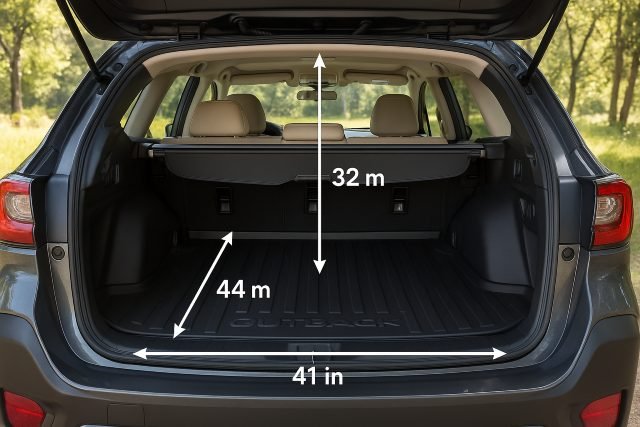
Understanding the Subaru Outback trunk capacity is essential whether you’re planning a long road trip, transporting outdoor gear, or simply comparing SUVs. In this detailed guide, we break down the Outback’s cargo dimensions, storage features, real-world usability, and how it compares within the midsize crossover segment. The goal is to help you determine whether the Outback delivers the practicality you need.
- Overview of Subaru Outback Cargo Volume
- Subaru Outback Trunk Dimensions & Usable Space Breakdown
- Key Storage Features That Enhance Outback Trunk Capacity
- How the Outback Compares to Competitors
- Real-World Examples of Subaru Outback Cargo Capacity
- Frequently Asked Questions About Subaru Outback Trunk Capacity
- Conclusion
Overview of Subaru Outback Cargo Volume
The Subaru Outback is known for its generous cargo area, and its popularity among travelers and outdoor enthusiasts is no coincidence. With 32.6 cubic feet of cargo space behind the rear seats and 75.6 cubic feet with the seats folded, the Outback provides flexibility that rivals many compact and midsize SUVs. These measurements come directly from Subaru’s official specifications, making them reliable benchmarks for shoppers evaluating cargo capacity.
This spacious interior is complemented by a low load floor, wide trunk opening, and well-designed interior ergonomics that make packing larger or irregular-shaped items easier. Because many crossover SUVs sacrifice vertical depth for styling, the Outback’s wagon-like proportions become a real advantage.
Subaru Outback Trunk Dimensions & Usable Space Breakdown
To truly understand how much the Subaru Outback can carry, it’s important to go beyond just cubic feet and look at the vehicle’s interior layout.
Behind the rear seats, the cargo area offers a wide loading width, extending nearly the full span of the cabin. This allows you to store items such as camping gear, luggage, strollers, or grocery bags without having to make multiple trips. The trunk floor length with seats up is roomy enough for medium to large suitcases, while folding the seats down creates a near-flat surface measuring well over six feet, accommodating longer objects like skis or furniture pieces.
Depth, height, and wheel-well spacing are also favorable thanks to Subaru’s symmetrical design philosophy. The trunk’s nearly rectangular shape reduces wasted space, which is something many curved-body SUVs struggle with. That means more real-world usability and fewer packing compromises.
Key Storage Features That Enhance Outback Trunk Capacity
Beyond raw trunk volume, Subaru includes several smart storage additions that enhance the Outback’s practicality. The underfloor storage compartment is ideal for valuables or tools, and its segment-leading space is helpful for securing items you don’t need often. The power rear gate provides convenient hands-free loading, and tie-down hooks keep cargo stable during travel.
Subaru also integrates roof rails that swing out to form built-in crossbars. This makes roof-mounted cargo boxes or adventure equipment easier to install. With the Outback’s roof load capacity of up to 150 lbs, you can expand your carrying options significantly when trunk space alone isn’t enough.
How the Outback Compares to Competitors
Compared to vehicles like the Toyota RAV4, Honda CR-V, or Ford Escape, the Subaru Outback’s trunk capacity remains highly competitive. The CR-V has slightly more volume behind the rear seats, but the Outback’s longer load floor and lower height often make it easier to handle bulkier items. Similarly, while the RAV4 offers a tall cargo area, the Outback’s flatter surface and deeper trunk space benefit travelers who carry long gear or stack wider loads.
Independent tests conducted by automotive reviewers such as Car and Driver and MotorTrend show the Outback’s cargo area fits more real-world luggage than many SUVs with higher official cubic-foot ratings. This highlights how design efficiency can matter as much as raw numbers.
Real-World Examples of Subaru Outback Cargo Capacity
Owners often appreciate the Outback’s versatility for weekend adventures or daily tasks. For example, a family of four can easily pack for a camping trip with multiple duffel bags, coolers, and tents stored behind the rear seats. Outdoor sports enthusiasts often transport bicycles (when wheels are removed) or surfboards using a combination of the trunk and roof crossbars.
During home improvement projects, users have reported loading boxed furniture, landscaping supplies, or even small appliances due to the long floor length. This makes the Outback a practical option for suburban lifestyles where versatile cargo capability is valuable.
Frequently Asked Questions About Subaru Outback Trunk Capacity
How big is the Subaru Outback trunk with seats up?
The Outback offers 32.6 cubic feet of space, ideal for luggage, groceries, strollers, and sports equipment.
What is the maximum trunk capacity with seats folded?
When the rear seats are laid flat, the cargo space expands to 75.6 cubic feet.
Can you sleep in a Subaru Outback?
Yes. Many owners comfortably sleep inside the vehicle thanks to its long, flat cargo area. Adding a camping mattress improves comfort.
Is the Subaru Outback good for road trips?
Its large trunk capacity, comfortable interior, and roof rails make it one of the most road-trip-friendly SUVs in its class.
Conclusion
The Subaru Outback trunk capacity stands out for its combination of generous cargo volume, smart storage features, and real-world practicality. Whether you’re commuting, traveling cross-country, or gearing up for an adventurous weekend, the Outback’s cargo system is designed to meet a wide variety of needs. With its low load floor, wide opening, and clever interior configurations, it remains one of the most versatile vehicles in the midsize crossover segment.
If you’re comparing SUVs or simply exploring what your Outback can do, understanding its storage capabilities will help you make the most of every journey.