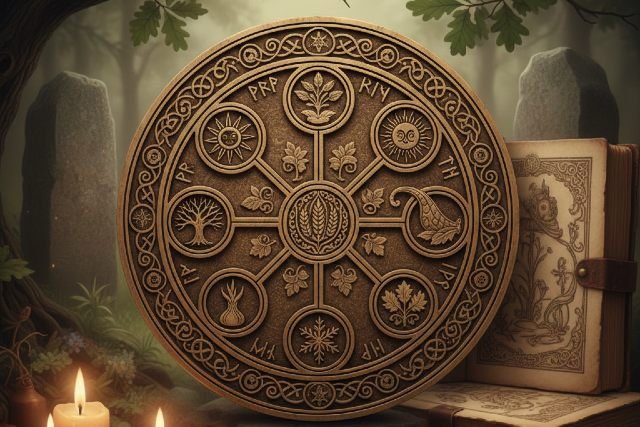
The wheel of the year is an ancient seasonal framework that reflects humanity’s enduring relationship with nature, time, and the cycles of life. Based on the movement of the sun and the changing seasons, the wheel of the year organizes the annual cycle into meaningful phases of growth, rest, death, and renewal. From early agricultural societies to modern Pagan traditions, the wheel of the year has remained a powerful symbol of balance and continuity.
- What Is the Wheel of the Year?
- Origins of the Wheel of the Year
- Historical Development of the Wheel of the Year
- The Eight Sabbats of the Wheel of the Year
- Spiritual Meaning of the Wheel of the Year
- Modern Practice of the Wheel of the Year
- How to Begin Following the Wheel of the Year
- Frequently Asked Questions About the Wheel of the Year
- Conclusion
Today, the wheel of the year is practiced worldwide by Wiccans, Druids, Pagans, and nature-centered spiritual seekers. It is also increasingly embraced by people who want to live more seasonally and mindfully, even without religious affiliation.
What Is the Wheel of the Year?
The wheel of the year is a cyclical calendar made up of eight seasonal festivals known as Sabbats. These festivals correspond to key astronomical events such as solstices and equinoxes, as well as traditional agricultural milestones like planting and harvesting. Rather than measuring time in a straight line, the wheel of the year presents time as a circle, emphasizing repetition, rhythm, and renewal.
This cyclical understanding of time reflects how ancient societies experienced life. Seasons returned, crops regrew, and the sun’s strength waxed and waned in a predictable yet sacred pattern. The wheel of the year provided both structure and spiritual meaning to these changes.
Origins of the Wheel of the Year
The origins of the wheel of the year can be traced back thousands of years to prehistoric farming communities. Survival depended on understanding seasonal shifts, weather patterns, and the movement of the sun. Monumental sites such as Stonehenge in England and Newgrange in Ireland were constructed with precise solar alignments, demonstrating the importance of solstices and equinoxes as early as 3000 BCE.
Celtic culture played a particularly influential role in shaping what would later become the modern wheel of the year. The ancient Celts divided the year using four major seasonal festivals that marked transitions between light and dark, growth and rest. These celebrations were deeply tied to the land and were essential for both spiritual and agricultural life.
Historical Development of the Wheel of the Year
Before Christianity spread across Europe, seasonal festivals were community-wide events. They combined ritual, storytelling, feasting, and agricultural rites, reinforcing social bonds and shared spiritual beliefs. Deities associated with fertility, harvest, and the natural world were honored during these times.
As Christianity expanded, many Pagan celebrations were absorbed into Christian observances. Over time, older traditions were reinterpreted rather than erased. Elements of Samhain influenced All Saints’ Day, while Yule traditions became associated with Christmas. Although the religious context shifted, the seasonal significance of these festivals endured.
The modern version of the wheel of the year emerged during the twentieth century, particularly through the work of Gerald Gardner and the revival of Wicca and Druidry. These movements combined ancient Celtic festivals with solar holidays, forming the eightfold wheel that is widely recognized today.
The Eight Sabbats of the Wheel of the Year
Each Sabbat on the wheel of the year represents a distinct phase in the natural cycle. Together, they tell the story of birth, growth, decline, death, and rebirth.
Yule, celebrated at the winter solstice, marks the longest night of the year and the rebirth of the sun. It symbolizes hope, renewal, and the promise of returning light during the darkest time of the year.
Imbolc follows as the first signs of spring begin to appear. Traditionally associated with purification and new beginnings, Imbolc honors the gradual return of warmth and life beneath the frozen earth.
Ostara occurs at the spring equinox, when day and night are in balance. It represents fertility, growth, and fresh starts. Many of its symbols, such as eggs and seeds, later influenced modern Easter traditions.
Beltane celebrates life in full bloom. Taking place as spring transitions into summer, it is a festival of passion, creativity, and vitality. Historically, fires were lit to bless crops and livestock.
Litha, or the summer solstice, marks the sun at its peak. It is a time of abundance, strength, and celebration of achievements, even as the days slowly begin to shorten.
Spiritual Meaning of the Wheel of the Year
The wheel of the year is deeply symbolic, representing the natural flow of existence. It teaches that nothing is permanent and that every ending leads to a new beginning. Many practitioners align their personal growth, goals, and spiritual reflection with the seasonal energies of the wheel.
By observing these cycles, people gain a deeper understanding of balance, patience, and acceptance. The wheel of the year encourages living in harmony with nature rather than resisting change.
Modern Practice of the Wheel of the Year
In modern times, the wheel of the year is practiced in diverse and flexible ways. Some follow traditional rituals rooted in Pagan religions, while others adapt the wheel into a personal seasonal mindfulness practice. Urban practitioners may celebrate indoors with candles and meditation, while rural practitioners often incorporate outdoor rituals and nature walks.
The adaptability of the wheel of the year is one reason it remains relevant today. It allows individuals to reconnect with natural rhythms even in fast-paced modern societies.
How to Begin Following the Wheel of the Year
Starting with the wheel of the year does not require complex rituals or formal initiation. Many people begin by simply observing seasonal changes and reflecting on how they feel throughout the year. Keeping a journal, creating seasonal intentions, or acknowledging solstices and equinoxes can be meaningful first steps.
Over time, these small practices can deepen awareness and create a stronger connection to both nature and personal growth cycles.
Frequently Asked Questions About the Wheel of the Year
The wheel of the year is a Pagan seasonal calendar that tracks the natural cycles of the Earth through eight festivals. It is not limited to one religion and can be practiced spiritually or symbolically.
You do not need to be Pagan to follow the wheel of the year. Many people use it as a guide for seasonal living, mindfulness, and self-reflection.
The wheel of the year is still relevant because it helps people reconnect with nature, slow down, and live more intentionally in harmony with the changing seasons.
Conclusion
The wheel of the year offers a timeless framework for understanding life as a cycle rather than a straight path. Rooted in ancient history yet adaptable to modern life, it continues to guide people toward balance, reflection, and renewal. By honoring the wheel of the year, individuals reconnect with the Earth’s rhythms and rediscover a deeper sense of meaning within the ever-turning cycle of existence.