Selecting the correct wheel nuts is essential for vehicle safety and long-term performance. Although often overlooked, wheel nuts are responsible for holding your wheels securely in place under constant stress, vibration, and load. Using incompatible or low-quality wheel nuts can lead to wheel loosening, uneven wear, or serious safety risks on the road.
This wheel nuts buying guide explains everything you need to know about materials, thread sizes, seat types, and torque specifications. Whether you are replacing factory hardware or upgrading aftermarket wheels, understanding these factors will help you make the right decision.
What Are Wheel Nuts and Their Purpose
Wheel nuts are threaded fasteners designed to secure wheels to the vehicle hub by tightening onto wheel studs or bolts. When installed and torqued correctly, they apply uniform clamping force that keeps the wheel firmly seated against the hub. Properly fitted wheel nuts ensure stable handling, effective braking, and even tire wear.
Automotive safety studies, including data from the National Highway Traffic Safety Administration, show that incorrect wheel installation and fastener failure contribute to thousands of preventable road incidents each year.
Wheel Nuts by Material Type
The material of wheel nuts affects their strength, corrosion resistance, and overall durability. Steel wheel nuts are the most common choice and are widely used by vehicle manufacturers due to their high tensile strength and affordability. They perform reliably in everyday driving conditions but may require protective coatings to prevent rust.
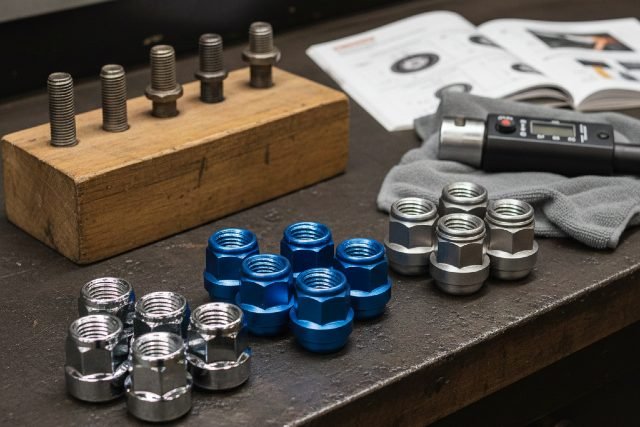
Chrome-plated wheel nuts are steel fasteners coated with chrome for enhanced corrosion resistance and visual appeal. They are commonly used on passenger vehicles and offer a balance between durability and appearance, although the chrome layer may wear over time.
Aluminum wheel nuts are significantly lighter than steel and are often used in racing or show vehicles. While they reduce rotational weight and offer stylish color options, they are not recommended for daily driving due to lower strength and faster wear.
Titanium wheel nuts represent a premium option. They provide exceptional strength, corrosion resistance, and reduced weight, but their high cost limits their use primarily to high-performance or motorsport applications. Automotive engineering standards generally recommend steel wheel nuts for street vehicles because of their superior load-bearing capability.
Understanding Wheel Nut Thread Sizes
Thread size compatibility is critical when selecting wheel nuts. Using the wrong thread pitch or diameter can damage wheel studs and compromise safety. Common metric thread sizes include M12x1.25, M12x1.5, and M14x1.5, while older American vehicles often use 1/2″-20 threads.
The correct thread size is determined by the vehicle manufacturer and can be found in the owner’s manual or service documentation. Forcing mismatched wheel nuts onto studs can lead to cross-threading, stripped threads, and eventual wheel failure.
Wheel Nut Seat Types Explained
The seat type refers to the shape of the area where the wheel nut contacts the wheel. This contact point is essential for proper load distribution and wheel alignment. Conical seat wheel nuts, also known as 60-degree taper seats, are commonly used with aftermarket wheels. Ball or radius seat wheel nuts are frequently found on European vehicles such as BMW, Audi, and Volkswagen. Flat seat wheel nuts are typically used on trucks and heavy-duty applications and often include a washer.
Using the incorrect seat type can cause the wheel to loosen over time, even when the wheel nuts are tightened to the correct torque specification.
Wheel Nut Torque Specifications
Proper torque is one of the most important factors in wheel nut installation. Torque refers to the amount of rotational force applied when tightening wheel nuts. Passenger cars typically require torque values between 80 and 100 foot-pounds, while SUVs and light trucks may require higher values depending on wheel and hub design.
Always follow the torque specifications provided by the vehicle manufacturer. A calibrated torque wrench should be used, and wheel nuts should be tightened in a crisscross pattern to ensure even pressure. It is also recommended to recheck torque after driving 50 to 100 miles, especially after wheel installation or rotation.
How to Choose the Right Wheel Nuts
Choosing the right wheel nuts starts with identifying your vehicle’s specifications, including thread size, seat type, and torque requirements. The type of wheels installed, whether factory or aftermarket, also plays a significant role in determining compatibility. Driving conditions such as daily commuting, off-road use, or performance driving should influence material choice.
Quality should always take priority over cost. Low-quality wheel nuts may fail prematurely and lead to expensive repairs or dangerous driving conditions.
Common Wheel Nut Issues and Solutions
Wheel nuts that repeatedly loosen are often the result of incorrect torque, improper seat type, or incompatible threads. Verifying manufacturer specifications and ensuring proper installation typically resolves this issue. Stripped threads usually occur due to overtightening or cross-threading and require immediate replacement of both the wheel nuts and damaged studs to maintain safety.
Frequently Asked Questions About Wheel Nuts
Using the wrong wheel nuts can result in wheel vibration, uneven tire wear, or complete wheel detachment. Old wheel nuts can be reused if they are undamaged, but replacing them during wheel upgrades or tire changes is generally recommended. Locking wheel nuts provide additional protection against theft and are especially useful for aftermarket or high-value wheels.
Conclusion
Wheel nuts may be small components, but their impact on vehicle safety and performance is significant. Understanding the differences in materials, thread sizes, seat types, and torque requirements allows you to select the right wheel nuts with confidence.
By choosing high-quality wheel nuts and installing them according to manufacturer specifications, you ensure safer driving, better handling, and longer-lasting wheels. This wheel nuts buying guide serves as a reliable reference for anyone looking to make informed and responsible automotive maintenance decisions.