If you’re planning a trip to the Canadian North, you’ve probably heard of Iqaluit, Yellowknife, or even Churchill. Yet one place that quietly delivers many of the same “wow” experiences — often with fewer crowds and deeper cultural authenticity — is rankin inlet.
- Where Is Rankin Inlet and Why Its Location Matters
- Rankin Inlet Is a Northern Hub With Real Infrastructure
- Inuit Culture in Rankin Inlet Is Authentic and Present Every Day
- The History of Rankin Inlet Is One of Change, Resilience, and Northern Identity
- Marble Island Near Rankin Inlet Is a Hidden Gem of Nunavut
- Wildlife Around Rankin Inlet Is World-Class Without the Crowds
- Outdoor Adventure in Rankin Inlet Is More Accessible Than People Assume
- Rankin Inlet Is Big Enough for Comfort but Small Enough for Connection
- Why Rankin Inlet Feels More Real Than “Famous” Northern Destinations
- Practical Travel Tips for Visiting Rankin Inlet
- Featured Snippet Answer: Why Is Rankin Inlet Underrated?
- Frequently Asked Questions About Rankin Inlet
- Conclusion: Rankin Inlet Belongs on More Canadian Travel Lists
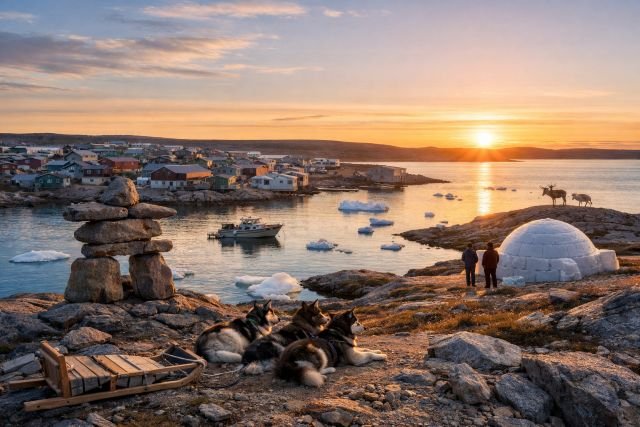
Located along the western edge of Hudson Bay in Nunavut’s Kivalliq Region, Rankin Inlet (Kangiqiniq) is a town that blends Arctic landscapes, Inuit heritage, and modern northern infrastructure in a way that makes it both accessible and meaningful. It is not staged for tourists. It is not overly commercialized. It is simply a vibrant northern community with a powerful identity, and that’s exactly why it deserves more attention.
With nearly 3,000 residents, Rankin Inlet is also one of Nunavut’s most significant population centres, which means travelers benefit from services, transport connections, and community life that smaller hamlets cannot always offer.
So why is rankin inlet considered one of Canada’s most underrated northern towns? The answer lies in its location, history, culture, wildlife, and the rare balance it strikes between authenticity and comfort.
Where Is Rankin Inlet and Why Its Location Matters
Rankin Inlet sits on the northwest coast of Hudson Bay and serves as a key community in Nunavut’s Kivalliq Region. Its location is significant because it functions as a natural gateway community. While it is undeniably remote, it is not isolated in the way that many people imagine when they think of Arctic towns.
Because Rankin Inlet operates as a regional hub, it has transportation links and infrastructure that make travel more manageable. This makes it a great choice for visitors who want to experience the North without jumping straight into a difficult expedition-style trip.
The geography also adds beauty. Hudson Bay creates dramatic coastlines, shifting light patterns, and wildlife-rich waters. The Arctic environment here feels vast and cinematic, but the town still offers a sense of stability and community.
Rankin Inlet Is a Northern Hub With Real Infrastructure
A major reason Rankin Inlet deserves more recognition is that it functions as a critical transportation and service hub. This matters for visitors because it changes what travel feels like. Instead of struggling to find accommodations or basic services, travelers benefit from a community designed to support year-round living at a meaningful scale.
Rankin Inlet Airport is a major connector for the region. Official statistics show that it has handled large numbers of aircraft movements, highlighting its importance in northern transportation.
In addition to that, public information also points to ongoing airport investment and terminal development in the mid-2020s, which reflects a broader trend of infrastructure growth. These improvements are strong signals that Rankin Inlet’s importance is increasing, not shrinking.
That makes it a better choice for many travelers than smaller, more logistically difficult communities, especially for people visiting Nunavut for the first time.
Inuit Culture in Rankin Inlet Is Authentic and Present Every Day
One of the most meaningful reasons to visit rankin inlet is the opportunity to experience Inuit culture in a community where it is not performed but lived. Rankin Inlet is predominantly Inuit, and its language, traditions, and community rhythm reflect that identity.
This makes the experience fundamentally different from destinations where Indigenous culture is shown mainly through tours or museum displays. In Rankin Inlet, the culture shapes everyday life. Travelers notice it in the art, the local storytelling, the seasonal patterns of living, and the way community relationships function.
For visitors seeking respectful cultural experiences, the best approach is to engage through community-led spaces, local artisans, and guided opportunities where the experience is shared on local terms.
The History of Rankin Inlet Is One of Change, Resilience, and Northern Identity
Rankin Inlet’s modern development cannot be understood without looking at its mid-20th-century transformation. One of the most important historical events was the opening of the North Rankin Nickel Mine during a period when nickel prices were climbing significantly. The mine operated from 1957 to 1962 and played a major role in shaping the settlement patterns of the region.
This industrial shift contributed to a transition from seasonal movement toward a more settled community structure. It also changed local employment patterns, education opportunities, and community life. In many ways, Rankin Inlet is a case study in how northern industry influenced Inuit settlement while Inuit identity remained strong through that transition.
For history-focused travelers, this adds depth to the town. You are not just visiting for scenery. You are visiting a place with a complex modern story rooted in resilience and change.
Marble Island Near Rankin Inlet Is a Hidden Gem of Nunavut
One of the most remarkable nearby destinations is Marble Island, located around 40 km northeast of Rankin Inlet. Marble Island is known for its striking quartzite landscape and cultural importance, and it holds a unique designation under the Nunavut Land Claims Agreement as an Area of Exclusive Possession.
For travelers, that designation is important. It indicates that the site is not simply a scenic attraction but also a place of deep cultural and historical meaning. Visiting the area responsibly and with local guidance transforms it from a “cool landscape” into a meaningful experience connected to Inuit stories and history.
Because Marble Island is not heavily commercialized, it also feels genuinely wild. That sense of discovery is part of why Rankin Inlet stands out compared to better-known northern destinations.
Wildlife Around Rankin Inlet Is World-Class Without the Crowds
Many people associate northern wildlife with expensive polar bear-focused trips in Churchill. But Rankin Inlet offers its own high-quality wildlife viewing, particularly because Hudson Bay supports rich marine ecosystems and seasonal animal movement.
Beluga whales are common along western Hudson Bay Nunavut communities, including Rankin Inlet, depending on the time of year. This is supported by official tourism information about Nunavut’s beluga distribution.
Destination Nunavut also highlights the broader possibility of whale sightings in the region and the diversity of wildlife travelers may encounter.
What makes this especially appealing is the atmosphere. Wildlife here often feels like part of the environment rather than a packaged tourist product. With local guidance and responsible travel practices, it becomes a more immersive and respectful experience.
Outdoor Adventure in Rankin Inlet Is More Accessible Than People Assume
A common misconception about Arctic travel is that it requires extreme gear, expert survival training, and a massive budget. Rankin Inlet challenges that belief. While it is still an Arctic destination, it is a community where outdoor life is practical and seasonal.
Local information highlights fishing opportunities in rivers such as the Meliadine River and Diane River, both popular with residents.
This means visitors can build a realistic itinerary around cultural experiences, coastal exploration, fishing excursions, and wildlife viewing without necessarily needing to commit to an expensive expedition. With the right local guidance and planning, Rankin Inlet can be a comfortable “first Arctic town” while still delivering the feeling of a true northern environment.
Rankin Inlet Is Big Enough for Comfort but Small Enough for Connection
Rankin Inlet’s size is a key part of its appeal. With a population of 2,975 in the 2021 Census, it offers the services of a regional hub while still feeling like a personal and connected community.
In practical terms, this means travelers benefit from accommodations, transport access, and services. In emotional terms, it means the town has a warmth that many larger places lose. People talk to you. They ask why you’re there. They often share stories. The experience becomes human, not transactional.
That balance is part of why Rankin Inlet remains underrated. It doesn’t rely on flashy branding. It simply delivers real northern life.
Why Rankin Inlet Feels More Real Than “Famous” Northern Destinations
Some northern destinations are known mainly because of their marketing appeal. Others become famous because they fit a specific adventure narrative. Rankin Inlet feels different because it is a functioning northern town first and a travel destination second.
It is a regional hub that supports surrounding communities, and it continues to grow through major infrastructure development such as airport expansion.
For travelers, this creates a richer experience. You are not just visiting an “Arctic postcard.” You are witnessing Nunavut as it is lived today.
Practical Travel Tips for Visiting Rankin Inlet
Traveling to Rankin Inlet is straightforward compared to many Arctic destinations, but it still requires realistic planning.
Weather has a major influence on flight schedules, so flexibility is essential. Building in buffer days is one of the best ways to protect your trip. Booking accommodations early is equally important, because capacity is limited compared to southern cities.
Respect also matters deeply in a close-knit community. Visitors should be mindful about photography, ask permission when appropriate, and approach cultural experiences with humility. Rankin Inlet offers powerful experiences, but it is not a theme park. It is someone’s home.
The best tip of all is to ask locals what is most worth doing during the week you arrive. Because seasons and conditions shape daily life, the best experiences often depend on local timing.
Featured Snippet Answer: Why Is Rankin Inlet Underrated?
Rankin Inlet is underrated because it offers authentic Inuit culture, remarkable Hudson Bay landscapes, rich wildlife viewing, and important modern northern history while still being one of Nunavut’s most accessible regional hubs. It combines real community life with true Arctic beauty without mass tourism.
Frequently Asked Questions About Rankin Inlet
Is Rankin Inlet worth visiting?
Yes, Rankin Inlet is worth visiting for travelers who want a genuine Nunavut experience that combines Inuit culture, wildlife opportunities, and Arctic landscapes without requiring a high-intensity expedition.
What is Rankin Inlet known for?
Rankin Inlet is known for its role as a regional hub, its Inuit cultural identity, nearby Marble Island, and its historical connection to the North Rankin Nickel Mine, which operated from 1957 to 1962.
How do you get to Rankin Inlet?
Rankin Inlet is primarily accessed by air through Rankin Inlet Airport (YRT), which acts as a major connector for the Kivalliq Region and has been the focus of ongoing infrastructure investment.
Can you see whales near Rankin Inlet?
Yes, beluga whales are common along western Hudson Bay communities in Nunavut, including Rankin Inlet, depending on seasonal movement and conditions.
What is the population of Rankin Inlet?
Rankin Inlet’s population was recorded as 2,975 in the 2021 Census, making it one of Nunavut’s larger communities.
Conclusion: Rankin Inlet Belongs on More Canadian Travel Lists
Too often, Canada’s North is spoken about like it is one single destination. In reality, it is made up of distinct communities, each with its own culture, history, and relationship to the land. Rankin inlet stands out because it offers the kind of authentic northern experience many travelers crave, while still providing the infrastructure and accessibility that makes the trip feel achievable.
It is a place where Inuit culture is present in everyday life, where Hudson Bay landscapes feel enormous and alive, where wildlife is part of the natural environment, and where modern northern history adds depth to every conversation.