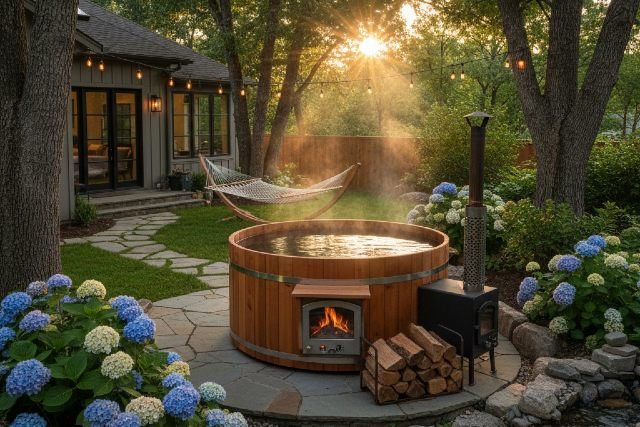
A wood fired hot tub brings warmth, relaxation, and natural beauty to any backyard. Unlike electric or gas-powered spas, this traditional soaking solution relies on firewood to heat water, creating a more authentic and eco-friendly experience. Homeowners are increasingly choosing wood fired hot tubs because they offer off-grid functionality, lower operating costs, and a timeless aesthetic that blends effortlessly with outdoor spaces.
- What Is a Wood Fired Hot Tub?
- Why Choose a Wood Fired Hot Tub for Your Backyard?
- Wood Fired Hot Tub Backyard Design Ideas
- Best Materials for a Wood Fired Hot Tub
- Internal vs External Wood Fired Stove
- Cost of Installing a Wood Fired Hot Tub
- Installation Considerations for Backyards
- Maintenance and Long-Term Care
- Health Benefits of Using a Wood Fired Hot Tub
- Conclusion
This article explores how a wood fired hot tub can transform your backyard, offering design inspiration, practical insights, and expert guidance to help you make an informed decision.
What Is a Wood Fired Hot Tub?
A wood fired hot tub is a soaking tub heated by a wood-burning stove rather than electricity or gas. The stove warms the water through direct heat and natural convection, allowing the water to circulate without the need for pumps or complex systems. This makes wood fired hot tubs especially appealing for backyards, rural properties, and off-grid locations where electrical access may be limited.
Because of their simple construction, wood fired hot tubs are often easier to maintain and repair compared to modern electric spas. Their design emphasizes function, durability, and a closer connection to nature.
Why Choose a Wood Fired Hot Tub for Your Backyard?
One of the main reasons homeowners choose a wood fired hot tub is energy efficiency. Electric hot tubs can significantly increase monthly utility bills, while a wood fired system uses readily available firewood. According to the U.S. Energy Information Administration, heating water electrically is one of the most energy-intensive household activities, making wood-fired alternatives more cost-effective over time.
Another advantage is flexibility. A wood fired hot tub can be installed almost anywhere, making it ideal for backyards that lack electrical infrastructure. Many users also appreciate the calming ritual of lighting the fire and waiting for the water to warm, which adds to the overall relaxation experience.
Wood Fired Hot Tub Backyard Design Ideas
Rustic Backyard Retreat
A rustic design highlights natural materials and blends seamlessly with outdoor landscapes. A cedar or redwood wood fired hot tub placed on a stone or gravel base creates a cozy, cabin-like atmosphere. This style works especially well in wooded or rural backyards where the tub becomes a natural extension of the environment.
Modern Backyard Design
A wood fired hot tub can also complement a modern backyard aesthetic. Stainless steel tubs paired with clean lines, concrete surfaces, and minimal landscaping create a sleek and contemporary look. An external wood fired stove helps maintain the modern appearance while improving safety and comfort.
Scandinavian-Inspired Outdoor Spa
Scandinavian design focuses on simplicity, wellness, and connection to nature. A circular wooden wood fired hot tub surrounded by privacy screens, soft lighting, and neutral tones creates a calming spa-like setting. This design encourages year-round use, particularly during colder months.
Best Materials for a Wood Fired Hot Tub
The most common materials used in wood fired hot tubs include cedar, redwood, and stainless steel. Cedar is popular due to its natural resistance to rot and insects, as well as its ability to retain heat. Redwood offers exceptional durability and visual appeal, making it a long-lasting option for outdoor use. Stainless steel provides a modern look and requires minimal maintenance, although it typically comes at a higher initial cost.
Choosing the right material depends on your climate, budget, and preferred aesthetic.
Internal vs External Wood Fired Stove
An internal wood fired stove is located inside the tub and heats water more quickly, but it reduces soaking space and requires extra caution. An external stove sits outside the tub and connects through water inlets, allowing for more room and improved safety. For most backyard installations, an external wood fired stove is the preferred option due to ease of maintenance and family-friendly design.
Cost of Installing a Wood Fired Hot Tub
The cost of a wood fired hot tub varies depending on size, material, and installation requirements. On average, homeowners can expect to invest between $4,500 and $12,000 for a complete setup. This includes the tub, wood stove, foundation, and basic accessories. Compared to electric hot tubs, which often exceed $15,000 when installation and long-term energy costs are considered, wood fired hot tubs offer strong long-term value.
Installation Considerations for Backyards
Proper placement is essential for safety and longevity. A wood fired hot tub should be installed on a level, well-drained surface with adequate clearance from buildings and trees. Fire safety measures such as heat-resistant bases and proper chimney ventilation are critical. Local building codes and regulations should always be reviewed before installation.
Maintenance and Long-Term Care
Maintaining a wood fired hot tub is relatively straightforward. Regular water changes help prevent buildup and reduce the need for chemical treatments. Ash from the stove should be removed routinely, and the tub’s exterior should be treated periodically with natural oils to protect the wood. With consistent care, a high-quality wood fired hot tub can last for decades.
Health Benefits of Using a Wood Fired Hot Tub
Soaking in a wood fired hot tub promotes muscle relaxation, improves circulation, and reduces stress. Research from Harvard Health indicates that heat therapy can help relieve joint pain and support cardiovascular health. The combination of warm water and a natural outdoor setting enhances both physical and mental well-being.
Conclusion
A wood fired hot tub is a timeless addition to any backyard, offering a balance of sustainability, relaxation, and visual appeal. Whether your goal is to create a rustic escape or a modern outdoor spa, a wood fired hot tub provides an authentic soaking experience that electric alternatives cannot match.
With proper planning, thoughtful design, and regular maintenance, a wood fired hot tub can become the centerpiece of your backyard and a long-term investment in comfort, wellness, and outdoor living.