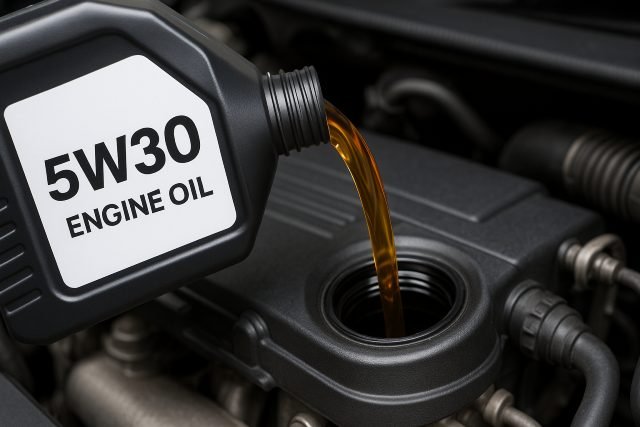
Choosing the right motor oil is one of the most important maintenance decisions a vehicle owner can make, and 5W30 engine oil continues to be one of the most trusted options. Its versatility, balanced viscosity, and consistent performance in both hot and cold conditions make it a preferred choice for millions of drivers and automotive manufacturers worldwide. Within the first few minutes of driving, 5W30 oil begins working to reduce friction, enhance efficiency, and protect delicate engine components, all while contributing to long-term reliability and lower repair costs.
- What the 5W30 Rating Really Means
- Cold-Start Performance and Reduced Engine Wear
- Protection at High Temperatures
- Improved Fuel Efficiency and Enhanced Engine Performance
- Resistance Against Sludge, Deposits, and Oxidation
- Extended Lifespan for Internal Engine Components
- Reliable Performance in a Wide Range of Climates
- Suited for Both Everyday Driving and High-Demand Conditions
- Synthetic vs. Conventional 5W30: Which Is Better?
- Common Questions About 5W30 Engine Oil
- Conclusion: Why 5W30 Engine Oil Remains a Trusted Choice
Understanding why 5W30 engine oil performs so well requires a closer look at its formulation and the science behind viscosity ratings. This article explores the meaning of 5W30, its advantages, real-world performance benefits, and why it remains a top recommendation for modern engines.
What the 5W30 Rating Really Means
The term 5W30 refers to the oil’s viscosity behavior in cold and hot temperatures. The “5W” rating describes how the oil flows at cold temperatures, where the “W” stands for winter. The lower the number before the W, the easier the oil circulates through the engine during cold starts. The “30” rating indicates the oil’s thickness at normal engine operating temperature. When combined, these ratings show that 5W30 oil flows quickly in cold conditions while maintaining enough thickness at high temperatures to properly protect moving engine parts. This balance is what makes 5W30 suitable for a wide range of climates and engine types, including small cars, SUVs, light trucks, and vehicles with turbocharged engines.
Cold-Start Performance and Reduced Engine Wear
Cold starts are a leading cause of internal engine wear because oil tends to thicken when temperatures drop, slowing its ability to reach vital components. According to the American Petroleum Institute (API), the majority of engine wear occurs within the first few seconds after ignition. Because 5W30 engine oil flows more easily at low temperatures, it circulates rapidly and forms a protective layer faster than thicker oils. This ensures smoother morning starts, less friction, and reduced metal-to-metal contact, especially in colder regions where temperatures often fall below freezing. Drivers commonly report quieter startups, more consistent idling, and improved long-term engine condition simply by using an oil that performs well in winter environments.
Protection at High Temperatures
Modern engines operate at higher temperatures due to advanced engineering, turbocharging, and tighter internal tolerances. Without the right oil, excessive heat can cause viscosity breakdown, thinning, and reduced lubrication. 5W30 engine oil is designed to withstand these temperature extremes, maintaining a stable protective film even when engines reach operating temperatures of 100°C or more. This prevents the oil from evaporating too quickly, ensures consistent lubrication, and minimizes long-term wear on pistons, bearings, and valve train components. In warmer climates or during demanding driving such as towing, long-distance travel, and high-speed highway use, the stability of 5W30 becomes a critical advantage.
Improved Fuel Efficiency and Enhanced Engine Performance
One of the practical benefits of 5W30 engine oil is its ability to improve fuel economy. Because it is engineered to reduce internal friction, the engine expends less energy moving its components, which results in smoother acceleration and better fuel efficiency. Studies by major oil manufacturers, including Castrol and Mobil 1, have shown that using the correct viscosity can improve fuel economy by approximately one to two percent. While this number may appear small, it becomes significant over thousands of miles. Drivers often notice more responsive throttle performance, smoother gear changes in automatic transmissions, and generally more efficient engine behavior after switching to a high-quality synthetic 5W30 oil.
If integrating this article into a larger website, you can consider linking internally to guides such as “How Often Should You Change Your Engine Oil?” or “Synthetic vs. Conventional Oil” to enhance user engagement and SEO.
Resistance Against Sludge, Deposits, and Oxidation
Cleanliness inside the engine is essential for long-term reliability. With inadequate or low-quality oil, engines begin accumulating harmful sludge and carbon deposits that can block oil passages, reduce efficiency, and eventually cause mechanical failure. Premium 5W30 engine oils contain detergents and dispersants designed to prevent the formation of sludge and keep contaminants suspended until the next oil change. This results in cleaner pistons, reduced carbon buildup, and more efficient lubrication throughout the engine’s life.
External sources like the Society of Automotive Engineers (SAE) and API provide extensive testing data confirming that modern synthetic 5W30 formulations offer superior oxidation resistance, which further protects the oil from breaking down under heat and pressure.
Extended Lifespan for Internal Engine Components
The protective qualities of 5W30 engine oil contribute directly to engine durability. Synthetic versions of 5W30 have been shown to reduce wear significantly compared to conventional oils, sometimes by as much as 50 percent according to laboratory test results provided by major lubricant brands. By maintaining a consistent viscosity under various temperature conditions, 5W30 ensures that essential components, including camshafts, crankshafts, cylinder walls, piston rings, and turbocharger bearings, remain well protected during operation. This directly translates into fewer mechanical problems and longer engine life, which is particularly important for high-mileage vehicles or engines subjected to heavy use.
Reliable Performance in a Wide Range of Climates
One reason 5W30 is universally recommended is its adaptability to different climates. In cold weather, it flows quickly enough to lubricate internal parts during startup. In hot weather, it maintains a thick enough film to prevent wear and protect against oil burn-off. Drivers in regions with extreme seasonal temperature differences benefit greatly from this versatility. The oil’s ability to perform consistently in both summer heat and winter cold means fewer issues related to poor lubrication, easier vehicle maintenance planning, and more dependable year-round operation.
Suited for Both Everyday Driving and High-Demand Conditions
Whether you use your car for daily commuting in the city or long-distance highway travel, 5W30 oil performs reliably. Stop-and-go traffic generates frequent temperature fluctuations that can stress lower-quality oils, while long journeys maintain sustained heat levels that may cause oxidation. Vehicles used for towing trailers, carrying heavy loads, or driving in mountainous regions also place additional strain on the engine. Because 5W30 oil balances low-temperature flow and high-temperature stability, it effectively supports all these driving scenarios without compromising performance. This makes it the preferred viscosity for drivers who want a single oil that performs well in both everyday and demanding conditions.
Synthetic vs. Conventional 5W30: Which Is Better?
Although both synthetic and conventional 5W30 oils meet minimum performance requirements, synthetic 5W30 is generally superior due to its advanced formulation. Synthetic oils are engineered for enhanced thermal resistance, better protection against deposits, improved longevity, and more consistent performance under extreme conditions. They tend to last longer between oil changes, often reaching intervals between 7,500 and 10,000 miles depending on driving habits. Conventional oils, while more affordable, break down more easily and usually require more frequent changes. For modern engines equipped with turbochargers or advanced emissions systems, synthetic 5W30 is almost always the recommended choice. Websites focusing on automotive maintenance may want to link to pages such as “Best Synthetic Motor Oils” or “How to Choose the Right Oil for Your Car” for additional value.
Common Questions About 5W30 Engine Oil
Many drivers ask whether 5W30 engine oil is suitable for high-mileage vehicles, and the answer is yes. In fact, high-mileage synthetic blends often include additives that condition seals, reduce oil consumption, and improve compression. Another common question concerns whether mixing different viscosities is safe. While small amounts will not harm the engine, it is always preferable to use the viscosity recommended in the owner’s manual to maintain optimal lubrication. Oil change frequency is another common concern. Synthetic 5W30 typically lasts significantly longer than conventional oil and can be changed every 7,500 to 10,000 miles. Lastly, some drivers wonder whether 5W30 is better than 5W20. While both can offer strong protection, 5W30 provides a slightly thicker protective film at high temperatures, making it ideal for hotter climates or heavier driving loads.
Conclusion: Why 5W30 Engine Oil Remains a Trusted Choice
In conclusion, 5W30 engine oil stands out because it provides exceptional performance, reliable protection, and outstanding versatility across different vehicles and climates. Its ability to deliver quick cold-start lubrication, maintain stability under heat, improve fuel efficiency, resist sludge formation, and extend engine life makes it an excellent choice for both modern and older engines. For drivers who want dependable year-round performance and long-term vehicle health, 5W30 remains one of the most effective and widely recommended motor oils available.
If you are creating a website or blog, you may want to include internal links such as “How to Choose the Right Engine Oil” or “Engine Maintenance Tips for Beginners.” External authority links like API.org and SAE.org also help strengthen credibility and align your content with E-E-A-T principles.