Tap-to-pay is now so normal that many people don’t think twice about it — until the first time they hear about RFID “skimming.” If your cards can be read with a quick tap, it’s reasonable to wonder whether a stranger could read them while they’re still in your pocket or bag. That curiosity is exactly why the rfid wallet has become a mainstream accessory: it’s designed to reduce the chance of unwanted RFID/NFC reads by adding a shielding layer around your contactless cards.
- What is an RFID wallet?
- Why people started caring about RFID and identity protection
- Does RFID skimming really happen?
- How EMV contactless security changes the story
- What an RFID wallet protects, and what it doesn’t
- What “revolutionary” RFID wallet tech looks like in real life
- How to choose the right RFID wallet for your lifestyle
- Practical identity protection habits that pair well with an RFID wallet
- A quick real-world scenario
- FAQ about RFID wallets
- Conclusion: why an rfid wallet is a smart layer, not the whole solution
It’s also important to keep expectations grounded. Most identity theft and payment fraud today is driven by larger, proven channels like phishing, account takeover, data breaches, and card-not-present fraud, and major industry reports continue to document the scale of these issues. An RFID-blocking wallet is best seen as one helpful layer in a broader protection strategy, not a magic shield against every kind of fraud.
What is an RFID wallet?
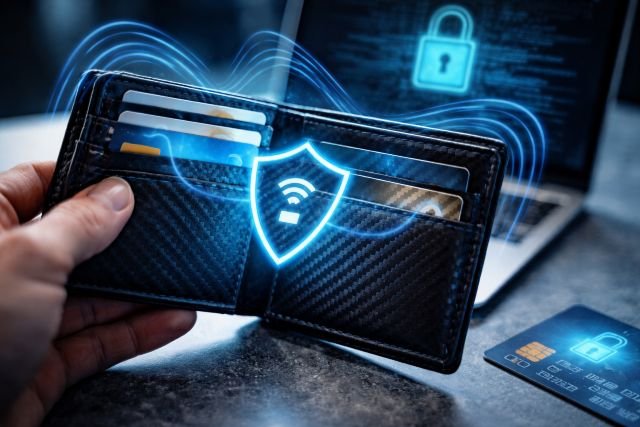
An rfid wallet is a wallet built with a conductive lining or layer — often a metallic mesh, foil-like fabric, or integrated shielding sheet — intended to interfere with the radio signals that contactless cards use. Most contactless payment cards and many access cards communicate at 13.56 MHz under proximity card standards commonly associated with NFC-style interactions.
When your cards are inside the shielded portion of the wallet, the wallet’s materials make it harder for an external reader to energize the chip and exchange data. In simple terms, the wallet is trying to ensure that “tap range” stays intentional: the chip should respond when you present it, not when it’s buried in your everyday carry.
Why people started caring about RFID and identity protection
Contactless payments feel almost invisible. You don’t insert a card, you don’t swipe, and sometimes you don’t even enter a PIN. That convenience can create a lingering question about what information is being transmitted and whether someone could trigger that transmission without your consent.
At the same time, the wider fraud environment has kept people on edge. Public reporting and fraud reviews regularly show that criminals adapt quickly and often focus on scalable tactics like social engineering and remote fraud rather than complex, one-off stunts. This context matters because it helps you choose security upgrades that actually match the most likely risks.
Does RFID skimming really happen?
The most accurate answer is that RFID-related threats exist, but their real-world prevalence is debated.
Security guidance acknowledges that researchers have demonstrated longer-range reads and related issues under certain conditions. NIST’s RFID security guidance discusses risks such as eavesdropping and the fact that real-world ranges can be different from “marketing assumptions,” depending on setup and environment.
However, many security discussions also point out a practical reality: criminals often pursue easier, higher-volume methods that don’t require specialized equipment or optimal conditions. Physical skimmers on payment terminals, phishing that steals login details, and misuse of leaked data are common because they scale.
What this means for you is straightforward. An RFID wallet isn’t a silly purchase, but it also shouldn’t be your only security move. It’s a sensible privacy-and-control tool, especially if you’re frequently in crowded spaces or you carry multiple RFID/NFC-enabled items together.
How EMV contactless security changes the story
A lot of fear-based marketing treats contactless cards as if they’re old magnetic stripe cards that broadcast static, reusable data. Modern payment cards are not designed that way.
EMV contactless transactions are built on standards intended to support secure transactions, and the ecosystem emphasizes dynamic mechanisms that make simplistic “copy and reuse” attacks much harder than the mag-stripe era. In practice, that doesn’t mean fraud is impossible. It means the easiest fraud paths often don’t involve reading a contactless card in someone’s pocket, especially compared with remote fraud and social engineering.
So where does an RFID wallet help? It supports privacy, reduces the odds of unintended reads, and can be especially relevant for non-payment RFID items like building access badges, transit cards, or IDs where security properties vary widely.
What an RFID wallet protects, and what it doesn’t
An RFID wallet primarily addresses unauthorized proximity reads of RFID/NFC-enabled items while they’re stored inside the shielded section. It’s a physical barrier that can reduce the chance of a card responding to a nearby reader.
What it does not do is stop the biggest sources of identity theft by itself. It won’t protect you from phishing links, fake bank calls, compromised passwords, merchant data breaches, or card details used online without the card present. Industry fraud reporting continues to emphasize how significant remote and transfer-based fraud can be.
If your goal is truly “shield your identity,” the RFID wallet should be one layer in a broader routine that includes account alerts, safer authentication habits, and awareness of common scams.
What “revolutionary” RFID wallet tech looks like in real life
The most meaningful innovations in RFID wallets aren’t flashy gimmicks. They’re improvements that make shielding reliable without making the wallet annoying to use.
A high-quality RFID wallet typically integrates shielding in a way that remains intact over time, even with daily flexing. It also places shielding where it matters: around the compartments where contactless cards are stored. A common failure mode in low-quality products is partial coverage, where the wallet claims RFID blocking but leaves edges or sections exposed in a way that allows intermittent reads.
Usability matters as much as shielding. If the wallet is bulky, uncomfortable, or hard to access, people stop using it consistently, which eliminates the benefit. The best designs balance slim form factors with durable construction and predictable card access.
How to choose the right RFID wallet for your lifestyle
If you spend a lot of time commuting or in crowded places, a slim RFID wallet with fully shielded card slots is usually the best fit because it keeps your everyday cards protected without adding bulk. Crowded environments increase the likelihood of accidental proximity interactions and also increase the value of peace of mind.
If you travel frequently, an RFID-blocking travel wallet or passport wallet can be helpful because travel tends to concentrate your most sensitive items in one place. You’re more likely to carry multiple cards, IDs, and documents together, and you’re more likely to be in dense lines at airports and transit hubs.
If you use access cards daily, you may want a wallet design that supports selective behavior. Some people prefer shielding for payment cards while keeping a badge easy to tap. In that case, wallet layout matters more than brand claims, because you’re optimizing for both convenience and control.
If you’re minimalist, you don’t necessarily need a large wallet to get the benefit. A compact RFID wallet or even a well-made RFID sleeve paired with a slim cardholder can be enough, especially if you carry only one contactless payment card.
Practical identity protection habits that pair well with an RFID wallet
Your RFID wallet is at its best when it’s part of a bigger “default safe” routine. Transaction alerts are a powerful baseline because they shorten the time between a fraudulent event and your awareness of it. Mobile wallets can also reduce risk in certain contexts because they often rely on device authentication and tokenization rather than exposing the same card credentials repeatedly.
In the physical world, staying alert to payment terminal tampering is still important because skimmers are a known, recurring threat, especially on unattended devices. And in the digital world, scam reporting continues to show that criminals frequently use urgency and impersonation to trick people into sharing one-time codes or credentials.
A quick real-world scenario
Picture yourself in an airport security line. You’ve got your wallet, phone, and documents moving through a high-traffic area where personal space disappears. An RFID wallet helps you keep contactless cards quiet and unreadable until you intentionally remove one and present it.
Now imagine you get a message saying your bank account is locked and you must “verify now.” You click, enter credentials, and share a one-time code. That’s one of the most common modern pathways to fraud, and an RFID wallet can’t help there. The best defense is recognizing social engineering patterns and using stronger authentication habits.
FAQ about RFID wallets
People often ask whether RFID-blocking wallets really work. When the wallet is built with a proper conductive shielding layer and your card is fully inside the shielded section, the wallet can block or significantly reduce RFID/NFC reads. Effectiveness depends on construction quality and coverage.
Another common question is whether someone can scan a credit card from far away. Contactless systems are designed for very short-range communication, commonly associated with proximity standards at 13.56 MHz. Security guidance also notes that research and specialized setups can demonstrate behaviors beyond everyday “tap range,” which is part of why some people prefer physical shielding as an added control.
Many people also ask why they should buy an RFID wallet if EMV contactless is secure. The simplest answer is that security is layered. EMV contactless is designed with security controls and dynamic elements that make simplistic cloning harder than older card technologies. An RFID wallet still provides privacy benefits and can be helpful for other RFID items that may not have the same security properties as payment cards.
Finally, people ask how to test an RFID wallet. A practical method is to try tapping your card at a contactless terminal while it remains inside the wallet. If the terminal can’t read it until the card is removed, the shielding is likely doing its job, though results can vary based on terminal sensitivity and how fully the card is enclosed.
Conclusion: why an rfid wallet is a smart layer, not the whole solution
An rfid wallet is a practical upgrade if you carry contactless cards and want more control over when they can be read. It can reduce unwanted proximity reads, add privacy in crowded settings, and help keep multiple RFID-enabled items from responding when you don’t intend them to.
The most reliable identity protection, though, comes from layered habits that address the biggest fraud channels. Modern fraud often leans on phishing, remote misuse of credentials, and terminal skimming — threats that industry reporting continues to track at significant scale. If you pair a quality RFID-blocking wallet with alerts, safer authentication, and scam awareness, you’ll have a protection strategy that matches how fraud actually happens today.