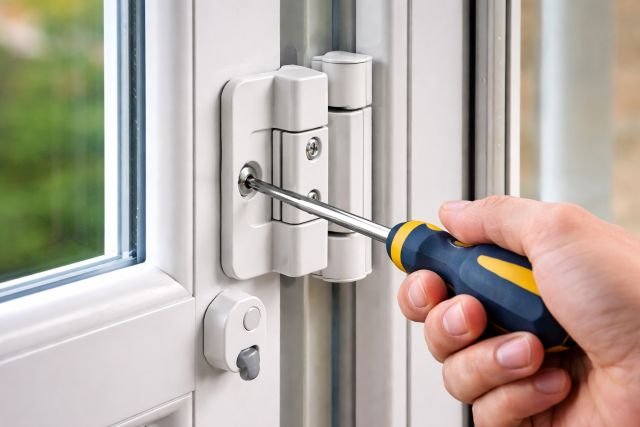
If your uPVC door rattles when it’s windy, scrapes the frame, or feels “loose” even when it’s shut, the fix is often simpler than people think: adjusting uPVC door hinges. Most modern uPVC doors use 3D-adjustable hinges (commonly flag hinges), which means you can fine-tune the door up/down, side-to-side, and in/out (compression) with basic tools — usually just Allen keys.
- Why uPVC doors start rattling or feeling loose
- Identify your hinge type before you adjust anything
- The 3 adjustments that matter
- Tools you’ll need (and how to avoid damaging the door)
- Step-by-step: Adjusting uPVC door hinges to stop rattle and looseness
- When hinges aren’t the real problem: lock keeps, rollers, and cams
- How tight is “tight enough” for comfort and performance?
- A quick real-world scenario (what a “5-minute fix” actually looks like)
- FAQs
- Conclusion: A tighter, quieter door starts with adjusting uPVC door hinges
The key is knowing what to adjust (and what not to). A rattle can come from hinge-side compression, lock-side keeps, worn seals, or a door that has dropped slightly over time. Retailer guides and manufacturers consistently point out that uPVC doors can drift out of alignment and may need periodic adjustment to maintain smooth operation and a good seal.
This article walks you through the process in a practical, “do it once — do it right” way, with real-world cues so you can stop the noise, tighten the fit, and avoid causing new problems.
Why uPVC doors start rattling or feeling loose
A uPVC door is basically a rigid leaf sitting inside a frame with hinges on one side and a multi-point locking system on the other. When anything shifts even a few millimetres, you’ll feel it.
Common causes include:
- Natural settling of the building or frame over time.
- Hinge wear or slight movement in hinge fixings.
- Seasonal expansion/contraction that changes how tightly the leaf meets the seals.
- Compression drift (the door isn’t pulling into the gasket firmly).
- Lock-side alignment issues (rollers/hooks not engaging the keeps properly).
That last point matters: people often blame hinges for everything, but if the door closes straight yet still pulls away on the handle side, the locking keeps or cams may be the real culprit — a nuance frequently mentioned in trade discussions and repair guidance.
Identify your hinge type before you adjust anything
Most DIY frustration comes from adjusting the wrong screw on the wrong hinge.
According to Screwfix’s guide, the three common uPVC hinge types are:
- Flag hinges (most common on modern external uPVC doors)
- Butt hinges (more traditional, often on lighter doors)
- T-hinges (less common, sometimes on older styles)
Everest also uses these same categories and recommends checking hinge type before attempting adjustments.
Quick visual check
- Flag hinge: looks like a chunky vertical hinge with a cover cap; often has multiple adjustment points hidden under caps.
- Butt hinge: two plates with a pin, more “classic door hinge” appearance.
- T-hinge: a “T” shape visible on the door face.
If you’re trying to fix a rattle fast, there’s a good chance you have flag hinges, because they’re designed for easy, multi-directional adjustment.
The 3 adjustments that matter
Most uPVC door hinge systems aim to let you correct the three big alignment variables:
1) Height adjustment (up/down)
Use when:
- door scrapes the threshold
- latch side drops and catches
- top corner rubs the frame
This is the “door drop” fix.
2) Lateral adjustment (side-to-side)
Use when:
- the door hits the frame on one side
- the gap looks uneven along the edge
- the latch doesn’t line up cleanly
This is the “door is shifted left/right” fix.
3) Compression adjustment (in/out)
Use when:
- the door rattles in wind
- you feel play when the door is shut
- drafts/noise come from the hinge side
- seal contact looks weak
This is the “tighten the seal” fix — and it’s the one that most directly addresses rattling.
DIY and manufacturer-style guidance often groups adjustments this way: identify where it’s misaligned, then change height/lateral/compression in small steps, checking as you go.
Tools you’ll need (and how to avoid damaging the door)
You can usually handle hinge adjustment with:
- Allen keys (commonly 4mm or 5mm)
- A screwdriver (to remove hinge caps)
- A pencil or masking tape (to mark original positions)
- A thin piece of paper (for a quick “seal pinch” test)
Tip from the field: work in quarter-turns, not full turns. Multiple DIY repair guides and videos emphasize small incremental adjustments because uPVC hardware is sensitive to tiny changes.
Step-by-step: Adjusting uPVC door hinges to stop rattle and looseness
Step 1: Diagnose where the rattle is coming from
Close the door normally (don’t lift the handle yet). Now try this:
- Gently push/pull the door at the hinge side. If it moves and clicks, it’s often compression.
- Repeat at the handle side. If it moves but hinge side feels firm, it’s often keeps/cams or the lock isn’t drawing in tightly.
- Look at the gasket line. If the seal contact looks uneven, you likely need lateral or compression correction.
If your door only stops rattling when you lift the handle fully, that’s a clue the multi-point locks are compensating for poor compression during normal closure.
Step 2: Pop off hinge caps and find the adjustment points
Most flag hinges hide screws under plastic caps. Carefully remove the caps (don’t force them; they can snap).
Screwfix and Everest both suggest identifying the hinge type and access points before adjusting, since different hinges expose different screws.
Step 3: Start with compression (the “rattle fix”)
For door rattle and a loose-feeling shut, compression is usually the first move.
- Turn the compression adjuster slightly to bring the door leaf tighter into the seal.
- Check closure: it should feel snug but not “hard” or overly stiff.
What “too tight” feels like: you need to slam the door, the handle becomes hard to lift, or the latch struggles. If you hit that, back off a little.
Why this matters: good compression helps reduce air leakage and drafts. Public energy-efficiency guidance repeatedly notes that controlling unwanted air leakage (“draughts”) improves comfort and reduces wasted heating. For example, the UK government has cited typical savings from draught proofing windows and doors of around £25–£35 per year.
Step 4: Correct door drop with height adjustment (if needed)
If you see scuff marks at the threshold or the latch side has dropped:
- Adjust height on the hinges in small steps.
- Re-check the reveal (the gap around the door). You want it even.
A useful rule: if the handle-side bottom corner catches, you often need a small lift and/or lateral tweak.
Step 5: Fine-tune lateral alignment (side-to-side)
Now that the door is snug, correct the side gaps:
- If the door touches the frame near the top, shift laterally in tiny steps and test.
- Adjust hinges proportionally. Often the top hinge controls the top corner more strongly, and the bottom hinge influences the lower corner more.
Everest’s guidance emphasizes checking where the door is out of alignment first, then adjusting accordingly.
Step 6: Do a “seal pinch” check
Close the door on a strip of paper at different points around the edge.
- If it slides out easily on the hinge side, you need more compression there.
- If it tears or is impossible to move at one point, that area may be too tight (risking seal wear).
When hinges aren’t the real problem: lock keeps, rollers, and cams
If the door closes square, the gaps look even, but you still get drafts or looseness on the handle side, your hinges may be fine.
Common lock-side issues:
- Keeps are slightly out of position
- Roller cams aren’t drawing in firmly
- Hooks/bars aren’t engaging cleanly
Trade and repair guidance often points out this exact scenario: if the door can still be pulled away after lifting the handle, it may be a locking/keeper adjustment rather than hinges.
Practical takeaway: use hinges to align the door in the frame; use the locking hardware to fine-tune how tightly it pulls in on the lock side.
How tight is “tight enough” for comfort and performance?
A properly adjusted uPVC door should:
- close smoothly without force
- latch easily
- feel solid with minimal movement when shut
- compress the gasket evenly to reduce drafts and noise
This isn’t just comfort—airtightness and weathertightness are core performance concepts for external doors. Standards used in industry testing and classification focus on air permeability, watertightness, and wind resistance for external windows and doorsets.
You don’t need to turn your home into a laboratory, but it’s helpful to understand the goal: consistent, even sealing without overstressing the hardware.
A quick real-world scenario (what a “5-minute fix” actually looks like)
Let’s say your door:
- rattles in wind
- feels slightly loose when shut
- closes fine but sounds “clicky” when you push it
In many homes, this ends up being:
- a quarter-turn compression adjustment on each flag hinge (starting with the middle hinge if present)
- a test close
- a tiny follow-up tweak on the top hinge to even out the seal
That’s why people describe it as a minutes-level job — if the door hasn’t dropped heavily and your lock-side keeps are already aligned.
FAQs
How do I stop my uPVC door from rattling?
In most cases, stop rattling by increasing hinge-side compression slightly so the door pulls tighter into the rubber seal. Adjust in quarter-turns and test after each change. If the rattle is on the handle side, you may need to adjust the locking keeps instead.
Which way do I turn the hinge to tighten the seal?
It depends on the hinge model. As a rule, compression adjustment moves the door leaf in/out relative to the frame. Make a small change, close the door, and confirm the seal contact improved without making the handle stiff. Many guides recommend incremental adjustments and rechecking frequently.
Why does my door feel loose even when it’s shut?
A loose feel usually means weak compression against the gasket (hinge-side), misaligned lock keeps (handle-side), or worn seals. If there’s movement when you push/pull the closed door, compression adjustment is often the first thing to check.
Can adjusting uPVC door hinges reduce drafts?
Yes. Drafts often come from air leakage around the door edge. Improving alignment and compression helps the seal do its job. Energy-efficiency advice highlights that reducing unwanted gaps around doors and windows can save money and improve comfort; UK government guidance has cited typical savings of around £25–£35 per year from draught proofing.
When should I call a professional instead?
Call a pro if the door is badly twisted, the frame is moving, the hinges are damaged, the door won’t lock safely after adjustment, or you suspect the locking mechanism is failing. Also be cautious if your door is under warranty—manufacturers often recommend checking warranty terms before DIY adjustments.
Conclusion: A tighter, quieter door starts with adjusting uPVC door hinges
Most door rattles and loose fits aren’t a “replace the door” problem — they’re an alignment and sealing problem. With a careful diagnosis and small, controlled tweaks to height, lateral position, and especially compression, adjusting uPVC door hinges can restore that solid close, reduce drafts, and stop the annoying wind rattle in minutes.
If your door still feels loose after hinge tuning, don’t force more adjustment — shift focus to the lock-side keeps and cams, because hinges and locks work together to create an even seal. And remember: the goal isn’t maximum tightness; it’s consistent contact all the way around, so the door closes smoothly and performs like it should.