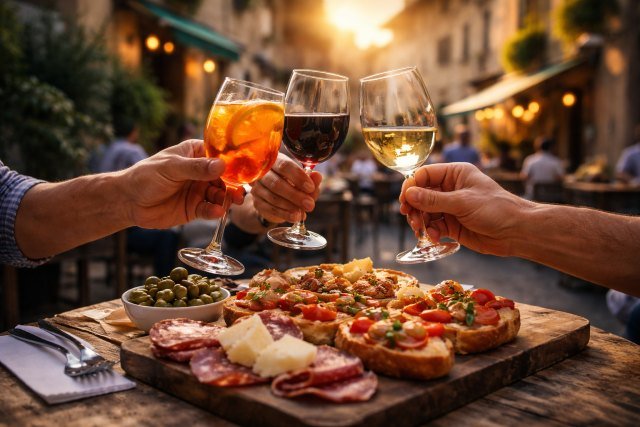
“Ehi Vuoi Da Bere?” If you’ve heard this phrase — or seen it popping up online — you already know it translates to a friendly “Hey, do you want something to drink?” But in Italian culture, Ehi Vuoi Da Bere often signals something bigger than hydration or alcohol. It’s an invitation into connection: a small ritual that says you’re welcome here, stay a moment, let’s talk.
- What does Ehi Vuoi Da Bere mean in everyday Italian?
- Ehi Vuoi Da Bere and aperitivo culture
- A quick history: why Italy’s “share a drink” tradition is so enduring
- What Italians might actually mean when they offer “a drink”
- What do Italians drink during aperitivo?
- What gets served with the drink: stuzzichini, not “full dinner”
- The unspoken etiquette behind “Ehi Vuoi Da Bere”
- How to bring the Ehi Vuoi Da Bere vibe into your own home
- A health-aware note: Italy’s culture is social, not reckless
- Common questions people ask about Ehi Vuoi Da Bere
- Conclusion: why Ehi Vuoi Da Bere is bigger than a drink
In Italy, sharing a drink is rarely just about the drink. It’s about timing (that golden space between work and dinner), place (the bar counter, the piazza, the living room), and people (friends, neighbors, coworkers, family). And when you understand how Italians use casual offers like this, you start to see why “a quick drink” can turn into the most memorable part of a day.
What does Ehi Vuoi Da Bere mean in everyday Italian?
At its simplest, Ehi vuoi da bere means “Hey, do you want something to drink?” — a warm, informal offer you might hear at home, at a friend’s place, or even as a friendly check-in while someone’s cooking. It’s less formal than “Vuoi qualcosa da bere?” and more like conversational Italian spoken between people who feel comfortable with each other.
What matters is the subtext: the phrase often implies I’m happy you’re here and let’s share a moment. That’s why it fits so naturally with Italy’s broader food-and-drink culture, especially the ritual of aperitivo.
Ehi Vuoi Da Bere and aperitivo culture
If there’s one tradition that captures the spirit behind Ehi Vuoi Da Bere, it’s the aperitivo. Aperitivo is the pre-dinner pause where people meet for a drink and small bites — less a “happy hour” and more a social reset before the evening meal.
The word itself carries the idea: “aperitivo” relates to opening — classically understood as opening the appetite. Italian sources trace the term’s roots to aperire (“to open”).
That’s the key: aperitivo is designed to start something (appetite, conversation, the evening), not to rush intoxication. When someone says Ehi Vuoi Da Bere around aperitivo time, the real invitation is often: come join us for that in-between hour where life slows down and friendship speeds up.
A quick history: why Italy’s “share a drink” tradition is so enduring
Modern aperitivo culture is strongly associated with Northern Italy, with deep ties to aromatized wines and bitters. Turin, for example, is widely linked to the rise of vermouth culture; historical accounts credit Antonio Benedetto Carpano with creating a foundational commercial vermouth in Turin in 1786, which helped shape pre-dinner drinking traditions.
Over time, this evolved into regional styles:
In Milan, aperitivo became a signature after-work ritual — bars filling as the day ends, conversation spilling into evening.
In Venice and the Veneto, spritz culture flourished in its own way.
Across Italy, you’ll find local variations — different drinks, different snacks, different pacing — but the social purpose stays consistent: people come together before dinner, not to hurry past the day but to mark it.
What Italians might actually mean when they offer “a drink”
In many cultures, “want a drink?” defaults to alcohol. In Italy, it can mean several things depending on context, time, and who’s asking:
At home: it might be water (still or sparkling), juice, or something simple, especially if it’s daytime.
After work: it often leans aperitivo — spritz, vermouth-based drinks, wine, or a light beer.
After dinner: it could mean espresso, amaro, or a digestivo.
That flexibility is part of the charm. Ehi Vuoi Da Bere is less a menu and more a gesture.
What do Italians drink during aperitivo?
Aperitivo drinks tend to be lighter, aromatic, and often slightly bitter — meant to stimulate appetite.
Classic options include spritz-style drinks, vermouth, and iconic cocktails like the Negroni (and variants). Cultural and culinary sources regularly frame these as staples of the Italian pre-dinner moment.
The important detail for authenticity isn’t memorizing recipes. It’s matching the drink to the moment: something refreshing, served with intention, paired with small bites, and enjoyed slowly.
What gets served with the drink: stuzzichini, not “full dinner”
The snacks that show up with aperitivo are often called stuzzichini — small bites meant to tease the appetite. They can be as simple as olives and chips or more elaborate spreads depending on the bar and city. Food media frequently describes stuzzichini as a defining part of “aperitivo hour” hospitality.
When you’re writing or speaking about Ehi Vuoi Da Bere, this pairing matters because it explains the social engineering behind the phrase:
A drink invites conversation.
A small bite keeps people lingering.
Lingering turns into bonding.
The unspoken etiquette behind “Ehi Vuoi Da Bere”
Italian hospitality can feel effortless, but it runs on a few practical habits that make guests feel instantly at ease.
Timing matters more than perfection
Aperitivo is usually a late afternoon/early evening bridge into dinner. Exact times vary by city and region, but the cultural idea is consistent: it’s a transition, not the main event.
The first offer is generous, the second offer is thoughtful
A host might offer something right away, then follow up with options once they know what you actually like.
The best “Italian” drink is the one that fits your guest
Offering a non-alcoholic option is normal and polite. Italian hospitality is about inclusion, not pressure.
How to bring the Ehi Vuoi Da Bere vibe into your own home
You don’t need an Italian bar cart. You need the same three ingredients Italy uses: simplicity, rhythm, and attention to people.
Start with a “one-drink” menu. Pick one signature option and one alcohol-free option. That keeps it relaxed and prevents hosting from turning into bartending.
Create an aperitivo window. Even 45 minutes works. The point is to give the day a soft landing.
Keep snacks intentionally small. Think “tease,” not “feed.” A couple of crunchy, salty, and savory bites will do the job.
Use the phrase as a ritual. Saying Ehi Vuoi Da Bere as guests arrive becomes your signal that they can exhale, settle in, and be present.
A health-aware note: Italy’s culture is social, not reckless
It’s worth saying clearly: celebrating Italian drink culture doesn’t mean glamorizing excess.
Italian public health sources define binge drinking as a high-volume intake in a short time; one Italian definition describes binge drinking as consuming 5–6 or more drinks in a limited window (often 2–3 hours), and notes a standard “unit” as roughly 12 grams of pure alcohol.
This is exactly where Italy’s aperitivo mindset is instructive: the ritual emphasizes pace, food pairing, and conversation — protective factors that reduce the “drink fast” dynamic many people want to avoid.
If you’re writing for readers who want actionable guidance, a simple framing helps: serve food, serve water, slow the rhythm, and make “no thanks” feel easy.
Common questions people ask about Ehi Vuoi Da Bere
Is “Ehi Vuoi Da Bere” grammatically correct Italian?
It’s commonly presented as an informal phrase meaning “Hey, do you want something to drink?” You’ll also hear “Vuoi qualcosa da bere?” which is a more standard, polite version.
Is it only about alcohol?
No. Depending on context, it can mean water, soda, juice, or anything you’d offer a guest — especially at home or earlier in the day.
What’s the difference between aperitivo and happy hour?
Aperitivo is culturally framed as a pre-dinner social pause meant to “open” the appetite, typically paired with small bites. It’s less about discounts and more about ritual and connection.
Where did aperitivo culture start?
While aperitivo has many influences, Turin and the rise of vermouth culture are often highlighted in historical accounts of the modern ritual’s development, including 18th-century vermouth production associated with Turin.
Conclusion: why Ehi Vuoi Da Bere is bigger than a drink
Ehi Vuoi Da Bere works as a phrase because it’s not a script — it’s a doorway. It’s the Italian way of making space for someone, offering comfort without ceremony, and turning an ordinary moment into a shared one.
Whether you’re traveling, learning Italian, or hosting at home, you can borrow the tradition without copying it perfectly. Offer something simple, add a small bite, slow down, and let conversation do what it always does in Italy: transform a drink into a connection.