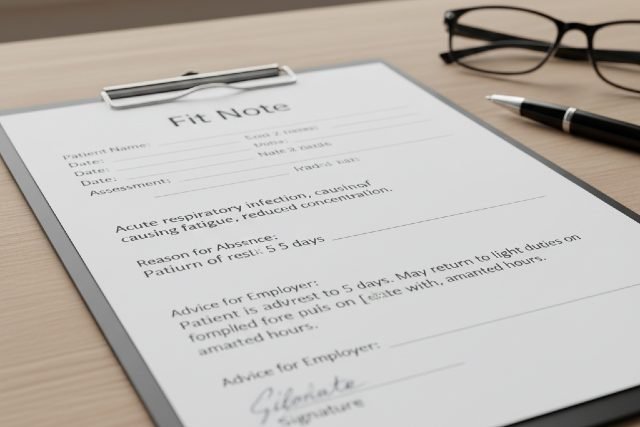
A fit note — or Statement of Fitness for Work — is a formal document written by a qualified healthcare professional to confirm whether an employee is able to work. The fit note helps employers understand an employee’s health condition, the limitations caused by that condition, and any adjustments that could help the individual return to their role safely. In the first 100 words, it is essential to emphasize that a fit note serves both a legal and practical purpose in managing sickness absence and supporting wellbeing at work.
- Understanding What a Fit Note Is
- What a Doctor’s Fit Note Should Include
- Fit Note Example: Not Fit for Work
- Fit Note Example: May Be Fit for Work
- What Employers Should Do When They Receive a Fit Note
- Legal Requirements and Compliance
- Duration and Validity of Fit Notes
- Common Conditions Requiring Fit Notes
- Fit Note FAQ
- Conclusion: What Every Fit Note Should Include
Understanding What a Fit Note Is
A fit note is an official medical statement confirming an employee’s fitness to work. It is usually required after seven consecutive days of sickness. The document may indicate that the person is not fit for work at all or may be fit for work if certain adjustments are made. Fit notes are designed to facilitate communication between employees, employers, and healthcare professionals, ensuring the return-to-work process is safe and effective.
Fit notes can be issued by GPs, hospital doctors, nurses, physiotherapists, pharmacists, and occupational therapists. Since changes in UK legislation in 2022, these professionals have been authorized to certify fit notes, which helps streamline access to documentation.
What a Doctor’s Fit Note Should Include
A doctor’s fit note must clearly identify the patient by name, date of birth, and any relevant medical identifiers such as an NHS number. These details ensure accuracy and prevent confusion in HR systems.
A medical assessment must be included in the fit note. This assessment states whether the patient is not fit for work or may be fit for work with adjustments. Some medical details may be kept general for confidentiality purposes, but the doctor must provide enough information to allow the employer to make informed decisions.
When the note indicates that the patient may be fit for work, the document should outline the adjustments that might support a return to work. These adjustments could relate to working hours, physical duties, mental load, mobility needs, or environmental factors. Although no bullet points will be used here, the narrative must explain clearly what changes are being recommended.
The note should specify the expected duration of the condition. Doctors are required to indicate how long the patient is likely to be affected, when the fit note expires, and whether a follow-up appointment will be necessary.
Finally, the clinician’s own details must be provided. This includes the name of the healthcare professional, the issuing date, a signature or authorized stamp, and the medical practice address.
Fit Note Example: Not Fit for Work
Patient Name: Sarah Thompson
Date of Birth: 12 March 1986
Assessment: Sarah is not fit for work due to acute lower back pain caused by a lifting injury. The condition currently restricts her mobility and prevents her from standing or sitting for extended periods, making it unsafe for her to perform her usual duties.
Duration: The note covers the period from 10 February 2025 to 24 February 2025. A review is required at the end of this time to determine whether the condition has improved.
Clinician: Dr. Mark Ellis, City Health GP Centre
Date Issued: 10 February 2025
Fit Note Example: May Be Fit for Work
Patient Name: Daniel Reed
Date of Birth: 5 September 1990
Assessment: Daniel may be fit for work if certain reasonable adjustments are provided. His doctor recommends a phased return beginning with shorter working hours, avoidance of heavy lifting, and tasks that allow him to alternate between sitting and standing. These measures are intended to support recovery while preventing strain.
Duration: This recommendation applies from 1 March 2025 to 15 March 2025, with no follow-up required unless symptoms worsen.
Clinician: Nurse Practitioner Amy Ward, Riverside Medical Centre
Date Issued: 1 March 2025
What Employers Should Do When They Receive a Fit Note
When an employer receives a fit note stating that an employee is not fit for work, the appropriate action is to approve sickness absence and ensure the individual is not asked to perform work duties. Accurate records must be maintained as part of absence management procedures.
If the note suggests the employee may be fit for work, the employer should evaluate whether the suggested adjustments can realistically be implemented. This may involve a discussion with the employee about temporary duty modifications, workflow changes, or health and safety considerations. If adjustments are not feasible, the fit note should be treated as confirmation that the employee remains unfit for work.
Legal Requirements and Compliance
Fit notes support compliance with legal obligations such as Statutory Sick Pay and workplace health and safety regulations. They also assist HR teams with absence management, documentation, and dispute resolution. Because a fit note contains sensitive medical information, employers must store it securely in compliance with data protection laws including GDPR.
Duration and Validity of Fit Notes
A fit note is valid only for the duration specified by the healthcare professional. Once the expiry date is reached, the employee is considered fit to return unless a new fit note states otherwise. Healthcare professionals cannot issue open-ended fit notes; each certificate must reflect a defined period of assessment.
Common Conditions Requiring Fit Notes
The reasons for issuing a fit note vary widely. Musculoskeletal problems such as back pain and joint injuries are among the most common and may require temporary restrictions related to physical duties. Mental health conditions including anxiety or depression may lead to recommendations for altered working hours or remote work. Post-surgery recovery often requires gradual return strategies, while chronic illnesses such as diabetes or asthma may require access to breaks or modified environments.
Here is a quick reference table:
| Condition Type | Examples | Typical Work Consideration |
|---|---|---|
| Musculoskeletal | Back pain, sprains | Reduced physical strain |
| Mental Health | Anxiety, depression | Adjusted schedule or environment |
| Post-Surgery | Mobility limitations | Phased return |
| Chronic Illness | Diabetes, asthma | Regular breaks or monitoring |
Fit Note FAQ
Do you need a fit note for the first seven days of sickness?
No. Employees can self-certify for the first seven calendar days. A fit note is required afterward.
Can employers dispute a fit note?
Employers may ask for clarification but cannot override the medical judgment written in the fit note.
Can fit notes be issued electronically?
Yes. Fit notes can be created, signed, and delivered digitally.
Does a fit note reveal detailed medical information?
Not necessarily. Many notes use general terms to protect patient confidentiality.
Can pharmacists issue fit notes?
Yes. In the UK, pharmacists have been authorized to issue them since 2022.
Conclusion: What Every Fit Note Should Include
A fit note is an essential tool for managing workplace health. It must clearly outline the patient’s condition, how the illness affects their ability to work, and any suggested adjustments that could support a safe and successful return. Whether the note states that an employee is not fit for work or may be fit with tailored support, an accurate fit note ensures legal compliance and promotes effective communication between all parties. By understanding what a doctor’s fit note should include, employers and employees can work together to create a healthy, supportive working environment.