Back pain has a way of shrinking your world—sitting feels stiff, standing feels tight, and even sleep can turn into a guessing game. The good news is that a stretcher for back relief at home can help you restore mobility and calm down cranky tissues, especially when you pair it with a simple routine you can repeat daily.
Low back pain is also extremely common. The World Health Organization notes it is the leading cause of disability worldwide and estimates hundreds of millions of people live with it. The goal here isn’t to stretch harder. It’s to stretch smarter, gently, and consistently so your body feels safe enough to loosen up.
What a “back stretcher” really means at home
When people say “back stretcher,” they often mean a curved lumbar arch device you lie on to gently extend the lower spine. Others mean a strap used for hamstrings and hips, or a supported decompression stretch (like a partial doorway hang). A foam roller is also commonly used to mobilize the upper back.
A helpful expectation: these tools can reduce stiffness and improve motion, but they are not magical “spine reset” devices. Most everyday low back pain is non-specific, meaning it isn’t tied to a single structural issue that needs to be permanently “put back in place.” That’s why major clinical guidance emphasizes conservative care and movement-based approaches, especially early on.
Why a stretcher for back pain can work
A lot of back pain involves a mix of stiffness, muscle guarding, and sensitivity. Gentle stretching and mobility work can improve how your back and hips move, reduce the sensation of tightness, and help you feel more confident using your body again.
Evidence reviews consistently support exercise as helpful for chronic non-specific low back pain. Cochrane’s evidence summary says exercise probably reduces pain compared with no treatment or usual care, and may improve function as well. The best results usually come when stretching is paired with a little strengthening and a commitment to staying active.
Choosing the right stretcher for back relief at home
A lumbar arch back stretcher is typically best for people who feel stiff or compressed after long sitting and feel better with gentle extension. It can feel like the spine is “opening,” particularly after a day at a desk.
A stretch strap is often the most practical tool for back pain because it helps you target hamstrings without tugging aggressively on the spine. Tight hamstrings can influence pelvic position, and that can change how your low back loads during sitting, bending, and walking.
Supported decompression can feel relieving for some people, but it should be done gently with feet supported so you are not hanging your full body weight.
A foam roller is especially useful for thoracic mobility. When the upper back is stiff, people often compensate by moving too much through the low back. Improving upper back mobility can make posture changes and daily movement feel less stressful.
The simple 10-minute routine at home
This routine is designed to be done five to six days per week for two to three weeks, then maintained three to four days per week. The priority is repeatability. If you can do it consistently, you will usually do better than someone who goes hard once and quits for a week.
Safety check before you start
If you have fever, significant trauma, unexplained weight loss, progressive weakness, new bowel or bladder issues, or numbness in the groin/saddle area, don’t rely on home stretching alone and seek urgent medical advice.
If your pain has lasted 12 weeks or more, it’s considered chronic. The National Institute of Neurological Disorders and Stroke notes chronic back pain is pain continuing 12 weeks or longer, and reports that about 20% of people with acute low back pain develop chronic low back pain with persistent symptoms at one year.
Step 1: Calm the system with breathing (about 1 minute)
Lie on your back with knees bent and feet on the floor. Breathe in through your nose for roughly four seconds, then exhale slowly for about six seconds. Aim for five to six breaths.
This matters because many people unconsciously brace when they hurt. A slower exhale can reduce that protective tension and make the rest of the routine more comfortable.
Step 2: Pelvic tilts to “oil the hinge” (about 2 minutes)
Stay on your back with knees bent. Gently tilt your pelvis so your low back flattens slightly into the floor, then tilt the other direction to create a small arch. Keep the movement small and smooth.
Do eight to ten slow reps. If you feel pinching, reduce range and slow down.
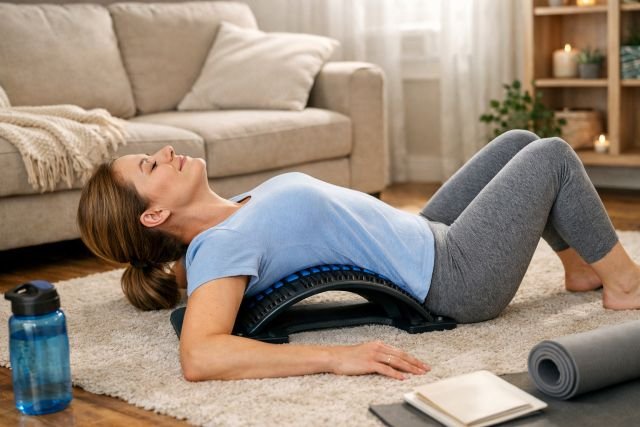
Step 3: Stretcher for back extension using the lumbar arch device (about 2 minutes)
Place the lumbar back stretcher under your mid-to-low back, but start higher and shallower than you think. The goal is mild opening, not a deep backbend.
Settle in for 30 to 45 seconds while breathing slowly. If it feels good and your symptoms do not worsen, repeat for another 30 to 45 seconds. If it increases sharp pain or makes leg symptoms worse, skip it and focus more on the hip and hamstring steps.
A quick reality check is important here. Pulling-based treatments like traction have limited supportive evidence overall for low back pain, which is why this routine uses the lumbar arch as gentle mobility, not aggressive “decompression.”
Step 4: Hamstring stretch with a strap (about 2 minutes)
Lie on your back. Loop a strap around one foot and lift that leg until you feel a mild stretch behind the thigh. Keep the knee slightly bent if needed and keep the other foot planted.
Hold 30 to 45 seconds, then switch sides. You should feel the stretch in the hamstring, not a sharp pull in the low back.
Step 5: Hip flexor stretch for “sitting tightness” (about 2 minutes)
Move into a half-kneeling position with a cushion under the back knee. Gently tuck your pelvis, then shift forward slightly until you feel a stretch at the front of the hip on the kneeling side.
Hold 30 to 45 seconds per side. If you feel it mostly in your low back, reset by tucking the pelvis more and reducing the forward shift.
Step 6: Lock the relief in with a short strength finisher (about 1 minute)
Choose a simple glute bridge. Lie on your back, knees bent, and lift hips slowly. Do eight slow reps and pause two seconds at the top.
This step matters because mobility changes often hold better when your body practices a little control right after stretching.
What real results usually look like
If this routine fits your pattern, you may feel looser after the first few sessions, but the bigger change is how predictable your back becomes. Over one week, many people notice that transitions like standing up from a chair feel smoother. Over two to three weeks, flare-ups often become less intense and less frequent, and it becomes easier to return to normal activity.
If you’re dealing with a longer-lasting issue, remember that chronic low back pain is common and does not automatically mean something dangerous is happening. Progress tends to come from steady, manageable work rather than heroic stretching sessions.
Common mistakes that stop a back stretcher from helping
The biggest mistake is intensity. People try to force a deep stretch, hold their breath, and stay there long enough to irritate tissues. Another common issue is stretching only the low back while ignoring the hips. The hips often contribute to how your pelvis sits and how your low back loads, especially if you sit a lot.
A third mistake is skipping strength completely. Many guidelines emphasize non-drug, noninvasive approaches and movement-based care. Stretching can make you feel better in the moment, but a small amount of strengthening helps the improvement stick.
FAQ
What is the best stretcher for back pain at home?
For many people, the most useful “stretcher for back” plan is a gentle lumbar arch device combined with a stretch strap for hamstrings and hip work. The arch targets spinal stiffness, while the strap and hip stretch address common contributors that influence back comfort.
How long should I use a back stretcher each day?
Start with 30 to 45 seconds, once per day, and keep the sensation mild. If it feels good and does not worsen symptoms, build up to 60 to 90 seconds total. More time is not always better.
Can a back stretcher help sciatica?
Sometimes, but it depends on what triggers symptoms. If bending backward worsens leg pain, avoid lumbar arch extension and focus on gentler mobility and professional assessment. If symptoms persist, worsen, or include weakness or numbness, get evaluated.
Is stretching enough to fix chronic low back pain?
Stretching helps, but evidence summaries support exercise more broadly for chronic non-specific low back pain, including movement and strengthening, not only flexibility work.
What if stretching makes my pain worse?
Stop that specific stretch and reduce range of motion. Return to breathing and pelvic tilts, and keep movement gentle. If pain consistently worsens or you have red-flag symptoms, seek medical advice.
Conclusion
A stretcher for back pain at home can create real results when it’s used gently and paired with a simple routine that improves hip mobility and adds a small dose of strengthening. Low back pain is widespread and a leading cause of disability worldwide, but consistent movement-based habits are strongly supported across reputable guidance and evidence summaries. If you keep the routine mild, repeatable, and focused on progress rather than intensity, you give your back the best chance to feel normal again.