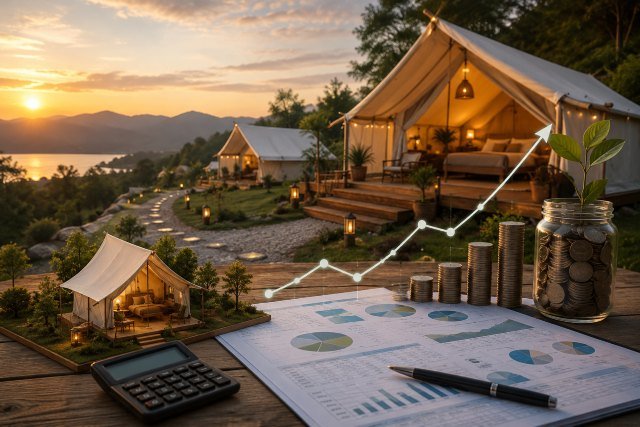
The Glamping Economy has become one of the most interesting opportunities in outdoor hospitality. Travelers want nature, privacy, fresh air, and memorable stays, but they also want comfort. That is exactly where glamping sits: between traditional camping and boutique accommodation.
- What Is the Glamping Economy?
- Why Glamping Appeals to Modern Travelers
- Glamping Economy Startup Expenses: What You Need to Budget
- Utility and Infrastructure Costs
- Furniture, Design, and Guest Experience
- Permits, Insurance, and Legal Costs
- Marketing and Booking Platform Costs
- Operating Costs in the Glamping Economy
- Glamping ROI: How Revenue Is Calculated
- Occupancy and Seasonality
- Pricing Strategy for a Profitable Glamping Business
- Example Glamping Startup Scenario
- Common Mistakes That Hurt Glamping ROI
- How to Improve Profitability in the Glamping Economy
- Is Glamping a Good Investment?
- FAQs About the Glamping Economy
- Conclusion: The Future of the Glamping Economy
Instead of basic tents and sleeping bags, glamping offers furnished safari tents, domes, cabins, yurts, treehouses, tiny homes, and luxury outdoor stays with beds, heating, bathrooms, decks, fire pits, and curated experiences.
This shift is not just a travel trend. It is becoming a serious business model. The global glamping market was valued at about USD 3.40 billion in 2024 and is projected to reach USD 7.36 billion by 2032, according to Fortune Business Insights. Grand View Research also estimates strong long-term growth, placing the market at USD 3.79 billion in 2025 with a projected rise to USD 7.87 billion by 2033.
For entrepreneurs, landowners, campground operators, and hospitality investors, the question is no longer whether glamping has demand. The real question is whether the numbers work.
What Is the Glamping Economy?
The Glamping Economy refers to the business ecosystem built around luxury outdoor accommodation. It includes glamping resorts, private land rentals, eco-retreats, cabin stays, wellness camps, farm stays, adventure lodging, and premium campground upgrades.
Unlike traditional hotels, glamping businesses often rely on lower-density lodging, natural surroundings, unique structures, and experience-based pricing. Guests are not only paying for a place to sleep. They are paying for privacy, atmosphere, scenery, fire pits, stargazing, outdoor baths, hiking access, photography moments, and a break from city life.
This is why a glamping unit can often charge more than a standard campsite. Some industry operators estimate nightly rates for glamping sites commonly range from $100 to $300, depending on location, amenities, season, and guest experience.
The strongest glamping businesses usually combine three things: a beautiful location, comfortable accommodation, and a clear guest experience. Without those three, a glamping site can quickly become an expensive campsite rather than a profitable hospitality asset.
Why Glamping Appeals to Modern Travelers
Glamping is growing because it solves a simple travel problem. Many people like the idea of camping, but they do not want the discomfort of setting up tents, carrying gear, sleeping on the ground, or using poor facilities.
Glamping removes those barriers. It gives guests the emotional feeling of being close to nature while still offering convenience.
Younger travelers, couples, families, wellness tourists, and remote workers are especially drawn to unique stays. A treehouse, dome, lakeside cabin, or safari tent feels more memorable than a standard hotel room. That emotional value allows operators to charge a premium.
Camping and outdoor accommodation demand has also grown in recent years. A 2025 report cited by the Houston Chronicle noted that U.S. campsite, RV space, and cabin bookings rose from nearly 42 million in 2019 to 52.5 million the previous year, while cabins and glamping-style stays grew from 6.7 million visits to 12.6 million within that five-year period.
That growth matters because glamping does not depend only on hardcore campers. It attracts people who may never book a traditional campsite but will happily pay for a stylish outdoor stay.
Glamping Economy Startup Expenses: What You Need to Budget
Startup costs vary widely depending on whether you already own land, how many units you build, the type of accommodation you choose, and how much infrastructure the site needs.
A small backyard or farm-based glamping setup may start with one or two units. A full resort-style operation may require land purchase, roads, utilities, permits, staff housing, reception areas, commercial bathrooms, wastewater systems, insurance, landscaping, and marketing.
For a lean startup, one of the biggest advantages is that you can begin with a small number of units and expand after proving demand. This makes glamping more flexible than building a hotel.
Land Cost and Site Preparation
Land is usually the first major expense. If you already own suitable land, your startup cost may be much lower. If you need to buy land, the cost depends heavily on location, zoning, access roads, views, water availability, and distance from tourist attractions.
The best glamping land is not always the cheapest land. A remote plot may look affordable, but if it lacks road access, power, water, drainage, and safety access, development costs can rise quickly.
Site preparation may include clearing, grading, pathways, parking, fencing, drainage, landscaping, lighting, signage, and guest privacy screening. Even a simple site needs a safe layout and a strong first impression.
A practical approach is to avoid overdeveloping at the beginning. Start with the areas guests will notice most: clean access, attractive unit placement, safe walkways, privacy, and a beautiful arrival experience.
Accommodation Units
The accommodation unit is the heart of the glamping business. Common choices include bell tents, safari tents, geodesic domes, yurts, cabins, tiny homes, container cabins, treehouses, and A-frame huts.
Entry-level canvas tents can cost far less than permanent cabins, but they may have shorter seasons and higher weather-related maintenance. More durable structures cost more upfront but can improve comfort, increase nightly rates, and extend the booking season.
Some beginner glamping guides estimate basic canvas tents may range from around $1,600 to $10,000, depending on quality and features. However, a fully furnished premium dome, cabin, or tiny home can cost much more once insulation, bathrooms, heating, decks, furniture, and installation are included.
The best unit type depends on your market. A couples’ retreat near a scenic mountain may justify premium domes with hot tubs. A family farm stay may perform better with cabins and outdoor play areas. A festival-style site may use simpler tents with shared amenities.
Utility and Infrastructure Costs
Utilities are where many new glamping owners underestimate costs. Guests may want nature, but they still expect comfort.
Water, electricity, wastewater, toilets, showers, heating, cooling, Wi-Fi, lighting, and fire safety systems can become major expenses. Off-grid systems such as solar power, composting toilets, rainwater harvesting, and propane heating may reduce dependency on public utilities, but they still require careful planning and maintenance.
Bathrooms are especially important. A beautiful tent with poor restroom facilities can lead to bad reviews. If each unit has a private bathroom, startup costs rise, but nightly rates may also increase. If facilities are shared, design and cleanliness become even more important.
In colder or hotter climates, insulation, heating, fans, or air conditioning can directly affect occupancy. A glamping site that can operate for ten months instead of four months has a much better chance of producing strong ROI.
Furniture, Design, and Guest Experience
Glamping is not only about shelter. It is about presentation. Guests expect a stay that photographs well and feels special.
Typical setup costs include beds, mattresses, linens, rugs, lighting, side tables, seating, curtains, storage, outdoor chairs, fire pits, grills, mini-fridges, coffee stations, towels, toiletries, and decorative touches.
This is where operators can either waste money or create value. Expensive decor is not always necessary. What matters is comfort, consistency, cleanliness, and a clear theme.
A forest retreat might use warm wood, wool blankets, lantern lighting, and natural textures. A desert dome might use neutral tones, stargazing windows, and outdoor soaking tubs. A lakeside setup might focus on decks, hammocks, kayaks, and sunrise views.
Good design increases perceived value. Higher perceived value supports higher nightly rates.
Permits, Insurance, and Legal Costs
Permits can make or break a glamping project. Before buying land or installing units, owners should check zoning, short-term rental rules, campground regulations, building codes, fire safety rules, septic requirements, flood risk, environmental restrictions, and accessibility requirements.
This part of the Glamping Economy is not glamorous, but it is essential. A business that ignores permits may face fines, forced closure, or expensive redesigns.
Insurance is another major cost. Operators may need general liability insurance, property insurance, business interruption coverage, workers’ compensation, vehicle insurance, and special coverage for outdoor activities.
Recent safety discussions around campgrounds show why emergency planning matters. After deadly flooding in Texas, lawmakers proposed stricter disaster-planning rules for campgrounds and RV parks, highlighting the importance of flood preparedness, warning systems, and emergency communication in outdoor hospitality.
For glamping operators, safety is not only a legal issue. It is part of guest trust.
Marketing and Booking Platform Costs
A glamping business needs strong marketing before opening. Beautiful units alone do not guarantee bookings.
Startup marketing costs may include branding, website design, photography, drone footage, booking software, Google Business Profile optimization, social media content, influencer stays, local SEO, paid ads, email marketing, and listing fees on platforms such as Airbnb, Hipcamp, Booking.com, or direct-booking systems.
Professional photography is especially important. Glamping is a visual product. Guests often decide based on the first few images.
A direct booking website can improve profit margins over time, but listing platforms may help generate early bookings. Many new operators use both: platforms for visibility and a direct website for repeat guests.
Operating Costs in the Glamping Economy
Startup expenses are only half the story. ROI depends heavily on ongoing operating costs.
Common monthly expenses include cleaning, laundry, maintenance, utilities, staff wages, booking software, platform commissions, insurance, property taxes, replacement linens, firewood, toiletries, pest control, landscaping, repairs, waste removal, Wi-Fi, and marketing.
Cleaning is one of the most important recurring costs. Glamping guests may be outdoors, but they still expect hotel-level cleanliness. Poor cleaning standards lead to poor reviews, and poor reviews reduce occupancy.
Maintenance also needs a reserve budget. Canvas tears, zippers fail, decks weather, hot tubs need service, heaters break, and outdoor furniture wears faster than indoor furniture.
A healthy glamping business should set aside money every month for repairs, replacements, and seasonal upgrades.
Glamping ROI: How Revenue Is Calculated
Glamping ROI depends on three core numbers: nightly rate, occupancy rate, and operating margin.
For example, imagine a small site with four units. Each unit rents for $180 per night. If the site averages 50% occupancy across the year, each unit books around 182 nights.
That creates annual gross revenue of about $32,760 per unit. Across four units, that equals about $131,040 in gross annual revenue before expenses.
If operating expenses consume 45% of revenue, the business keeps about 55% as operating profit before debt payments, taxes, and owner salary. In that scenario, annual operating profit would be roughly $72,000.
If total startup investment was $220,000, the simple payback period would be around three years. If startup investment was $400,000, payback would take much longer.
This is why controlling startup costs matters. A beautiful glamping site can still produce weak ROI if the owner overbuilds too early.
Occupancy and Seasonality
Seasonality is one of the biggest factors in glamping ROI. A site in a warm destination with year-round tourism has a very different financial profile than a mountain site open mainly from May to September.
Some seasonal glamping examples show occupancy rising sharply during peak summer months and falling during shoulder seasons. One glamping business example calculated a seasonal pattern where occupancy moved from 40% in May to 90% in August before dropping to 25% in September.
This type of pattern is common in outdoor hospitality. Operators must make enough money in peak months to survive slower months.
To improve annual ROI, owners can add cold-weather amenities, hot tubs, fireplaces, saunas, heated floors, insulated units, holiday packages, romantic winter stays, wellness retreats, and local event partnerships.
The goal is to stretch demand beyond the obvious summer weekends.
Pricing Strategy for a Profitable Glamping Business
Pricing should not be random. It should reflect demand, season, day of week, amenities, guest type, and local competition.
Weekend rates should usually be higher than weekday rates. Peak season rates should be higher than shoulder season rates. Special dates, holidays, festivals, and local events may justify premium pricing.
Dynamic pricing can help owners avoid leaving money on the table. If units sell out too quickly, rates may be too low. If the calendar stays empty, the offer, images, reviews, or pricing may need adjustment.
The strongest pricing strategy is value-based. Guests will pay more when the stay feels unique. A tent with a bed may compete on price. A private forest dome with a hot tub, breakfast basket, fire pit, and sunset view can compete on experience.
Example Glamping Startup Scenario
Consider a landowner who already owns five acres near a lake and wants to start with three units.
Instead of building a full resort immediately, they install three furnished safari tents, shared luxury bathrooms, gravel parking, solar pathway lights, fire pits, decks, outdoor seating, and a small check-in shed.
Their initial investment may include site preparation, tents, furnishings, bathroom construction, utilities, permits, insurance, photography, and website setup.
If each unit rents for $160 per night and reaches 45% average annual occupancy, each unit earns around $26,280 per year. Three units generate about $78,840 in gross revenue.
If the owner manages operations personally and keeps expenses controlled, the site may become profitable faster. If the owner hires staff, pays high debt costs, and relies heavily on paid ads, the payback period becomes longer.
This example shows why glamping is attractive but not automatic. The numbers depend on execution.
Common Mistakes That Hurt Glamping ROI
One common mistake is spending too much before testing demand. New owners sometimes build large, expensive sites without knowing whether guests will book at profitable rates.
Another mistake is choosing land based only on beauty. A beautiful location still needs access, safety, permits, utilities, and market demand.
Poor photography is another ROI killer. Since glamping is highly visual, weak photos can make even a good site look average.
Many owners also underestimate operations. Guests expect fast communication, clean spaces, comfortable beds, clear directions, and smooth check-in. A glamping stay may look simple, but it is still a hospitality business.
Finally, some operators ignore weather. Wind, rain, snow, flooding, insects, mud, heat, and cold can all affect guest experience. Durable design and emergency planning protect both guests and profits.
How to Improve Profitability in the Glamping Economy
The most profitable glamping sites usually do more than sell overnight stays. They create additional revenue streams.
These may include breakfast baskets, firewood bundles, guided hikes, yoga sessions, sauna access, hot tub upgrades, bike rentals, paddleboard rentals, romantic packages, photography packages, farm experiences, event rentals, retreats, and branded merchandise.
Partnerships also help. Local restaurants, tour guides, wineries, farms, wellness coaches, and adventure companies can add value without requiring the owner to build every service in-house.
Direct bookings improve margins because they reduce platform commission costs. Over time, email marketing, repeat guest offers, local SEO, and strong reviews can make direct bookings a major profit driver.
The key is to raise revenue per guest without damaging the natural, peaceful experience that brought them there.
Is Glamping a Good Investment?
Glamping can be a good investment when the land, concept, budget, and operations are aligned. It is especially attractive for landowners who already have usable property in a scenic or tourist-friendly area.
Compared with hotels, glamping can offer a lower barrier to entry and flexible expansion. Compared with traditional camping, it can generate higher nightly rates. Compared with short-term rentals, it can stand out through uniqueness and outdoor experience.
However, it is not passive income. Glamping requires hospitality skills, maintenance planning, guest communication, legal compliance, safety systems, marketing, and financial discipline.
The best approach is to start small, prove demand, track real numbers, improve the guest experience, and expand only when the first units are consistently profitable.
FAQs About the Glamping Economy
What is the Glamping Economy?
The Glamping Economy is the business market around luxury outdoor accommodation, including safari tents, domes, yurts, cabins, treehouses, eco-retreats, and premium campground stays.
How much does it cost to start a glamping business?
Startup costs can range from a few thousand dollars for a very simple setup on owned land to hundreds of thousands of dollars for a developed multi-unit retreat. Land, utilities, permits, bathrooms, structures, furnishings, and marketing are the biggest cost drivers.
How long does it take to get ROI from glamping?
A well-managed small glamping site may recover its investment in a few years, but ROI depends on startup cost, nightly rate, occupancy, operating expenses, financing, and seasonality.
What is the biggest expense in glamping?
For many operators, the biggest expenses are land, site preparation, accommodation units, utilities, bathrooms, and permits. Ongoing costs include cleaning, maintenance, staff, insurance, and marketing.
Is glamping more profitable than camping?
Glamping can be more profitable per guest because nightly rates are usually higher than basic campsites. However, costs are also higher because guests expect comfort, design, cleanliness, and amenities.
Conclusion: The Future of the Glamping Economy
The Glamping Economy is growing because travelers want outdoor experiences without giving up comfort. Market forecasts point toward continued expansion, and demand for unique nature-based stays remains strong.
For business owners, the opportunity is real, but profit depends on smart planning. Startup expenses must be controlled, permits must be handled properly, guest experience must feel premium, and pricing must match demand.
A successful glamping business is not just a tent in a field. It is a carefully designed hospitality experience that turns land, nature, comfort, and emotion into revenue.