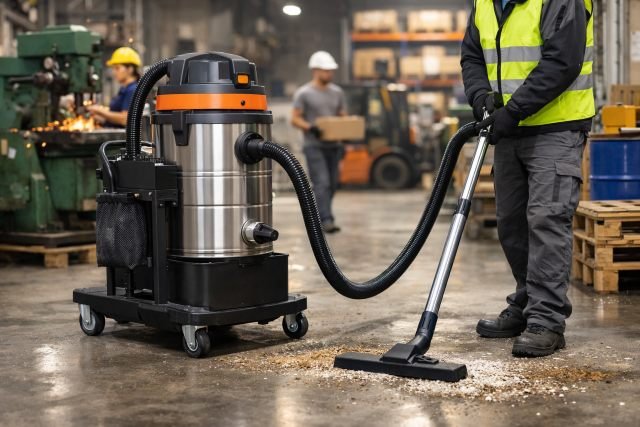
Industrial workplaces constantly deal with dust, debris, liquids, and hazardous waste. The visuals above demonstrate how an industrial vacuum cleaner operates in factories, warehouses, and manufacturing plants to create safer, cleaner, and more efficient work environments.
- Introduction: The Growing Need for Industrial Vacuum Cleaners
- What Is an Industrial Vacuum Cleaner?
- How an Industrial Vacuum Cleaner Enhances Workplace Safety
- How Industrial Vacuum Cleaners Improve Operational Efficiency
- Industry-Specific Applications of Industrial Vacuum Cleaners
- Choosing the Right Industrial Vacuum Cleaner
- Frequently Asked Questions About Industrial Vacuum Cleaners
- Conclusion: A Cleaner Workplace Is a Safer and More Efficient One
Introduction: The Growing Need for Industrial Vacuum Cleaners
Modern industries face increasing pressure to maintain high safety standards while improving productivity. An industrial vacuum cleaner plays a vital role in achieving both goals. Unlike traditional cleaning tools, it is designed to handle heavy-duty waste, fine dust, and hazardous materials generated during industrial operations.
Within the first hours of production, contaminants begin to accumulate on floors, machinery, and in the air. Over time, this buildup increases accident risks, damages equipment, and reduces employee efficiency. Using an industrial vacuum cleaner helps organizations proactively address these challenges while meeting safety and compliance standards.
What Is an Industrial Vacuum Cleaner?
An industrial vacuum cleaner is a high-powered cleaning system engineered specifically for demanding industrial environments. It is capable of operating continuously while removing large volumes of dry dust, liquid spills, metal shavings, powders, and hazardous waste.
These machines differ from domestic or commercial vacuums because they are built with reinforced motors, advanced filtration systems such as HEPA filters, and durable containers that can safely collect industrial waste. As a result, they are widely used in manufacturing plants, warehouses, construction sites, and processing facilities.
How an Industrial Vacuum Cleaner Enhances Workplace Safety
Reducing Slips, Trips, and Falls
Workplace accidents caused by slips and falls remain one of the leading causes of injuries worldwide. According to the Occupational Safety and Health Administration, slip- and trip-related incidents account for a significant percentage of workplace injuries each year.
An industrial vacuum cleaner helps prevent these incidents by quickly removing dust, oil spills, and loose debris from floors and walkways. Clean, dry surfaces improve traction and visibility, which directly lowers the risk of accidents and employee injuries.
Improving Air Quality and Dust Control
Airborne dust is one of the most overlooked hazards in industrial settings. Prolonged exposure to fine particles can lead to respiratory conditions, allergies, and long-term occupational illnesses.
Industrial vacuum cleaners are designed to capture dust at the source and prevent it from becoming airborne. High-efficiency filtration systems can trap microscopic particles and significantly improve indoor air quality. This creates a healthier working environment and supports compliance with occupational health standards.
Minimizing Fire and Explosion Hazards
In industries that deal with combustible dust or flammable materials, improper cleaning methods can increase the risk of fires or explosions. Sweeping or compressed air cleaning can disperse fine particles into the air, creating dangerous conditions.
Specialized industrial vacuum cleaners designed for hazardous environments safely collect combustible dust without dispersing it. Many systems are certified for explosive atmospheres and help prevent static electricity buildup, making them essential for high-risk industries such as food processing, woodworking, and metal fabrication.
How Industrial Vacuum Cleaners Improve Operational Efficiency
Faster Cleaning and Reduced Downtime
Manual cleaning methods are time-consuming and often require multiple workers. An industrial vacuum cleaner completes the same task in a fraction of the time while delivering more consistent results.
| Cleaning Method | Average Cleaning Time | Workforce Needed |
|---|---|---|
| Manual Cleaning | 2–3 hours | Multiple workers |
| Industrial Vacuum Cleaner | 30–45 minutes | Single operator |
By reducing cleaning time, businesses can minimize downtime and keep production lines running efficiently.
Protecting Machinery and Equipment
Dust and debris do not only affect cleanliness; they also shorten the lifespan of industrial machinery. When contaminants enter sensitive components, they accelerate wear and increase the likelihood of breakdowns.
Regular use of an industrial vacuum cleaner helps remove debris before it damages equipment. This proactive approach reduces maintenance costs, extends machine lifespan, and improves overall operational reliability.
Further equipment safety guidance is available from the UK Health and Safety Executive at
Supporting Lean Manufacturing and Workplace Organization
Cleanliness is a core principle of Lean Manufacturing and 5S methodologies. An organized and clean workspace reduces wasted movement, improves workflow, and supports consistent production quality.
An industrial vacuum cleaner enables teams to maintain high cleanliness standards with minimal effort. Over time, this leads to better efficiency, improved employee morale, and stronger process control.
Industry-Specific Applications of Industrial Vacuum Cleaners
In manufacturing plants, industrial vacuum cleaners are commonly used to collect metal shavings, fine dust, and coolant residues. In warehouses and logistics centers, they help maintain safe loading areas by removing packaging waste and debris. In food and pharmaceutical facilities, these machines support hygiene standards by safely removing powders, allergens, and fine particles while meeting regulatory requirements.
Choosing the Right Industrial Vacuum Cleaner
Selecting the correct industrial vacuum cleaner depends on the type of material being collected, the required filtration level, and the operating environment. Facilities handling hazardous or combustible materials must ensure the equipment meets safety certifications. Mobility, capacity, and ease of maintenance should also be considered to ensure long-term efficiency.
Matching the vacuum cleaner to the specific risks and workload of your facility ensures optimal performance and safety.
Frequently Asked Questions About Industrial Vacuum Cleaners
How often should an industrial vacuum cleaner be used?
In high-risk environments, daily use is recommended to maintain safety and cleanliness. Lower-risk facilities may require less frequent cleaning, depending on operations.
Are industrial vacuum cleaners suitable for hazardous materials?
Yes, as long as the equipment is specifically designed and certified for hazardous or combustible materials.
Do industrial vacuum cleaners provide a good return on investment?
Most organizations experience long-term savings through reduced workplace injuries, lower maintenance costs, and improved productivity.
Conclusion: A Cleaner Workplace Is a Safer and More Efficient One
An industrial vacuum cleaner is a powerful tool that directly improves workplace safety and operational efficiency. By reducing slip hazards, improving air quality, protecting equipment, and minimizing downtime, it supports both employee well-being and business performance.
For companies focused on long-term growth and compliance, investing in the right industrial vacuum cleaner is not just a cleaning decision but a strategic step toward a safer, more efficient workplace.