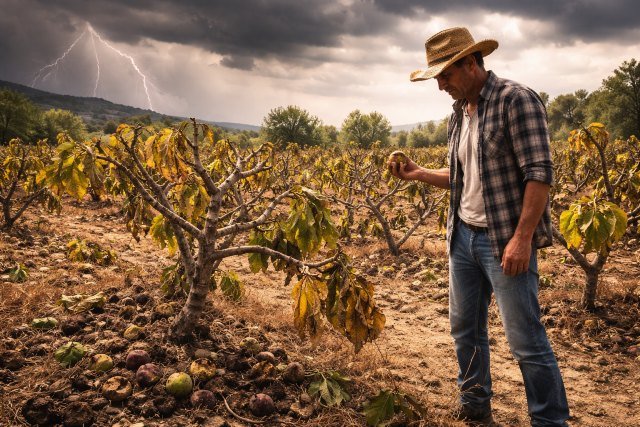
The Italian Fig Crop Loss crisis is becoming a growing concern for farmers, economists, and food lovers alike. Italy has long been known for producing some of the world’s finest figs, particularly in regions such as Puglia, Calabria, and Campania. However, recent weather extremes — including heatwaves, droughts, and sudden storms — are severely damaging fig orchards and reducing yields.
In the last decade, climate patterns across southern Europe have become increasingly unpredictable. According to the European Environment Agency, extreme weather events in Mediterranean countries have intensified due to climate change, putting traditional crops like figs under pressure.
As a result, Italian Fig Crop Loss is now affecting farmers’ incomes, export markets, and local food traditions. This article explores the causes, impacts, and possible solutions to protect Italy’s iconic fig industry.
Why Italy Is Famous for Fig Production
Italy is one of Europe’s leading producers of figs. The fruit has been cultivated in the Mediterranean region for thousands of years and remains an essential part of Italian agriculture.
Several regions specialize in fig farming:
| Region | Specialty |
|---|---|
| Puglia | Dried figs and fig-based sweets |
| Calabria | Traditional sun-dried figs |
| Campania | Fresh figs and artisanal products |
The Mediterranean climate — warm summers and mild winters — has historically been ideal for fig trees. These conditions allow figs to ripen slowly, producing rich flavor and high sugar content.
However, this delicate climate balance is now shifting. The increasing Italian Fig Crop Loss linked to extreme weather events is disrupting centuries-old farming practices.
What Is Causing Italian Fig Crop Loss?
Several climate-related factors are contributing to the growing Italian Fig Crop Loss problem.
Heatwaves and Rising Temperatures
One of the biggest threats is extreme heat. Mediterranean regions have experienced record temperatures in recent summers.
According to Copernicus Climate Change Service, Europe recorded its hottest summer on record in 2022. Temperatures in southern Italy frequently exceeded 40°C (104°F).
Excessive heat affects figs in several ways:
- Premature fruit drop
- Sunburn damage on figs
- Reduced fruit size and quality
- Increased water stress in trees
While fig trees are relatively drought-tolerant, prolonged heatwaves weaken the plants, making them vulnerable to pests and disease.
Drought and Water Scarcity
Drought conditions across southern Italy have worsened significantly. In some areas, rainfall has decreased while evaporation rates have increased.
Figs rely on stable soil moisture during the fruit development stage. When drought occurs:
- Trees produce fewer fruits
- Fruits may remain small or dry prematurely
- Sugar development is reduced
In regions like Puglia, farmers have reported yield reductions of 20–40% during severe drought years, contributing directly to the rise in Italian Fig Crop Loss.
Research from the European Commission’s Joint Research Centre highlights that Mediterranean droughts are becoming longer and more intense.
Sudden Storms and Flooding
While drought is a major issue, the opposite extreme is also causing damage. Sudden heavy rains and storms can destroy fig crops within hours.
Extreme rainfall events lead to:
- Fruit splitting and rot
- Soil erosion
- Root damage
- Increased fungal diseases
For example, storms in southern Italy in recent years have destroyed entire orchards just weeks before harvest. Farmers report that unpredictable rainfall patterns make it difficult to plan harvesting schedules.
This volatility further worsens Italian Fig Crop Loss across multiple growing seasons.
Pest and Disease Outbreaks
Climate change also creates favorable conditions for agricultural pests.
Warmer winters allow insects to survive and reproduce more easily. Several pests now threaten Italian fig farms, including:
- Fig fruit flies
- Scale insects
- Fig mosaic virus spread by mites
Longer warm seasons allow multiple pest cycles per year, increasing damage to orchards.
According to research published by the European Plant Protection Organization, pest populations in Mediterranean agriculture are expanding due to warmer climates.
Economic Impact of Italian Fig Crop Loss
The consequences of Italian Fig Crop Loss extend far beyond the farm.
Declining Farmer Income
Many Italian fig farms are family-owned businesses that rely heavily on seasonal harvest income.
When extreme weather reduces production:
- Farmers lose revenue
- Costs of irrigation and crop protection increase
- Profit margins shrink significantly
Some farmers report harvest reductions of up to 50% in extreme years, making fig farming financially unsustainable for smaller operations.
Rising Prices for Consumers
Lower fig production can also affect market prices.
When supply decreases, prices rise in both domestic and export markets. Italy exports figs to many European countries as well as the United States and the Middle East.
Higher prices impact:
- Fresh figs
- Dried figs
- Fig-based desserts and specialty foods
For consumers, this means traditional Italian fig products may become more expensive or less available.
Threat to Traditional Food Culture
Figs play an important role in Italian cuisine and heritage.
Traditional foods such as:
- Fichi secchi (dried figs)
- Fig jams and preserves
- Fig-based pastries
depend on reliable fig harvests.
If Italian Fig Crop Loss continues to worsen, these culinary traditions could face long-term challenges.
Case Study: Puglia’s Fig Farmers Facing Climate Challenges
Puglia is one of Italy’s most important fig-producing regions. Local farmers have observed significant climate changes in recent years.
Farmers report:
- Harvest seasons arriving earlier than expected
- Reduced fruit quality during extreme heat
- Higher irrigation costs due to drought
One cooperative in the region reported a 30% production drop after a summer heatwave combined with late storms.
These experiences highlight how Italian Fig Crop Loss is not just theoretical — it is already affecting farmers on the ground.
How Farmers Are Adapting to Climate Change
Despite these challenges, many Italian farmers are experimenting with new strategies to reduce Italian Fig Crop Loss.
Improved Irrigation Systems
Modern drip irrigation systems allow farmers to deliver precise amounts of water directly to tree roots.
Benefits include:
- Reduced water waste
- Better moisture control
- Improved fruit quality
Efficient irrigation is becoming essential as drought conditions worsen.
Climate-Resilient Fig Varieties
Agricultural researchers are also working to develop fig varieties that tolerate extreme heat and drought.
These varieties may:
- Resist sunburn damage
- Maintain fruit size during heatwaves
- Require less water
Italian agricultural institutes are actively researching climate-resilient crops.
Protective Orchard Management
Farmers are adopting new techniques to protect fig trees from weather stress.
Examples include:
- Shade netting to reduce sunburn
- Soil mulching to retain moisture
- Wind barriers to protect against storms
These strategies can help reduce the severity of Italian Fig Crop Loss during extreme seasons.
What the Future Holds for Italy’s Fig Industry
Climate scientists warn that Mediterranean agriculture faces increasing risks over the coming decades.
According to the Intergovernmental Panel on Climate Change (IPCC), southern Europe is expected to experience:
- More frequent heatwaves
- Increased drought risk
- Stronger extreme weather events
If these trends continue, crops such as figs, olives, and grapes may require major adaptations.
However, innovation in farming techniques and climate research may help protect the future of Italy’s fig industry.
FAQ: Italian Fig Crop Loss
What is causing Italian Fig Crop Loss?
Italian Fig Crop Loss is mainly caused by extreme weather events such as heatwaves, drought, sudden storms, and pest outbreaks, all linked to climate change.
Which regions in Italy produce the most figs?
Major fig-producing regions include Puglia, Calabria, and Campania, where Mediterranean conditions historically favored fig cultivation.
How much crop loss are farmers experiencing?
In severe years, farmers report 20–50% reductions in fig harvests, depending on drought severity and storm damage.
Can farmers prevent fig crop losses?
While extreme weather cannot be fully prevented, farmers can reduce risks through improved irrigation, climate-resilient varieties, and better orchard management practices.
Conclusion
The growing problem of Italian Fig Crop Loss highlights how climate change is transforming agriculture across the Mediterranean. Heatwaves, drought, storms, and pests are putting enormous pressure on traditional fig orchards that have existed for generations.
Without adaptation, Italy’s fig production — and the cultural heritage tied to it — could face significant challenges in the coming decades.
However, there is still hope. Through modern farming techniques, scientific research, and climate-resilient agriculture, farmers may be able to reduce losses and protect the future of fig cultivation.
The story of Italian Fig Crop Loss ultimately reflects a broader global challenge: how agriculture must evolve in response to a changing climate.