Mens work trousers are durable, functional pants designed for demanding work environments. They are typically built with reinforced fabrics, job-ready pockets, and ergonomic construction that supports movement, protection, and long-term wear.
- Why Mens Work Trousers Matter More Than You Think
- How to Choose Mens Work Trousers: The 3-Factor Framework
- Fit Guide: Comfort Meets Jobsite Mobility
- Fabric Guide: What Your Work Trousers Are Actually Built For
- Function Guide: Features That Actually Improve Your Workday
- Choosing Work Trousers by Job Type
- Safety Standards and High-Visibility Requirements
- How to Tell If Mens Work Trousers Are High Quality
- Cost vs Value: The Cost-Per-Wear Rule
- Care Tips to Make Work Trousers Last Longer
- FAQ: Mens Work Trousers
- Conclusion: Buying the Right Mens Work Trousers
Why Mens Work Trousers Matter More Than You Think
If you’ve ever had a seam split mid-shift, felt restricted when crouching, or struggled to keep tools secure, you already understand the difference between ordinary pants and proper workwear. Mens work trousers are designed to work as part of your daily equipment, not just your outfit. They help you move better, carry tools more safely, and stay comfortable across long shifts in unpredictable conditions.
This matters because workplaces remain physically demanding and injury-prone. In the United States, private industry employers reported 2.6 million nonfatal workplace injuries and illnesses in 2023, highlighting why protective and functional workwear decisions are not optional for many roles.
The best mens work trousers reduce discomfort, improve job performance, and often save money over time by lasting longer and preventing frequent replacements. The smart way to choose them is to evaluate three factors together: fit, fabric, and function.
How to Choose Mens Work Trousers: The 3-Factor Framework
Most buyers choose work trousers based on waist size and price alone, which is why many end up with pants that feel stiff, tear too quickly, or fail to support their job needs. A better method is to judge every pair through three filters. Fit determines mobility and comfort. Fabric determines durability and climate suitability. Function determines storage, reinforcement, and practical features that match the job.
When any one of these fails, you feel it quickly. When all three work together, you stop thinking about your trousers during your shift, which is exactly the goal.
Fit Guide: Comfort Meets Jobsite Mobility
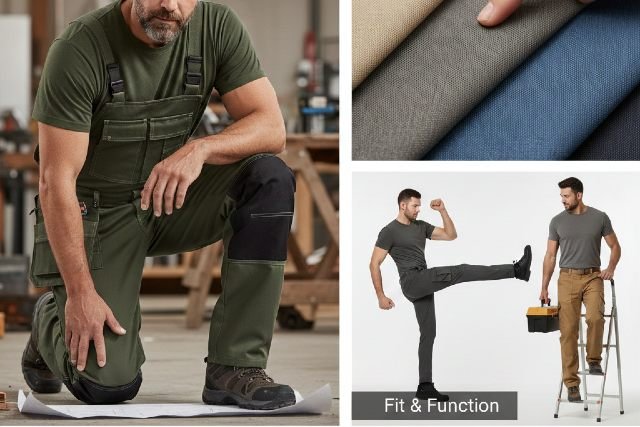
Fit is about more than how trousers look. The best mens work trousers allow you to squat, kneel, climb, and move without pulling at the waistband, binding at the knees, or feeling tight through the seat and thighs. This matters because many trades involve repeated bending, crouching, and lifting, and restrictive clothing creates fatigue over time.
Slim Fit Work Trousers
Slim fits are often chosen for indoor work, warehouse roles, driving-heavy jobs, and light trades because they reduce fabric snagging and look clean. The downside is that slim cuts can feel restrictive unless they include stretch zones or a gusseted crotch. If you bend or kneel frequently, a slim fit without stretch can be uncomfortable.
Regular Fit Work Trousers
Regular fit trousers remain the most versatile option because they balance movement and structure. For most trades, this fit provides enough space for mobility without feeling bulky. If you’re unsure where to start, regular fit is typically the safest baseline.
Relaxed Fit Work Trousers
Relaxed fits are ideal for heavy labor, outdoor work, and tasks involving frequent kneeling because they offer extra room through the seat and thighs. They are also easier to layer during colder seasons. However, relaxed trousers can sometimes feel too loose in tight environments or in roles where snagging is a concern.
The Simple Fit Test You Should Always Do
Before committing to mens work trousers, you should test movement in real positions. You should be able to squat fully without feeling the waistband pull down or the crotch seam tighten. Kneeling should not cause tightness around the knee or thigh. Stepping up should feel natural without pulling at the fabric. Reaching overhead should not expose the lower back, which often indicates insufficient rise or waistband stability. A short walk at a faster pace helps reveal irritation points and fabric stiffness.
If the trousers feel tight in the thigh or seat even when the waist fits, it’s usually better to change the cut rather than sizing up excessively. Sizing up often creates bagginess at the waist and poor belt stability, which leads to discomfort and constant adjustment.
Fabric Guide: What Your Work Trousers Are Actually Built For
Fabric determines how long your trousers last and how they feel across seasons. The right fabric can resist abrasion, prevent tears from spreading, and keep you comfortable during long shifts. The wrong fabric can feel heavy, trap heat, or fail at stress points after only a few weeks of hard use.
Durability-focused workwear comparisons often highlight ripstop as a strong option because of its tear-resistant structure, and many workwear guides note that ripstop typically outperforms cotton twill in resisting damage over time.
Fabric Comparison Table
| Fabric Type | Best For | Key Strength | Watch-Out |
|---|---|---|---|
| Cotton Canvas / Duck | Construction, heavy trades | High abrasion resistance | Heavy, slower to dry |
| Ripstop | Multi-trade rugged use | Tear resistance | Can feel stiff if low quality |
| Cotton Twill | General indoor trades | Soft and breathable | Less durable than ripstop |
| Polycotton Blend | All-around work | Durable and quick-drying | Some blends trap heat |
| Stretch Blend (Elastane) | Movement-heavy roles | Comfort and flexibility | Low quality stretch can wear faster |
| Softshell / Lined Fabrics | Winter conditions | Warmth and wind resistance | Less breathable and higher cost |
Cotton Canvas / Duck: The Heavy-Duty Classic
Canvas and duck fabrics are commonly used in rugged work trousers because they resist abrasion and survive harsh environments. They work best for outdoor trades, construction, and jobs involving frequent contact with rough surfaces. The tradeoff is weight. Canvas trousers can feel heavy in hot weather, and they often take longer to dry after rain or sweat.
Ripstop: Built to Resist Tearing
Ripstop fabric uses a reinforced weave structure that reduces the chance that a small rip becomes a large tear. This makes it especially useful in jobs that involve contact with sharp edges, tools, or rough environments. Ripstop is widely used in performance gear and industrial clothing because it is engineered to resist tearing under stress.
If your job involves movement, climbing, or snag risks, ripstop can be an excellent middle ground between comfort and durability.
Cotton Twill: Softness and Breathability
Cotton twill is often chosen when comfort is a top priority. It feels softer than canvas and can be more breathable. Some twill workwear can be treated or reinforced for specialized protection, but raw twill typically will not match ripstop or canvas in tear resistance.
Polycotton Blends: Practical and Long-Lasting
Polycotton blends combine the comfort of cotton with the durability and faster-drying qualities of polyester. Many uniform providers and workwear suppliers prefer blends because polyester improves laundering performance and maintains structure better than pure cotton in many cases.
Polycotton is one of the best everyday fabric choices if you work across varied conditions and want balance rather than extremes.
Hot Weather vs Cold Weather Fabrics
For hot weather, lighter fabrics and moisture-managing blends are often better than heavy cotton. Polyester blends generally dry faster than cotton and can handle sweat more effectively, which matters in long shifts.
For cold weather, lined work trousers and softshell materials improve warmth and block wind, but they can be less breathable and may cost more.
Function Guide: Features That Actually Improve Your Workday
Function is where mens work trousers become true workwear rather than just durable pants. Many trousers claim to be “utility” trousers, but real function is about reinforcement, storage, and ergonomic construction that supports the way you work.
Reinforced Knees and Kneepad Pockets
If your work involves kneeling, knee reinforcement should be treated as essential. Reinforced knees reduce abrasion damage and can extend the trousers’ lifespan significantly. Many high-performance designs also include kneepad pockets, which are especially useful for flooring work, construction tasks, or maintenance jobs.
Pocket Design That Holds Up
Pocket failure is one of the most common workwear complaints. Good mens work trousers use reinforced pocket seams, bar-tacked corners, and durable inner pocket fabric. The pocket layout also matters. If you carry tools, a well-designed utility pocket prevents shifting weight and reduces the chance of dropping items while moving.
Gusseted Crotch for Mobility
A gusseted crotch uses an extra panel to reduce seam stress and improve range of motion. It’s one of the most valuable features for trades that require repeated squatting or climbing. It also reduces blowouts, which are common in trousers without reinforcement in that area.
Stretch Zones Instead of Full Stretch
Not all stretch is equal. Higher-quality mens work trousers often include stretch where you need it most, such as behind the knees, across the seat, or in the crotch area. This improves comfort without sacrificing durability the way thin all-over stretch fabric sometimes does.
Weather Protection and Worksite Resistance
Depending on your job, you may benefit from water-resistant fabric finishes, wind protection, or additional insulation. For mechanics and industrial roles, resistance to oils and grime may matter more than waterproofing. The best choice depends on your daily environment, not marketing labels.
Choosing Work Trousers by Job Type
A good pair of mens work trousers should match the real demands of your trade.
If you work in construction or heavy labor, durability should dominate your decision. Canvas or heavy ripstop with reinforced knees, triple stitching, and strong pocket seams is usually best. If you work in electrical or HVAC roles, you may benefit from ripstop or polycotton blends with a clean profile to reduce snags, plus enough stretch for movement in tight spaces. If you work in logistics and warehouse settings, you may want lighter fabrics and stretch comfort because mobility and long shifts matter more than extreme abrasion resistance. If you work in automotive or mechanical roles, durability is still key, but stain management and fabric resistance to oils may influence your decision.
Safety Standards and High-Visibility Requirements
Some jobs require more than durability and comfort. If you work near traffic, machinery, or high-risk zones, you may need high-visibility trousers that meet EN ISO 20471. This standard defines minimum material requirements for fluorescent and reflective visibility components and assigns compliance classes based on how much visibility coverage is provided.
It’s important to note that visibility class can change when garments are worn together, such as trousers paired with a compliant jacket. If your employer mandates a specific class, always verify the label and compliance documentation.
How to Tell If Mens Work Trousers Are High Quality
Quality mens work trousers can be identified even online if you know what to look for. Stitching is the first sign. Triple-stitched seams, reinforced belt loops, and bar-tacks at pocket corners suggest higher construction standards. Material thickness is another clue. Fabric weight is often listed in ounces or GSM, and heavier fabrics generally last longer in abrasive conditions, though they may be warmer and less flexible.
You should also look for reinforcement at stress points such as knees, seat, pocket openings, and crotch seams. These areas fail first in most trousers. If product photos show additional layers, strong seam lines, or double stitching in these zones, it’s usually a positive indicator.
Cost vs Value: The Cost-Per-Wear Rule
Price alone doesn’t tell you whether work trousers are a good deal. A cheaper pair that lasts only a few months can cost more than a premium pair that survives heavy use for years. The simplest method is cost-per-wear. Divide the price by the number of wears you realistically expect before failure. Higher quality workwear often wins because it survives repeated laundering, abrasion, and stress.
This is especially true for workers who wear the same trousers repeatedly each week. A small increase in quality often pays for itself quickly.
Care Tips to Make Work Trousers Last Longer
Even the best mens work trousers can wear out early if they’re washed incorrectly. Turning trousers inside out helps protect stitching and fabric finishes. High heat drying can weaken fibers and shorten the life of stretch materials, so lower heat or air drying is often better. Closing zippers and fastening velcro prevents snagging and reduces seam stress during washing.
If you frequently work in oily or dirty environments, spot cleaning stains early can prevent fabric breakdown and maintain a professional appearance longer.
FAQ: Mens Work Trousers
What are the best mens work trousers for durability?
The best mens work trousers for durability are typically made from ripstop or heavy cotton canvas because these fabrics resist tears and abrasion better than lighter materials.
Should work trousers be tight or loose?
Work trousers should feel secure but not restrictive. You should be able to squat, kneel, and climb without tightness at the waist, thighs, or knees. Regular and relaxed fits tend to work best for most trades.
Are stretch work trousers worth it?
Stretch work trousers are worth it if your work involves frequent bending, kneeling, or climbing. High-quality stretch zones improve comfort and mobility, but low-quality stretch fabric may wear out sooner.
Which fabric is best for hot weather work?
For hot weather, lightweight twill and moisture-managing blends are often the best choice. Polyester blends typically dry faster and handle sweat better than pure cotton.
How do I know if work trousers are hi-vis compliant?
To confirm compliance, check the label for EN ISO 20471 certification and the garment’s class rating. Visibility class may change depending on whether you wear trousers alone or with a compliant jacket.
Conclusion: Buying the Right Mens Work Trousers
The right mens work trousers make long shifts easier, reduce replacement costs, and support safer, more efficient movement on the job. The best way to choose is to focus on fit, fabric, and function together. Fit should support squatting, kneeling, and climbing without restriction. Fabric should match your job’s abrasion level and climate. Function should include the pocket layout, reinforcement, and mobility features you’ll actually use daily.
When you choose trousers built for your trade and work conditions, they stop being an irritation and start becoming an advantage. That’s the difference between buying any pair of pants and buying mens work trousers that genuinely perform.