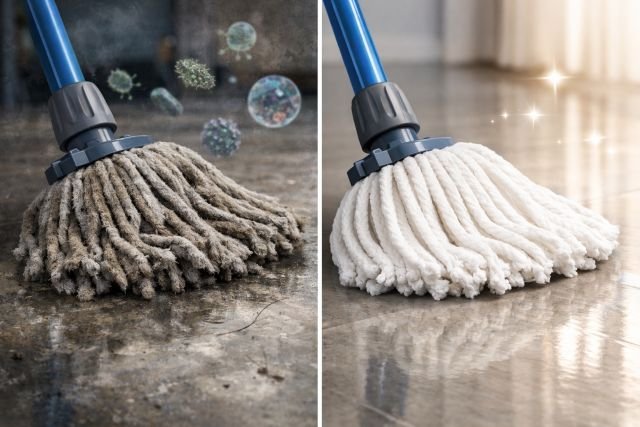
When most people think about floor hygiene, they focus on cleaning chemicals, frequency, or mopping technique. But the mop head is often the deciding factor in whether you are actually removing germs or simply spreading them across the floor. A mop head acts like the core cleaning engine. Its material, absorbency, fiber structure, and maintenance determine how much dirt and bacteria it can lift and how much it leaves behind.
- Quick Definition
- How a Mop Head Influences Floor Hygiene
- Mop Head Material Types: Which Cleans Best?
- Mop Head and Cross-Contamination: The Hidden Cleaning Problem
- Mop Head Hygiene in Healthcare and High-Risk Facilities
- How Mop Head Condition Changes Cleaning Performance
- Microfiber Mop Head Care: Why Maintenance Determines Results
- Choosing the Right Mop Head by Floor Type
- Mop Head and Chemical Compatibility
- Real-World Scenario: The Mop Head Problem Behind “Dirty Floors” Complaints
- When Should You Replace a Mop Head?
- Best Practices for Mop Head Hygiene
- FAQ: Mop Head Questions
- Conclusion: A Mop Head Can Make or Break Your Cleaning Results
If the mop head is low-quality, worn out, or poorly maintained, it can become a contamination tool rather than a cleaning tool. The CDC specifically warns that mop heads can become a source of contamination, especially if they are left soaking in dirty cleaning solutions, and it recommends laundering them after use and allowing them to dry fully.
This guide explains how mop head choices affect hygiene, cleaning outcomes, cross-contamination risk, and cleaning efficiency. You will also learn how to maintain and replace mop heads for better performance and safer spaces.
Quick Definition
What is a mop head?
A mop head is the removable cleaning component of a mop that contacts the floor and absorbs or traps dirt, liquids, and microorganisms. Its material, structure, and maintenance directly affect hygiene and cleaning performance.
How a Mop Head Influences Floor Hygiene
Floor hygiene depends on whether contaminants are removed and contained instead of redistributed. A mop head influences hygiene through its fiber design, how much surface contact it provides, how well it absorbs and holds soil and moisture, and how much contamination it releases back onto the floor during use.
A mop head that traps particles effectively and keeps them locked in during cleaning helps reduce microbial load. A mop head that absorbs dirty water and redistributes it into other areas creates cross-contamination, especially when cleaning multiple rooms or zones in one session.
Mop Head Material Types: Which Cleans Best?
Microfiber Mop Head: Best for Hygiene and Consistent Results
Microfiber mop heads are widely regarded as one of the most effective mop head options for hygiene-focused cleaning. Their fibers have a high surface area and tend to trap dirt and microbes inside the structure rather than pushing them around. Because microfiber has strong pickup performance, it can improve cleaning outcomes even when used with lower liquid volume, which helps floors dry faster and reduces slip hazards.
Research evaluating microfiber compared with cotton systems suggests microfiber mops can achieve superior microbial reduction on floors when used correctly. A University of Washington environmental health fact sheet summarizes evidence showing that a cotton-loop mop reduced bacteria by about 30%, while a microfiber mop reduced bacteria by about 99% in the described comparison.
Microfiber is most effective when laundering routines are correct, because improper washing can reduce its ability to trap particles.
Cotton String Mop Head: Common and Absorbent, but Higher Risk
Cotton string mop heads are common in many commercial environments because they are inexpensive, widely available, and can absorb a lot of liquid. However, that high absorbency can also become a disadvantage when hygiene matters. Cotton tends to hold dirty water, dry more slowly, and may spread contaminants if used across zones or rooms without strict control.
Cotton mop heads can still deliver good results when paired with frequent water changes, strict room-to-room replacement, and thorough drying. But compared to microfiber, cotton often depends heavily on training and process discipline to maintain hygiene.
Sponge Mop Head: Convenient for Smooth Floors, Less Suitable for High-Risk Zones
Sponge mop heads work best on smooth tile surfaces where quick wipe-up and liquid removal are the main goal. However, sponges can retain moisture inside the structure, making them more prone to microbial growth if they are not dried correctly. Sponges can also degrade faster under repeated disinfectant exposure, which reduces their lifespan and performance.
Disposable Mop Heads: Strongest Hygiene Control, Higher Ongoing Cost
Disposable mop heads are often used in healthcare, cleanrooms, and contamination-sensitive environments. They reduce contamination risk because they eliminate reuse. Many infection prevention programs rely on single-use or disposable microfiber mops to reduce bioburden and lower cross-contamination risks, especially during outbreaks or in isolation areas.
The tradeoff is higher recurring cost and increased waste, which is why many facilities reserve disposable systems for the highest-risk zones.
Mop Head and Cross-Contamination: The Hidden Cleaning Problem
Cross-contamination occurs when a mop head picks up microbes and soil from one location and transfers them to another. This often happens when cleaners use one mop head across bathrooms, corridors, and office areas without changing it or when mop heads are dipped back into clean solution after being exposed to heavy contamination.
The CDC highlights that mop heads can become contamination sources, particularly if left soaking in dirty cleaning solutions. It also recommends laundering mop heads after use and allowing them to dry properly to reduce contamination.
Color-coding mop heads by zone and using separate mop heads for bathrooms and food areas are common solutions that reduce the chance of contamination transfer.
Mop Head Hygiene in Healthcare and High-Risk Facilities
In healthcare, floor cleaning supports infection prevention and reduces environmental transmission risk. The CDC emphasizes that effective environmental cleaning depends on the appropriate selection and use of cleaning supplies and equipment.
Research suggests that the mop system itself can significantly influence microbial removal. Studies evaluating microfiber systems indicate they can outperform traditional cotton approaches in microbial reduction when used correctly.
The WHO also highlights the importance of trained environmental cleaning staff in healthcare settings and recognizes cleaning teams as key contributors to reducing infection spread.
In high-risk settings, the mop head is not just a tool. It becomes part of the infection control system.
How Mop Head Condition Changes Cleaning Performance
Even high-quality mop heads lose performance over time. Fibers flatten, fray, or become coated with residues that reduce absorption and pickup. As a mop head wears out, it may leave streaks, spread residue, and lose its ability to trap contaminants.
A worn mop head can also develop persistent odors, even after washing. In many cases, odor indicates retained bioburden or trapped organic material. When this happens, the mop head may appear visually acceptable but still perform poorly from a hygiene standpoint.
Replacing mop heads before they fail is one of the easiest ways to maintain consistent results.
Microfiber Mop Head Care: Why Maintenance Determines Results
Microfiber mop heads can deliver excellent cleaning performance, but only when laundering and storage are done correctly. Improper laundering can clog fibers, reduce absorption, and decrease microbial pickup performance. Washing microfiber with cotton items often introduces lint that sticks to the microfiber structure, making it less effective.
CDC guidance emphasizes laundering mop heads after use and letting them dry fully to reduce contamination. Fabric softener is often discouraged because it coats fibers and reduces their ability to trap particles effectively.
Microfiber also performs better when fully dried between uses, because damp storage promotes microbial growth and odors.
Choosing the Right Mop Head by Floor Type
Choosing a mop head should match both the floor surface and the hygiene requirement. Smooth floors like tile and vinyl benefit from microfiber because it reduces streaking and provides excellent pickup. Concrete and heavy-duty areas sometimes require stronger, more absorbent systems like cotton or heavy microfiber designed for rough surfaces. Wood and laminate floors generally perform best with microfiber damp mops because excess water can damage these surfaces.
Healthcare facilities and food production environments typically prioritize microfiber systems or controlled-use disposables because microbial removal and cross-contamination prevention are the primary goals.
Mop Head and Chemical Compatibility
Not every mop head material responds the same way to disinfectants and chemicals. Some sponge materials break down under repeated disinfectant exposure. Cotton may hold too much solution and oversaturate floors, which can increase slip risks and extend drying time. Microfiber performance can decline if detergent residues build up or if fibers are damaged by improper washing conditions.
When disinfection is required, using EPA-registered disinfectants helps ensure products meet specific pathogen performance claims. CDC guidance also reinforces that cleaning and disinfecting processes should follow correct procedures and product instructions.
For best outcomes, facilities should confirm chemical compatibility with mop head material and laundering systems.
Real-World Scenario: The Mop Head Problem Behind “Dirty Floors” Complaints
A commercial office building had daily cleaning but continued to receive complaints about streaky floors and unpleasant odors. The team had increased disinfectant strength and extended cleaning time, but results did not improve.
The actual issue turned out to be mop head maintenance. Microfiber mop heads were being washed with cotton towels and dried inconsistently. Over time, the mop heads became clogged with lint and residue, reducing their ability to trap dirt and leaving streaks behind.
Once the facility separated microfiber laundry loads, replaced worn mop heads, and reinforced proper drying routines, cleaning results improved immediately. Floors looked brighter, odors decreased, and staff spent less time re-cleaning the same areas.
This case highlights that even the best mop head type can fail without proper care.
When Should You Replace a Mop Head?
There is no universal timeline for replacement because it depends on frequency of use, soil level, laundering quality, chemical exposure, and mop head material. However, replacement should happen as soon as performance declines or hygiene risks appear.
Mop heads should be replaced when they retain odor after laundering, show visible fraying or thinning, leave streaks consistently, absorb poorly, or fail hygiene checks such as ATP testing or internal audits. In high-risk facilities, replacement cycles are often stricter, and mop heads may be tracked by usage or batch IDs.
Replacing early often costs less than re-cleaning, managing complaints, or dealing with contamination issues.
Best Practices for Mop Head Hygiene
The best mop head hygiene strategy is built around prevention. Separate mop heads by zone or purpose, avoid leaving mop heads soaking in dirty solutions, wash them after use, and dry them fully before reuse.
Facilities that train cleaning staff and run simple inspections tend to maintain more consistent floor hygiene and reduce cross-contamination risks. WHO guidance emphasizes the importance of training and supporting environmental cleaning staff, especially in healthcare settings.
When hygiene matters, the mop head should be treated like a controlled tool, not a reusable cloth.
FAQ: Mop Head Questions
What mop head is best for hygiene?
A microfiber mop head is generally best for hygiene because its dense fiber structure traps dirt and microbes more effectively than traditional cotton systems when used and laundered correctly.
How often should you replace a mop head?
Replace a mop head when it begins to smell after laundering, frays, leaves streaks, absorbs poorly, or fails hygiene checks. Replacement frequency depends on usage level, floor soil load, and laundering practices.
Can a mop head spread bacteria?
Yes. Mop heads can spread bacteria when reused across zones, stored wet, or left soaking in dirty cleaning solution. CDC guidance warns that mop heads can become contamination sources if not handled correctly.
Should mop heads be washed after every use?
In professional hygiene-focused settings, mop heads should be laundered after use and dried thoroughly before reuse to reduce contamination risks, consistent with CDC recommendations.
Is disinfectant enough if the mop head is dirty?
Disinfectant helps, but it does not automatically fix a contaminated or poorly maintained mop head. Research suggests cleaning performance depends on mop design, textile quality, and proper process control, not chemical strength alone.
Conclusion: A Mop Head Can Make or Break Your Cleaning Results
A mop head is more than a cleaning accessory. It is the part of the system that touches the floor, captures contamination, and determines whether you remove germs or spread them. The right mop head improves hygiene, reduces cross-contamination, and delivers consistent cleaning results, especially when paired with good laundering and replacement routines.
Microfiber mop heads often provide the strongest combination of pickup performance and hygiene benefits, but they still require correct laundering and drying practices. Cotton and sponge mop heads can work in certain environments, yet they carry higher hygiene risks if processes are not tightly controlled. Disposable mop head systems offer the best contamination control in high-risk zones but increase operating costs.
If you want cleaner floors and better hygiene outcomes, focus on the mop head just as much as your chemicals, schedules, and staff training, and follow trusted guidance from public health authorities and evidence-based cleaning research.