The Quiet Magic of a Music Box
A music box is small enough to fit in your palm, yet powerful enough to carry a lifetime of meaning. It isn’t simply a miniature instrument. It’s a memory device. One twist of a key and suddenly you’re in a childhood bedroom, a wedding day, or a moment you didn’t realize you still held onto.
- The Quiet Magic of a Music Box
- What Is a Music Box?
- Why a Music Box Feels So Special
- The Hidden History Behind the Music Box
- How a Music Box Works
- Cylinder vs Disc Music Boxes: What’s the Difference?
- Why Music Boxes Became Legendary Gifts
- The Modern Comeback: Why the Music Box Is Trending Again
- What Makes a Music Box Valuable? Collector Secrets
- Why a Music Box Sound Feels “Magical”
- Common Questions About Music Boxes
- Real-World Examples: When Music Boxes Matter Most
- How to Choose the Perfect Music Box
- The Cultural Symbolism of the Music Box
- Conclusion: Why Every Music Box Holds a Secret
That’s the real secret behind these tiny treasures. They don’t just make music. They create emotional memory.
In a world filled with streaming playlists and instant sound, the delicate melody of a music box feels almost sacred. And the more you learn about them, the more fascinating they become — mechanically, historically, and emotionally.
What Is a Music Box?
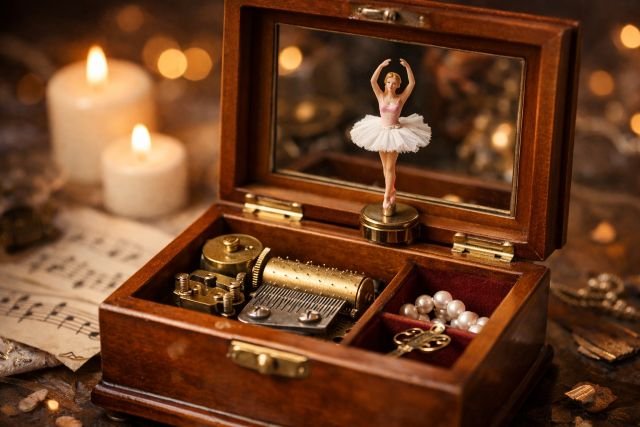
A music box is a mechanical instrument that plays a melody when a spring-driven mechanism rotates a cylinder or disc. Pins or bumps strike tuned metal teeth, called a comb, producing musical notes with a soft, shimmering sound.
That definition may sound technical, but the experience is deeply personal, which explains why people collect, gift, and treasure them worldwide.
Why a Music Box Feels So Special
The reason a music box stands out isn’t volume or complexity. It’s intimacy.
Most music today is designed to fill spaces: speakers, cars, headphones, and huge rooms. A music box is designed to fill a moment. When someone opens a music box, they don’t just hear music. They witness a ritual. The lid lifts slowly, the mechanism begins to turn, and a melody appears like it’s being created right in front of them.
That physical cause-and-effect creates a stronger emotional connection than passive listening, which is why music boxes are often chosen for milestone gifts like anniversaries, birthdays, and baby showers.
The Hidden History Behind the Music Box
The earliest music box-style mechanisms evolved from the concept of carillons, bell-based instruments used in European churches and towers. Eventually, artisans and watchmakers realized they could shrink that idea into a portable object that could “store” melodies mechanically.
The Swiss Inventor Who Changed Everything
A Swiss watchmaker named Antoine Favre-Salomon is widely credited with creating the first true comb-based music box mechanism in 1796 by embedding it into a pocket watch.
That innovation mattered because it introduced the core design still used today: tuned metal teeth and precisely placed pins.
Why Switzerland Became the Music Box Capital
Switzerland already dominated precision watchmaking, and music boxes required the same discipline: micro-engineering, tuning accuracy, and craftsmanship. This is one reason Swiss music boxes became the standard for quality. Even today, collectors often associate Swiss-made mechanisms with authenticity and long-term value.
How a Music Box Works
To appreciate why these objects are so admired, it helps to understand what’s happening inside them. A music box creates sound using only stored energy, controlled motion, and vibration.
Inside a typical music box, a wound spring stores energy. When released, that energy turns a cylinder or disc. The cylinder contains carefully placed pins, and as it rotates, those pins pluck or strike the teeth of a metal comb. Each tooth is tuned to a specific note, and the vibration travels through the wood or resonator to amplify the sound.
The magic is in the precision. A tiny difference in pin placement can change timing and tone, which is why higher-quality music boxes sound smoother and more musical than cheap ones.
Cylinder vs Disc Music Boxes: What’s the Difference?
Collectors often know something casual buyers don’t: the mechanism type changes the sound, flexibility, and value.
Cylinder Music Boxes
Cylinder music boxes use a pinned drum to “program” the melody. This style dominated from the late 1700s through the 1800s and is often associated with antique and vintage craftsmanship. Cylinder-based music boxes typically sound warm and classic, especially in well-maintained pieces.
Disc Music Boxes
Disc music boxes became popular because they allowed people to swap discs and play different songs. This made music boxes more versatile and sometimes louder, as larger combs could be used for richer resonance. Disc systems also created an early form of “music collections,” where owners could build a library of interchangeable melodies.
In simple terms, cylinders are romantic and collectible, while discs tend to be bold and flexible.
Why Music Boxes Became Legendary Gifts
A music box isn’t just an object. It’s a message.
When you give someone a music box, you’re usually communicating something deeper than “here’s a present.” You’re saying, “This melody reminds me of you,” or “I want you to remember this moment,” or even “I chose something timeless.”
That symbolism makes music boxes powerful emotional gifts, especially when paired with meaningful melodies like “Canon in D,” “Für Elise,” or lullabies that become tied to childhood memories.
The Modern Comeback: Why the Music Box Is Trending Again
Music boxes might feel old-fashioned, but demand has been rising. Some industry reports estimate the global music box market value around $500 million in 2023, with growth driven by gifting culture, nostalgia trends, and personalization.
It’s also important to note that market estimates vary depending on how research firms define the category. Some include broader gift and collectible segments, producing larger totals. That variation doesn’t weaken the point. It reinforces it: music boxes are active across both luxury collector markets and mass gifting markets.
This comeback makes sense because modern consumers increasingly crave handmade experiences, “slow living,” tangible nostalgia, and gifts that feel personal rather than disposable.
What Makes a Music Box Valuable? Collector Secrets
Two music boxes can look similar but be priced completely differently. That’s because collectors value what’s inside the box just as much as what’s outside it.
Condition and functionality are often the biggest factors. If the mechanism doesn’t work, value can drop sharply. Experts and appraisers frequently note that major wear or non-working parts can reduce value by more than half, mainly because repairs require specialized skills and parts.
Maker and origin also matter. Premium brands such as Reuge, known for Swiss craftsmanship, often hold higher collector demand and stronger resale value.
Complexity plays a role too. Music boxes with more notes usually produce richer melodies. Higher-end mechanisms may include 36, 50, or more notes, creating depth that smaller, simplified versions can’t replicate.
Materials and craftsmanship can dramatically affect desirability as well. Hand-carved wood, inlays, and rare historical construction styles often increase collectible appeal.
Why a Music Box Sound Feels “Magical”
A music box feels magical partly because it produces sound in a way that is physically visible and emotionally slow.
Unlike digital audio, the vibration is real and immediate. Metal teeth resonate, harmonics form naturally, and wood amplifies it like an acoustic instrument. The sound is often slightly imperfect, which makes it feel human. That subtle imperfection is one reason music box tones can feel warmer and more intimate than synthetic or overly polished recordings.
Common Questions About Music Boxes
Why does a music box sound different from a recording?
A music box creates sound through mechanical vibration. Each note comes from a tuned metal tooth being struck or plucked, and the resonance travels through the box itself. That acoustic process creates natural harmonics that recordings often flatten.
How long does a music box last?
A well-made music box can last for decades or even generations with proper care. Since the mechanism relies on precision, it benefits from being kept clean, dry, and occasionally serviced when necessary.
Can a music box play custom songs?
Yes. Many modern music boxes offer customization, including custom melodies, engraved messages, and personalized designs. Custom gifting is one of the factors driving market growth and renewed popularity.
Are antique music boxes worth buying today?
They can be, but the value depends heavily on condition, originality, and maker authenticity. Working pieces from respected brands often hold stronger value, while damaged or heavily altered ones can be harder to resell.
Real-World Examples: When Music Boxes Matter Most
A music box becomes unforgettable when it’s tied to a life moment. Imagine a couple celebrating their anniversary with a music box playing “Can’t Help Falling in Love.” Over time, that melody becomes emotionally welded to their relationship, stronger than any playlist could.
In another situation, a child inherits a music box from a grandparent. The melody becomes a family signature—something that carries identity, comfort, and tradition. In these cases, the emotional value becomes greater than the market value, which is why people keep music boxes for life.
Collectors often describe a different but equally powerful experience. Finding an antique cylinder music box in working condition can feel like uncovering history. Since condition is one of the strongest pricing drivers, a working mechanism can instantly elevate both rarity and value.
How to Choose the Perfect Music Box
Choosing the right music box starts with listening. A good one has clean notes, consistent speed, and a smooth melody without wobble or sudden changes. Uneven sound often signals wear, poor tuning, or low-quality parts.
Next, choose the song first, not the design. Many buyers pick a box that looks beautiful and later regret the tune because it doesn’t resonate emotionally. When the melody matters, the music box becomes personal rather than decorative.
For antiques, buy from reputable sellers who provide authenticity documentation and offer transparency about repairs or replaced parts. If you’re investing in a valuable piece, ask about servicing history and consider future maintenance costs.
The Cultural Symbolism of the Music Box
Music boxes appear frequently in films, fairy tales, and novels because they symbolize innocence, nostalgia, mystery, and hidden emotion. They are often used as “memory objects,” where a melody unlocks a character’s past.
That narrative role mirrors real life. Music is a powerful trigger for autobiographical memory, and a music box delivers that trigger in its most intimate form: a small melody produced quietly, mechanically, and personally.
Conclusion: Why Every Music Box Holds a Secret
A music box is special because it does something modern technology rarely does. It slows time.
It’s not just the tune. It’s the motion, the craftsmanship, the ritual, and the emotional weight that such a tiny object can hold. Some music boxes become collectibles. Others become heirlooms. But almost all of them become memories.
When you hold a music box, you’re holding a secret: a melody locked inside a mechanism, waiting for the exact right moment to be released.