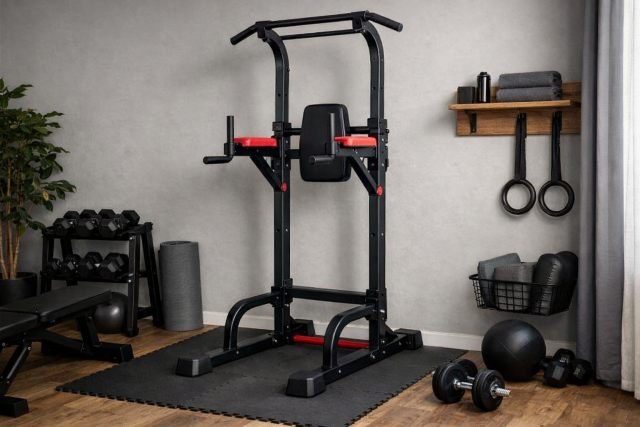
A pull up and dip station is one of the smartest purchases you can make for a compact home gym. It combines two powerful bodyweight exercises—pull-ups and dips—into one setup that fits comfortably in a spare room, studio apartment, or small garage. When space is limited, you need equipment that’s versatile, stable, and easy to store, and the right station can train your back, chest, shoulders, arms, and core without requiring heavy weights or a full gym rack.
- What Is a Pull Up and Dip Station?
- Why Pull-Ups and Dips Work So Well
- Pull Up and Dip Station Benefits for Small-Space Home Gyms
- Best Types of Pull Up and Dip Station for Small Spaces
- How Much Space Do You Actually Need?
- What to Look for in a Pull Up and Dip Station
- Best Pull Up and Dip Station Options for Small Spaces
- Safety Tips for Small-Space Training
- How to Train on a Pull Up and Dip Station
- Common Questions People Ask Before Buying
- FAQ
- Conclusion: Why a Pull Up and Dip Station Is the Smartest Small-Space Upgrade
Bodyweight resistance training is strongly supported by major fitness organizations. The American College of Sports Medicine (ACSM) recommends strength training at least two non-consecutive days per week for general health and fitness, which makes a pull up and dip station a practical solution for staying consistent at home.
What Is a Pull Up and Dip Station?
A pull up and dip station is a compact fitness structure designed for upper-body strength training using your bodyweight. Most models include a pull-up bar and dip handles, and some also feature push-up grips, back padding, or a knee-raise station. The exact design varies, but the purpose stays the same: enabling multi-movement training in a minimal footprint. Power towers are the most common full-frame option, while wall-mounted systems and modular setups are popular in smaller homes.
Why Pull-Ups and Dips Work So Well
Pull-ups and dips are considered high-value exercises because they train multiple large muscle groups at the same time, which is ideal if you’re trying to get maximum results with limited equipment. Pull-ups work the lats, biceps, forearms, upper back, and core. Dips target the chest, triceps, shoulders, and also demand core stability. Research using electromyography (EMG) supports the strong muscle activation seen in pull-up variations, which helps explain why they’re effective for strength development.
Pull Up and Dip Station Benefits for Small-Space Home Gyms
The biggest advantage of a pull up and dip station is efficiency. It gives you a complete push–pull foundation without needing large machines. Many setups have a vertical design that uses height rather than floor space, which is perfect for apartments. Most importantly, you can scale training easily. Beginners can use resistance bands or partial reps, while advanced users can add weight with a vest or backpack. Because it supports consistent resistance training, it aligns well with general fitness recommendations like those from ACSM.
Best Types of Pull Up and Dip Station for Small Spaces
If you’re choosing a pull up and dip station for a small space, the format matters as much as the quality. Compact power towers are the best all-in-one choice because they combine pull-ups, dips, leg raises, and push-ups in one vertical unit. Wall-mounted pull-up bars with dip attachments are excellent for extremely limited floor space because they keep the ground clear, although they typically require drilling and strong studs. Doorway pull-up bars paired with dip attachments are often the best option for renters because they can be installed and removed quickly, but they vary in stability and sometimes cause frame damage if used carelessly. Modular setups using portable dip bars with a pull-up bar are ideal for people who need to store everything under a bed or inside a closet, and portable dip equipment is commonly recommended for small spaces because it packs away easily.
How Much Space Do You Actually Need?
Space requirements depend on the type of station. Compact power towers often need a clear area of roughly four feet by four feet to allow safe movement and avoid collisions with walls. For taller users, ceiling height becomes a key issue because you need overhead space for full pull-up range. Wall-mounted setups require far less floor space, but you still need room for your body to move during dips and pull-ups. Doorway or modular setups generally require minimal permanent space because they can be stored away when not in use, though you still need a clear exercise zone while training.
What to Look for in a Pull Up and Dip Station
For small spaces, the most important factor is the footprint. Before buying, measure the exact area where it will go and account for extra clearance around it. Next, focus on weight capacity and stability. Many manufacturers advertise high weight capacities, but stability depends heavily on base width, steel thickness, and how the station is constructed. Some models market capacities as high as 450 pounds, but real-world stability can still vary depending on design and assembly quality.
Adjustability is also important, especially if multiple people will use the station. A multi-grip pull-up bar adds variety and can reduce strain because you can switch between wide, neutral, and chin-up grips. For small apartments, ease of storage is a major advantage, so foldable designs, modular parts, or wheels for movement can make a big difference.
Best Pull Up and Dip Station Options for Small Spaces
The best pull up and dip station for a small space depends on your living situation and training goals. If you want one all-in-one centerpiece that supports pull-ups, dips, push-ups, and leg raises, a compact power tower is usually the best choice. If you live in a studio or need to keep floor space open, a wall-mounted pull-up bar with dip handles provides excellent stability while saving room. If you rent and need flexibility, a doorway pull-up bar paired with a dip attachment offers a low-cost solution that can be removed when needed. If storage is your biggest concern, portable dip bars combined with a pull-up setup give you a modular solution that can be stored in a closet and set up in minutes.
Safety Tips for Small-Space Training
Small spaces increase the chance of accidental collisions, so safety matters even more. Make sure the station is placed on a level surface and check for wobbling before every session. Use a workout mat to prevent slipping and to protect flooring. Ensure you have enough clearance from walls, furniture, lights, and ceiling fans. If you’re new to dips, start with shallow range of motion and avoid dropping too deep, as shoulder discomfort often comes from poor control or excessive depth.
How to Train on a Pull Up and Dip Station
A pull up and dip station can deliver excellent results even with a minimalist plan. For general fitness, strength training twice per week is considered a reliable baseline, and ACSM recommends at least two non-consecutive days weekly for strength work.
A beginner can start with assisted pull-ups using resistance bands, then add controlled negative reps, and gradually build toward full pull-ups. Dips can begin with bench-assisted dips or partial dips until strength and shoulder tolerance improve. Intermediate trainees can increase volume and intensity by adding more sets, slowing tempo, or adding external resistance.
Progression is simple and effective. You can add reps each week, slow down the lowering phase, pause at the top, change grips, or add a weighted vest or backpack. These progression tools allow muscle growth and strength gains without needing heavy equipment.
Common Questions People Ask Before Buying
Many people wonder if a pull up and dip station is enough for a full workout. For upper body and core, the answer is yes, especially if you train progressively. If you add lower-body movements like squats, lunges, and hip hinges, you can build a well-rounded program without a full gym. Another common question is stability in apartments. A high-quality power tower can be stable, but the floor type and assembly quality matter. Placing it on a mat and tightening bolts regularly helps.
People also ask what to do if they can’t do a pull-up yet. The most effective approach is using bands for assistance, practicing negatives, and improving grip strength. Many beginners progress from assisted reps to full reps within weeks to months when training consistently. Lastly, dips can sometimes irritate shoulders, especially if performed too deep or too fast. Proper form and gradual progression usually solve the issue.
FAQ
What is a pull up and dip station?
A pull up and dip station is a compact piece of fitness equipment that allows you to perform pull-ups, dips, and often additional movements like leg raises and push-ups, making it ideal for small home gyms.
What’s the best pull up and dip station for small spaces?
The best option depends on your space and lifestyle. Compact power towers offer the most variety, wall-mounted systems save the most floor space, doorway setups are best for renters, and portable dip bars paired with a pull-up bar are the easiest to store.
Is a pull up and dip station good for beginners?
Yes. Beginners can start with assisted pull-ups and modified dips, then gradually progress toward full repetitions. This makes it a highly scalable strength tool.
How often should I use it?
Most fitness guidelines recommend strength training at least two days per week with rest between sessions, and a pull up and dip station fits perfectly into that frequency.
Can you build muscle with just pull-ups and dips?
Yes. Both movements are compound exercises that heavily load major upper-body muscles. With progressive overload through reps, tempo, and added weight, you can build significant muscle and strength.
Conclusion: Why a Pull Up and Dip Station Is the Smartest Small-Space Upgrade
A pull up and dip station is one of the most effective and space-efficient tools for building upper-body strength at home. It supports powerful compound training with minimal equipment, and it can be adapted to beginners and advanced athletes alike. Whether you choose a compact power tower, a wall-mounted setup, a doorway option, or portable dip bars, the key is choosing a model that fits your available space while providing stability and progression potential.
With consistent training aligned to proven strength guidelines, you can transform even a small apartment corner into a serious strength zone and build a stronger back, chest, arms, and core without needing a full gym.