If you’ve ever stood in the supermarket aisle staring at three different pizza bases and wondering which one will actually deliver a proper pizza night, you’re not alone. Store-bought bases have multiplied fast: chilled dough, “stone-baked” rounds, ultra-thin crusts, naan, gluten-free options, cauliflower-style alternatives, and shelf-stable crusts that promise convenience.
Some of these pizza bases genuinely work. Others taste like they were designed to hold toppings rather than be eaten. The difference usually comes down to two things: how close the base is to real dough, and how it behaves in a home oven where heat is gentler than a pizza oven.
This guide ranks the most common store-bought pizza base types you’ll realistically find in grocery stores. You’ll also get practical, real-world tips that make any base taste more like something you’d happily pay for, plus answers to the questions people always ask when they want fast pizza that still feels like dinner.
What a pizza base actually needs to do
A pizza base isn’t just a platform. It has to brown before the toppings dry out, stay crisp enough under sauce, and taste good on its own. That last part matters more than people admit. If the base has no flavor, you’ll end up overcompensating with extra cheese, salty cured meats, and heavy sauce, and suddenly your “quick meal” is both less satisfying and often much higher in sodium. Pizza is widely recognized as a major contributor to sodium intake in many diets, largely because it’s eaten often and can be salt-heavy depending on components.
When you choose better pizza bases, you typically need fewer “fixes” to make the final pizza taste complete.
Store-bought pizza bases ranked from most worth it to least
Rank 1: Fresh refrigerated dough (best for real pizza texture)
If you want the closest thing to pizzeria crust without making dough from scratch, fresh refrigerated dough is the top choice. It’s still dough, not a finished cracker-like crust, which means it can rise, brown, and develop chew. Even in a regular home oven, you can get that satisfying contrast between crisp bottom and soft interior, especially at the edges.
The biggest reason refrigerated dough wins is versatility. You can stretch it thin for a New York-ish style, keep it a bit thicker for a fluffy bite, or split it into personal pizzas. It also tolerates toppings better because it’s designed to bake from raw. That matters if you like mushrooms, onions, or anything that releases water.
When refrigerated dough disappoints, it’s usually because it was baked too cold or too gently. Dough needs heat to spring. Let it come to room temperature so it stretches easily, then bake on a preheated tray or stone so the base crisps quickly. If you’re adding this to your article with an image, a strong alt tag would be: “Fresh pizza bases made from refrigerated dough before baking.”
Rank 2: Par-baked “bakery-style” bases (best speed-to-quality balance)
These are the round bases often labeled “stone-baked,” “artisan,” or “bakery-style.” They’re already baked once, so they’re fast, but they still feel like bread rather than a biscuit. When they’re good, they deliver a reliable weeknight pizza that doesn’t feel like a compromise.
Their biggest strength is predictability. You can top them and bake without worrying about undercooking dough in the center. They’re also family-friendly because they hold shape well and don’t require stretching skills.
The common failure point is blandness. Some are thick but taste empty, which is frustrating because thickness should mean more flavor, not more nothing. To fix that, treat the base like it deserves to be browned. Pre-crisp it for a few minutes before topping, then bake again. It’s a small step that keeps the center from going soft under sauce. An image that shows this technique could use an alt tag like: “Pre-baking store-bought pizza bases to prevent sogginess.”
Rank 3: Naan and quality flatbread (best “personal pizza” shortcut)
Naan pizzas are popular for a reason. They’re fast, they taste good, and they’re hard to mess up. Naan isn’t classic Italian pizza dough, but it has built-in flavor, often from fermentation and high-heat baking, and that immediately makes the final pizza feel more satisfying.
Naan works especially well for personal pizzas and quick lunches. It also suits topping combinations that would feel odd on traditional crust, like chicken tikka, spiced veggies, or a white sauce with herbs. In those scenarios, naan doesn’t feel like a substitute. It feels like the right base.
The main thing to manage is heat. Naan can brown faster at the edges than toppings melt, so keep an eye on it and consider baking on a slightly lower rack. If you add an image of a finished naan pizza, a clean alt tag would be: “Store-bought pizza bases made with naan for quick personal pizzas.”
Rank 4: Thin pre-baked crusts (best for crisp lovers, worst for heavy toppings)
Thin pre-baked crusts can be excellent when you want that snappy, crispy bite and a lighter-feeling meal. They’re also great when you want your toppings to be the star rather than a bready crust. Many people prefer crisp textures in crust styles, and thin crusts cater directly to that preference.
The downside is topping tolerance. Thin crusts punish watery sauce, overloaded cheese, and moisture-heavy vegetables. If you treat a thin crust like a deep-dish foundation, you’ll get a soggy center or a cracker that shatters into topping chaos.
The “worth it” version of thin crust is the one you top with restraint. Use a thicker sauce in a thin layer, add cheese in a controlled amount, and choose toppings that roast rather than steam. If you’re adding an image, an accurate alt tag would be: “Crispy thin pizza bases topped lightly for best texture.”
Rank 5: Tortillas and lavash (best for snacks, not for classic pizza)
Tortillas and lavash are pizza-adjacent options that can work surprisingly well for ultra-thin, crunchy pizzas. They’re not a substitute for real crust, but they’re great when the goal is speed and crispness, like a late-night snack or a quick kid-friendly meal.
This category becomes “not worth it” if you expect chew or that classic bread flavor. It shines when you accept it as its own thing. The trick is to crisp the base briefly before topping so it doesn’t soften under sauce. Because these are usually thin, sauce should be sparse and thicker rather than watery.
Rank 6: Whole grain and seeded bases (great when they’re not dry)
Whole grain or seeded pizza bases can bring nutty flavor and a heartier bite. They can also add fiber, which is associated with better digestive health and other benefits.
The problem is execution. Some whole grain crusts are dense and dry, which makes people add more cheese and salt to compensate. At that point, the “health halo” disappears and the pizza becomes less enjoyable.
If you choose this category, look for a base that still browns well and doesn’t feel like a dry cracker. Whole grains should taste toasty and rich, not dusty. These bases pair well with bolder flavors like roasted vegetables, olives, feta, or a sharper cheese blend because the crust can support stronger notes.
Rank 7: Gluten-free pizza bases (worth it when needed, variable when not)
Gluten-free bases are essential for people avoiding gluten, and some are genuinely enjoyable. The best gluten-free crusts usually lean into crispness rather than trying to mimic airy, chewy wheat dough. When gluten-free brands try to do “fluffy,” the texture can drift into gummy territory, especially under heavy toppings.
If you’re buying gluten-free pizza bases, expect to adjust technique. Bake longer than you think you need, keep toppings lighter and drier, and prioritize browning. Crisp edges and a dry bottom are what make gluten-free pizza feel satisfying.
Rank 8: Cauliflower and vegetable-based crusts (a niche win with the right expectations)
Vegetable-based crusts can be tasty and convenient, especially when you want a different flavor profile or you’re trying to reduce refined flour. But they behave differently because moisture is always in the background. If you bake them like a normal crust and load them like a normal crust, they can steam and go soft.
These are worth it when you treat them like a two-stage bake. Crisp the crust thoroughly first until it looks dry and browned, then add toppings and bake again. If the crust isn’t crisp before you add sauce, it won’t magically crisp afterward.
Rank 9: Shelf-stable ready crusts (most likely to disappoint)
Shelf-stable crust rounds are popular because they’re convenient and often inexpensive. They’re also the most likely to taste flat and feel either spongy or cracker-dry. These are the crusts that often force you into “fixing mode,” where you add more cheese, salt, and strong toppings just to make the pizza taste like something.
Because pizza can already contribute a lot of sodium in many diets, relying on salty “fixes” is not ideal. If you’re using a shelf-stable base, choose toppings with real flavor that don’t rely on salt alone, like roasted garlic, fresh herbs, caramelized onions, or a finishing drizzle of olive oil.
How to choose pizza bases that are actually worth it
Ingredient lists don’t tell the whole story, but they’re a strong clue. Bases that look like bread tend to taste like bread. Flour, water, yeast, salt, and maybe oil are usually a good sign. When the ingredient list grows long with stabilizers, sweeteners, and conditioners, the base may be engineered for shelf life more than flavor.
Also think about your topping style before you buy. If you love heavy toppings, choose dough or a thick par-baked base. If you love simple pizzas with a few high-quality ingredients, thin crusts can be amazing. The best base is the one that fits your pizza habits.
Make any store-bought pizza base taste better at home
The most common reason store-bought pizza disappoints is heat management. Home ovens are cooler and slower than pizza ovens, so you have to help your base crisp before your toppings overcook.
A fully preheated oven matters. Not “I turned it on five minutes ago,” but “it’s been hot long enough that the tray or stone is ripping hot.” A preheated surface makes the bottom of the base crisp quickly, which protects it from sauce moisture.
Moisture control is your second superpower. Watery sauce is the fastest route to soggy pizza. If you’re using jarred sauce and it looks thin, simmer it briefly so it thickens. Use less than you think you need, especially on thin bases.
Pre-baking is the third lever. Par-baked bases and thin crusts benefit from a short pre-crisp step. Vegetable-based crusts often need it even more. That quick first bake makes the base more resistant to sauce and improves browning.
Finally, restaurant-style finishing makes a bigger difference than most people expect. A drizzle of olive oil after baking, fresh basil added at the end, or a small sprinkle of parmesan can create aroma and richness that reads as “fresh” even when the base is store-bought. This is one of the easiest ways to make weeknight pizza feel intentional instead of improvised.
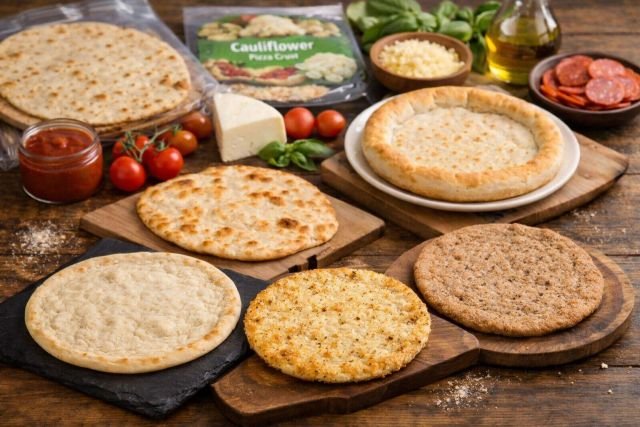
If you’re adding images in your post, consider including one photo that shows different base types side by side with an alt tag like: “Different store-bought pizza bases ranked by quality,” and another that shows a finished pizza on a board with an alt tag like: “Store-bought pizza bases baked until crisp for better texture.”
FAQs about pizza bases
What are the best store-bought pizza bases?
The best store-bought pizza bases are usually fresh refrigerated dough for the most authentic texture, and high-quality par-baked bakery-style bases for the best speed-to-quality tradeoff. Naan is also an excellent option for quick personal pizzas that still taste satisfying.
Are pre-baked pizza bases good?
Pre-baked pizza bases can be very good, especially when you pre-crisp them for a few minutes before topping and avoid watery sauce. The biggest difference between brands is dough flavor, so ingredient quality and browning performance matter.
How do I stop a store-bought pizza base from going soggy?
Use a hot, fully preheated oven and bake on a preheated tray or stone. Keep sauce thicker and lighter than you think, and consider pre-baking the base briefly. Sogginess is mostly a moisture and heat problem, not a topping problem.
Is thin crust healthier than thick crust?
Thin crust can be lower in calories because it uses less dough, but “healthier” depends on total toppings, portion size, and sodium. Pizza is commonly identified as a major sodium contributor in many diets, so cheese and cured meats often matter more than crust thickness.
Are whole grain pizza bases better for you?
Whole grains generally provide more fiber and nutrients than refined grains, and fiber is associated with digestive health benefits and other positive outcomes. The most “worth it” whole grain base is one that still tastes good, because an unpleasant crust often leads people to compensate with heavier toppings.
Conclusion: which pizza bases are worth it?
The store-bought pizza bases that are most worth your money are the ones that behave like real pizza in a home oven. Fresh refrigerated dough delivers the closest-to-pizzeria experience, especially when you bake it hot and let it brown properly. Par-baked bakery-style bases are the best weeknight compromise because they’re fast and still bread-like. Naan and quality flatbreads are fantastic when you want quick personal pizzas with built-in flavor.
Thin crusts can be brilliant if you top lightly and keep sauce thick, while gluten-free and vegetable-based crusts are most successful when you commit to crisping them thoroughly before piling on toppings. Shelf-stable ready crusts can work in a pinch, but they’re the least consistently satisfying and most likely to require “fixes.”