If you suspect your washing machine hose may be wearing out, you’re already taking the first important step toward preventing leaks and potential flooding. Washing machine hoses are often overlooked, yet they play a critical role in delivering hot and cold water from your home’s plumbing to your washer. When they weaken or fail, they can cause major water damage, mold growth, and expensive repairs. This guide explains the top signs your washing machine hose needs replacement, how long hoses last, and what you can do to protect your laundry area from unexpected water issues.
- Why Washing Machine Hoses Wear Out Over Time
- Top Signs Your Washing Machine Hose Needs Replacement
- How to Inspect a Washing Machine Hose in Two Minutes
- When to Replace Your Washing Machine Hose Immediately
- How to Replace a Washing Machine Hose
- Preventing Future Washing Machine Hose Problems
- FAQ: Washing Machine Hose Replacement
- Conclusion
Why Washing Machine Hoses Wear Out Over Time
Every washing machine hose endures constant water pressure, vibration, and fluctuations in temperature. Rubber hoses in particular tend to degrade with age, especially in homes with high water pressure or where the washer is used frequently. Even stainless-steel braided hoses, which are more durable, are not immune to wear. Insurance sources report that washing machine failures cost homeowners millions of dollars each year, largely due to burst hoses—yet most failures can be prevented simply by replacing hoses on schedule.
Top Signs Your Washing Machine Hose Needs Replacement
1. Cracks, Bulges, or Visible Surface Damage
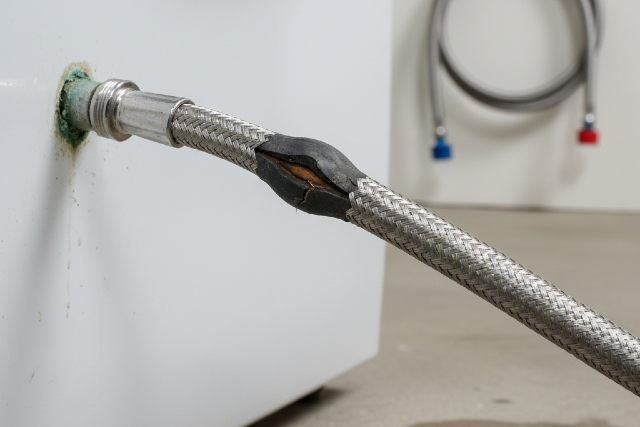
The most obvious sign of hose failure is visible damage. If the hose shows cracks along the outer surface, bulging areas that look swollen, blistering, or any type of warping, the internal layers of the hose may be breaking down. Bulging is especially dangerous because it usually indicates that water pressure is pushing against a weak area that may burst at any time.
2. A Stiff, Rigid, or Brittle Feel
A washing machine hose should feel flexible when gently bent or pressed. If the hose feels extremely hard, stiff, or brittle, it has likely dried out or deteriorated internally. This happens most often with older rubber hoses. When a hose loses flexibility, it is far more prone to cracking during pressure spikes or when the machine vibrates during the spin cycle.
3. Moisture, Dripping, or Small Puddles Near the Washer
Even if you do not see a large leak, moisture around the back of your washing machine is a serious warning sign. Dampness near the hose connection often indicates a loose fitting or a small, slow leak. These leaks tend to worsen over time and can lead to mold growth or significant water damage if ignored. Any unexplained dripping or pooling water behind or under the washer should prompt an immediate hose inspection.
4. Rust, Corrosion, or Mineral Buildup on the Hose Ends
The metal connectors at each end of your washing machine hose are vulnerable to corrosion, especially in areas with hard water. Rust or white, chalky mineral deposits usually mean water is seeping through small openings at the connection point. Over time, corrosion weakens these fittings and can cause them to detach suddenly under pressure. If you see rust at either end of the hose, replacement is strongly recommended.
5. The Hose Is More Than Five Years Old
Even if your washing machine hose looks fine during a visual inspection, age alone is often enough reason to replace it. Rubber hoses typically last three to five years, while stainless-steel braided hoses may last five to seven years. After this time, the material begins to break down internally. Many homeowners write the installation date directly on the hose to keep track and avoid surprise failures.
6. Excessive Washer Vibration During Spin Cycles
If your washing machine tends to shake or move during the spin cycle, the vibration can slowly damage the hose. This movement can loosen fittings, create stress along the hose surface, or cause the hose to rub against the wall or machine. Any signs of wear caused by vibration, such as scuff marks or slight tearing, indicate that the hose may need to be replaced sooner rather than later.
7. Hose Kinks or Tight Bends Behind the Machine
When a washing machine is pushed too close to the wall, the hose may bend sharply or kink. Over time, these tight bends restrict water flow and weaken the hose structure. A kinked hose is more likely to burst under pressure, particularly during the fill cycle when water pressure peaks. If your hose is bent sharply, replacing it with one that has a ninety-degree elbow fitting can help prevent future stress.
8. Mold, Mildew, or Musty Odors Near the Hose
If the area around your washing machine smells musty or shows signs of mold, it often means there is a slow leak or ongoing moisture buildup around the hose. Even a small, intermittent leak can create ideal conditions for mold growth. Any persistent odor or visible mold should be treated as a sign that the washing machine hose needs to be inspected and likely replaced.
How to Inspect a Washing Machine Hose in Two Minutes
Inspecting your hose is simple. Pull the washing machine slightly away from the wall, turn off the water supply, and look closely along the entire length of the hose. Check the texture by gently squeezing it to see whether it feels flexible or brittle. Examine both connectors for moisture, rust, or mineral deposits. A quick inspection every few months can prevent unexpected hose failures.
When to Replace Your Washing Machine Hose Immediately
Some signs require immediate action. If a hose has any bulging, severe cracking, persistent dripping, or corrosion around the fittings, you should replace it right away. Likewise, if your hose is older than five years or if you have recently experienced plumbing issues such as pressure spikes, replacing the hose proactively can help prevent sudden ruptures.
How to Replace a Washing Machine Hose
Replacing a washing machine hose is straightforward. Start by turning off the hot and cold water supply valves and unplugging the washer. Place a towel or small bucket underneath the connections to catch any remaining water. Using an adjustable wrench, loosen the hose from the water valve and then from the washing machine. After removing the old hose, attach the new one to the water supply valves and then to the washer’s intake ports. Tighten the connections securely but avoid over-tightening, which can damage the threads. Turn the water back on and check for leaks before sliding the washer carefully back into place.
Preventing Future Washing Machine Hose Problems
You can reduce the risk of leaks by replacing hoses within the recommended time frame and avoiding tight bends behind the washer. Leaving a few inches of space between the washing machine and the wall prevents accidental kinking. Some homeowners also install flood-prevention valves or auto-shutoff hoses, which stop the water supply automatically if a hose ruptures. Regular inspections and routine maintenance are key to avoiding water damage from a failing hose.
FAQ: Washing Machine Hose Replacement
How often should washing machine hoses be replaced?
Rubber hoses should be replaced every three to five years, while stainless-steel braided hoses generally last five to seven years.
What causes washing machine hoses to burst?
Hoses typically burst due to age, high water pressure, constant vibration, temperature fluctuations, or material deterioration.
Which type of hose is the most reliable?
Stainless-steel braided hoses offer the most durability and are the best choice for preventing ruptures.
Can I replace a washing machine hose myself?
Yes, replacing a hose is simple and usually takes only about fifteen minutes using basic tools.
Conclusion
Recognizing the early signs of a failing washing machine hose can save you from severe water damage, mold growth, and costly repairs. Whether you notice cracking, bulging, stiffness, moisture, corrosion, or simply realize the hose is older than five years, timely replacement is a smart and inexpensive preventive measure. Regular inspections and proactive maintenance ensure that your washing machine operates safely and efficiently, giving you peace of mind every time you start a load of laundry.