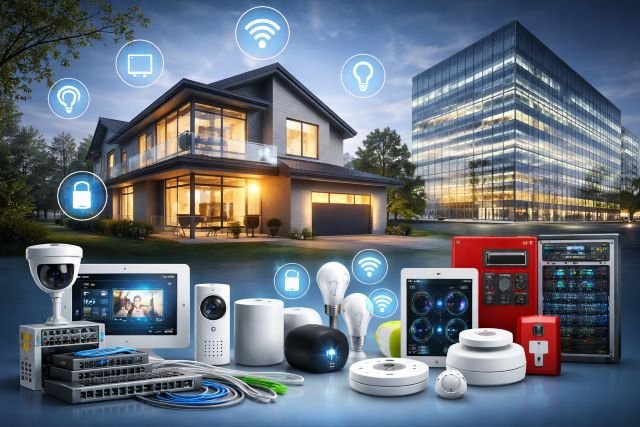
Extra low voltage systems have become a foundational element in modern residential and commercial construction. The term extra low voltage refers to electrical systems operating at 50 volts AC or below, or 120 volts DC or below, which significantly minimizes the risk of electric shock and fire hazards.
- What Is Extra Low Voltage?
- Importance of Extra Low Voltage in Modern Construction
- Extra Low Voltage Applications in Residential Projects
- Extra Low Voltage Applications in Commercial Projects
- Extra Low Voltage vs Conventional Low Voltage Systems
- Standards and Regulations Governing Extra Low Voltage
- Design and Installation Considerations
- Case Study: Smart Commercial Office Building
- Common Questions About Extra Low Voltage Systems
- Future Trends in Extra Low Voltage Technology
- Conclusion
In today’s construction landscape, extra low voltage technology is essential for powering smart devices, communication networks, security systems, and automated building controls. As buildings become more connected and intelligent, extra low voltage infrastructure ensures safety, efficiency, and adaptability.
What Is Extra Low Voltage?
Extra low voltage systems are designed for applications where safety, control, and reliability are more important than delivering high electrical power. These systems are commonly used for signaling, monitoring, data transmission, and automation rather than heavy electrical loads.
International standards such as those published by the International Electrotechnical Commission define extra low voltage as a protective electrical category intended to reduce physical harm and equipment damage. This makes extra low voltage ideal for environments with constant human interaction, such as homes, offices, hospitals, and retail spaces.
Importance of Extra Low Voltage in Modern Construction
The growing reliance on technology in buildings has increased the demand for safer electrical solutions. Extra low voltage systems address this need by reducing electrical hazards while supporting advanced digital infrastructure.
From an economic perspective, extra low voltage installations often require smaller cables, simpler containment systems, and less complex maintenance procedures. Over time, this results in lower operational costs and improved system longevity. Developers also favor extra low voltage systems because they align with sustainability goals and green building certifications.
Extra Low Voltage Applications in Residential Projects
Residential buildings increasingly depend on extra low voltage solutions to support modern lifestyles. Smart living, enhanced security, and seamless connectivity are all enabled through well-designed extra low voltage systems.
Home automation is one of the most prominent residential applications. Lighting control, climate management, and motorized shading systems operate efficiently using extra low voltage circuits. These systems allow homeowners to automate daily routines while maintaining low energy consumption.
Security is another critical residential application of extra low voltage technology. CCTV cameras, video door phones, motion sensors, and smart access locks all rely on extra low voltage power. Because these systems operate continuously, the reduced risk of overheating and electrical faults is a significant advantage.
Entertainment and audio-visual systems also benefit from extra low voltage installations. Home theaters, multi-room audio setups, and smart televisions use low voltage cabling to deliver stable performance with minimal signal interference. This approach also allows for cleaner and more aesthetically pleasing installations.
Data and communication networks within homes depend heavily on extra low voltage infrastructure. Structured cabling, wireless access points, and intercom systems all operate within extra low voltage limits, ensuring reliable connectivity and future scalability.
Extra Low Voltage Applications in Commercial Projects
Commercial buildings rely even more heavily on extra low voltage systems due to their scale, complexity, and regulatory requirements. Offices, shopping centers, hospitals, and industrial facilities all depend on extra low voltage infrastructure to function efficiently and safely.
Building management systems are a core commercial application of extra low voltage technology. These systems control heating, ventilation, air conditioning, lighting, and energy monitoring. According to data from the U.S. Department of Energy, automated building controls can reduce overall energy consumption by up to thirty percent, making extra low voltage systems a key contributor to operational efficiency.
Fire alarm and life safety systems are almost entirely based on extra low voltage circuits. Smoke detectors, heat sensors, emergency alarms, and voice evacuation systems must remain operational at all times. Extra low voltage design ensures reliability while complying with strict safety regulations.
Access control and surveillance are also major commercial uses of extra low voltage systems. Card readers, biometric scanners, turnstiles, and security cameras depend on low voltage power for continuous operation. These systems protect assets and occupants while minimizing electrical risks.
Information technology and data infrastructure in commercial environments are built around extra low voltage cabling. Structured data networks, server monitoring systems, and network switches operate more efficiently and with less electromagnetic interference when powered through extra low voltage solutions.
Extra Low Voltage vs Conventional Low Voltage Systems
While extra low voltage and low voltage systems are often grouped together, they serve different purposes. Extra low voltage systems prioritize safety and control, whereas conventional low voltage systems are designed for higher power delivery such as lighting circuits and small motors.
Understanding this distinction is essential during the design phase of a project. Using extra low voltage where appropriate improves safety and reduces costs, while reserving higher voltage systems for applications that genuinely require more power.
Standards and Regulations Governing Extra Low Voltage
Extra low voltage installations must comply with established electrical standards to ensure safety and performance. International guidelines such as IEC 60364, NEC Article 725, and BS 7671 outline design, installation, and testing requirements for extra low voltage systems.
Compliance with these standards is particularly important in commercial projects, where regulatory inspections and insurance requirements are strict. Proper documentation and certified components help avoid delays and legal complications.
Design and Installation Considerations
Successful extra low voltage implementation begins with careful planning. Designers must ensure physical separation between extra low voltage and high-voltage cables to prevent interference and safety issues. Adequate labeling, proper grounding, and allowance for future expansion are also essential.
Choosing high-quality components and experienced installers reduces the risk of system failures and improves long-term reliability. Extra low voltage systems may appear simple, but poor design can compromise performance and safety.
Case Study: Smart Commercial Office Building
A mid-sized commercial office building adopted a fully integrated extra low voltage building management system. The project included automated lighting, climate control, access management, and energy monitoring.
After implementation, the building achieved a reduction of nearly thirty percent in energy costs. Occupant comfort improved due to consistent temperature control, and facility managers gained real-time visibility into system performance. This real-world example demonstrates how extra low voltage systems deliver measurable operational and financial benefits.
Common Questions About Extra Low Voltage Systems
Many property owners ask whether extra low voltage systems are truly energy efficient. In practice, these systems consume less power and generate minimal heat, making them highly efficient for continuous operation.
Another common concern is upgradability. Extra low voltage systems are typically modular, allowing new devices and technologies to be added without major infrastructure changes. In many regions, extra low voltage systems are also mandatory for specific applications such as fire alarms and data networks.
Future Trends in Extra Low Voltage Technology
The future of extra low voltage systems is closely tied to the growth of smart buildings and smart cities. Technologies such as artificial intelligence, Internet of Things sensors, and Power over Ethernet are expanding the capabilities of extra low voltage infrastructure.
As demand for connected, energy-efficient buildings increases, extra low voltage systems will continue to evolve as a critical component of modern construction.
Conclusion
Extra low voltage systems are a cornerstone of safe, efficient, and intelligent residential and commercial buildings. From smart homes and security systems to large-scale building automation and data networks, extra low voltage applications provide unmatched safety, flexibility, and long-term value.
Investing in properly designed extra low voltage infrastructure ensures compliance with safety standards, reduces operating costs, and prepares buildings for future technological advancements. As construction continues to evolve, extra low voltage will remain essential to modern electrical design.