An immersion heater is a simple yet powerful device used to heat water directly inside a tank or container. It is commonly found in homes as a primary or backup water heating solution, especially in areas where gas supply is unreliable or where electric systems are preferred. When used correctly, an immersion heater provides reliable hot water, but incorrect usage can lead to higher energy bills or safety risks. This comprehensive guide explains immersion heater installation, practical usage tips, and essential safety advice so you can use the system efficiently and confidently.
- What Is an Immersion Heater?
- Types of Immersion Heaters
- Immersion Heater Installation Explained
- How to Use an Immersion Heater Efficiently
- Immersion Heater Safety Advice
- Special Considerations for Portable Immersion Heaters
- Immersion Heater vs Other Water Heating Systems
- Energy Consumption and Running Costs
- Common Immersion Heater Problems
- Frequently Asked Questions About Immersion Heaters
- Expert Insights and Best Practices
- Conclusion
What Is an Immersion Heater?
An immersion heater is an electric heating element that sits directly inside a water tank or cylinder. Instead of heating water externally like a boiler, it warms the water internally. Electricity flows through the metal element, generating heat, which is then transferred to the surrounding water. A built-in thermostat controls the temperature, ensuring the water does not overheat.
One of the biggest advantages of an immersion heater is its independence from central heating systems. Even if your boiler fails, the immersion heater can still supply hot water.
Types of Immersion Heaters
There are several types of immersion heaters designed for different use cases. Fixed immersion heaters are permanently installed in hot water cylinders and are most common in residential properties. Portable immersion heaters are typically used for buckets or small containers and are popular for travel or temporary use, although they require greater caution. Solar-compatible immersion heaters work alongside solar PV systems and use excess solar electricity to heat water, making them an energy-efficient option for modern homes.
Immersion Heater Installation Explained
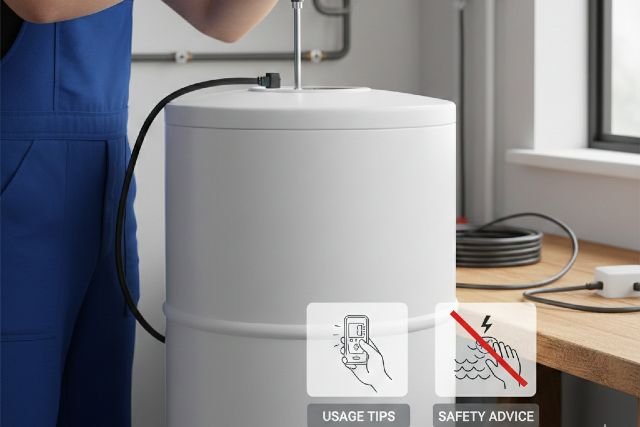
Immersion heater installation should always be handled by a qualified electrician or plumber. The process involves isolating the electrical supply, partially draining the water tank, fitting the heating element securely into the cylinder, connecting the thermostat, and testing the system for safe operation.
The cost of installation varies depending on whether the unit is new or a replacement. A standard installation usually ranges between moderate costs, while solar-compatible systems tend to be more expensive due to additional components. Proper installation is critical because incorrect wiring or poor fitting can lead to electrical faults, leaks, or overheating.
How to Use an Immersion Heater Efficiently
Using an immersion heater efficiently is essential for controlling electricity costs. One of the most effective methods is to heat water only when required rather than leaving the heater switched on continuously. Setting the thermostat to around 60°C, or 140°F, is considered optimal for both safety and efficiency. Insulating the hot water tank also plays a significant role, as it helps retain heat for longer periods and reduces reheating time.
According to the Energy Saving Trust, households that use timers and proper insulation can reduce water heating energy consumption by up to 25 percent. This demonstrates that small adjustments in usage habits can result in noticeable savings over time.
Immersion Heater Safety Advice
Safety is one of the most important aspects of using an immersion heater. The heater should never be switched on when there is no water in the tank, as this can cause the element to overheat and fail. Thermostats and thermal cut-out switches must always be functional, as they prevent dangerous temperature levels.
Electrical wiring should never be handled as a DIY task unless carried out by a certified professional. Damaged or corroded heating elements should be replaced immediately. For households with children, extra caution is necessary, particularly when portable immersion heaters are used, as exposed elements can pose serious burn or shock hazards.
The Electrical Safety Foundation International highlights that water heating appliances are a common cause of household electrical accidents, reinforcing the importance of regular inspections and safe usage practices.
Special Considerations for Portable Immersion Heaters
Portable immersion heaters require even greater attention to safety. They should only be used in heat-resistant containers and must always be plugged into sockets with ground fault or residual current protection. Touching the water while the heater is connected to power is extremely dangerous and should always be avoided. Portable immersion heaters should never be left unattended during operation.
Immersion Heater vs Other Water Heating Systems
Compared to gas boilers and tankless water heaters, immersion heaters are generally cheaper to install but less energy-efficient if misused. Boilers are better suited for whole-house heating, while tankless systems provide on-demand hot water with higher efficiency. Immersion heaters are best suited for small households, backup systems, or situations where simplicity and reliability are priorities.
Energy Consumption and Running Costs
A typical immersion heater operates at around three kilowatts. If used for two hours per day, it can consume approximately 180 kilowatt-hours per month. Depending on electricity rates, this can noticeably affect monthly bills. However, the use of timers and smart controls can significantly reduce unnecessary consumption and make immersion heaters more cost-effective.
Common Immersion Heater Problems
Some of the most common issues include a lack of hot water, water overheating, and unexpectedly high electricity bills. These problems are often linked to faulty thermostats, worn heating elements, or continuous operation without timers. Regular maintenance and timely replacement of components can prevent most of these issues.
Frequently Asked Questions About Immersion Heaters
An immersion heater can be expensive to run if it is left on constantly, but controlled usage makes it affordable. Leaving an immersion heater on overnight is not recommended unless it is managed by a timer and safety thermostat. On average, an immersion heater takes between 60 and 90 minutes to heat a full tank of water. When installed professionally and used correctly, an immersion heater is considered a safe and reliable appliance.
Expert Insights and Best Practices
Professionals recommend annual inspections for fixed immersion heaters and advise replacing units that are more than ten years old. Pairing immersion heaters with solar panels or smart timers can greatly improve efficiency. These practical steps not only reduce costs but also extend the lifespan of the system.
Conclusion
An immersion heater remains a dependable and versatile solution for water heating, especially as a backup system or for smaller households. When installed correctly, used efficiently, and maintained with safety in mind, an immersion heater can provide consistent hot water without excessive energy costs. By following expert usage tips and safety advice, homeowners can maximize performance while minimizing risks.