When it’s hot outside and work demands don’t slow down, choosing the right work shorts becomes more than a comfort decision — it becomes a productivity one. The best work shorts protect against abrasion, support movement, and keep you cool enough to stay focused during long hours on the job. Whether you’re working construction, landscaping, warehouse shifts, or service jobs, you need shorts that are tough enough for the work but breathable enough for summer heat.
- Why Work Shorts Matter More Than You Think
- Quick Answer: What Are the Best Work Shorts for Men?
- What to Look for in High-Performance Work Shorts
- Best Work Shorts for Men by Work Type and Environment
- Work Shorts Fabric Guide: What Lasts and What Breathes Best
- How to Choose the Right Work Shorts
- Work Shorts vs Work Pants: When Shorts Are the Better Choice
- How to Stay Cooler While Wearing Work Shorts
- FAQ: Work Shorts for Men
- Conclusion: Choose Work Shorts That Work as Hard as You Do
This guide explains what makes high-quality work shorts worth buying, the features that separate them from casual shorts, and how to choose the best pair based on your job type. You’ll also learn what materials last the longest, what fit works best for mobility, and how to stay cooler while working outdoors.
Why Work Shorts Matter More Than You Think
Work shorts aren’t simply shorter versions of work pants. They are designed with construction-grade stitching, abrasion-resistant fabric, and functional storage built for job-site tools. Regular shorts often fail because they aren’t engineered to withstand repetitive bending, kneeling, lifting, or carrying tools in heavy pockets. Work shorts protect key stress points like seams, pocket corners, and crotch areas, where tearing is most likely.
They also help regulate body temperature. That matters because heat stress is a serious workplace issue, especially for outdoor labor. Safety guidance from OSHA and NIOSH consistently emphasizes breathable clothing and proper heat management strategies during high-temperature work. Wearing breathable workwear can reduce discomfort and help minimize overheating risk when combined with hydration and breaks.
Quick Answer: What Are the Best Work Shorts for Men?
The best work shorts for men are made with durable tear-resistant fabric such as ripstop or canvas, include stretch for mobility, use reinforced stitching for long-term performance, and offer functional pocket layouts for tools and daily carry. The best pair balances toughness with breathability so you can work harder without overheating.
What to Look for in High-Performance Work Shorts
Durability That Handles Job-Site Abuse
Durability is the first requirement for real work shorts. Job-site shorts need to resist tearing and abrasion from concrete, ladders, rough wood, and sharp edges. A strong indicator of durability is fabric type. Ripstop fabric is built with a reinforced weave designed to improve tear resistance while remaining relatively lightweight, making it a popular option in modern workwear.
Canvas and duck fabric are also extremely tough, often used for heavy-duty trades where abrasion and pressure are constant. Some work shorts include reinforcement with high-durability textile brands like Cordura, which is used across professional gear because it offers improved abrasion resistance compared to standard fabrics.
Breathability and Heat Management
Breathability matters most when you work in direct sunlight or in hot indoor environments with limited airflow. When fabric traps heat, sweat builds up faster and the body becomes less efficient at cooling down. OSHA and other safety organizations recommend breathable, loose-fitting clothing as part of heat illness prevention strategies. Work shorts designed for hot weather often use lighter fabric weights, ventilation features, or moisture-friendly blends that dry faster.
If you work outdoors, breathable work shorts are one of the simplest ways to increase comfort, reduce distraction, and keep your pace steady during long shifts.
Stretch and Mobility Built for Movement
The best work shorts should move with you rather than resist movement. If you spend your day squatting, climbing, stepping onto platforms, or kneeling, mobility is non-negotiable. Stretch fabric blends with elastane or spandex make a noticeable difference. Gusseted crotch design improves freedom of movement and reduces seam stress, while articulated shaping helps shorts conform to motion naturally.
Work shorts built for movement feel more like athletic gear than stiff traditional workwear, while still remaining durable enough for job demands.
Pocket Layout That Makes Work Faster
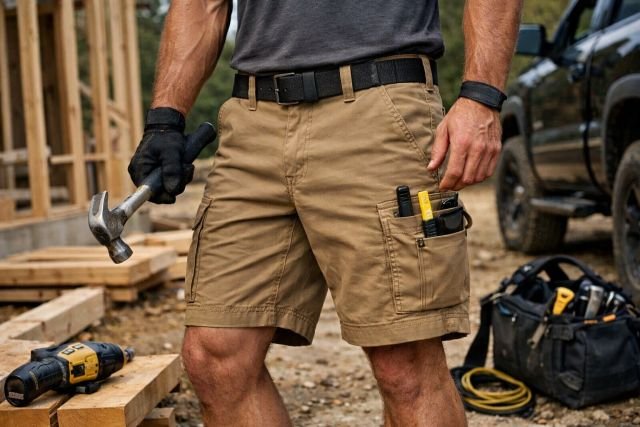
Pocket design is not just a convenience feature; it directly affects how fast you work. Poor pockets make tools bounce, shift, or slip out. Good pockets keep your gear stable and accessible without getting in the way. The most practical work shorts use deep front pockets, secure thigh pockets for phones, reinforced utility slots, and structured cargo pockets that stay close to the leg.
Well-designed storage reduces wasted motion, keeps your workflow smoother, and lowers the chance of dropping tools or damaging your phone.
Best Work Shorts for Men by Work Type and Environment
Best Overall Work Shorts
The best overall work shorts combine durability, comfort, and mobility in a balanced way. These are ideal if your job includes a bit of everything, such as maintenance, warehouse shifts, electrical work, or general construction. A midweight stretch ripstop or canvas blend is often the most practical because it remains tough but doesn’t feel bulky. When you choose an all-around option, focus on reinforced stitching and pocket durability, since these are the first areas to fail under daily wear.
Best Hot-Weather Work Shorts
If you work in extreme summer heat, breathable work shorts become essential. These are best for roofing, landscaping, delivery work, and outdoor labor where exposure to direct sun is constant. Lightweight fabric, faster drying blends, and airflow-friendly designs help manage sweat and heat. OSHA safety guidance supports breathable clothing as part of heat illness prevention, especially when paired with hydration and breaks.
Best Heavy-Duty Work Shorts
Some jobs destroy clothing quickly. Masonry, heavy mechanical work, and rough industrial environments demand shorts that prioritize toughness above all else. Heavyweight canvas, triple stitching, and reinforced pockets are key indicators. Cordura reinforcement in high-wear areas can significantly improve life span in shorts exposed to constant abrasion.
These are often heavier and less breathable, but they excel where durability is the main priority.
Best Stretch Work Shorts
Stretch work shorts are ideal for plumbers, installers, HVAC technicians, and anyone working in tight spaces where mobility determines speed. The best stretch shorts maintain a durable outer layer while allowing flexibility during kneeling, crawling, and climbing. A gusseted crotch and flexible waistband help prevent pulling and seam stress while improving comfort across long shifts.
Best Work Shorts for Storage
Some trades require carrying tools, fasteners, and devices all day. Work shorts designed for storage include cargo pockets, reinforced tool slots, and accessory loops. The key is balance. Too much storage can cause shorts to feel heavy or swing when moving. The best storage-focused options keep pockets structured and close to the body so you can move quickly without distraction.
Work Shorts Fabric Guide: What Lasts and What Breathes Best
Fabric choice is one of the most important buying decisions. Ripstop is often the best all-around choice because it is lightweight and tear-resistant. Canvas and duck offer maximum durability but may feel warmer and stiffer, especially during summer. Stretch blends provide comfort and movement but should be paired with reinforcement if your job involves frequent scraping against rough surfaces.
Polyester blends often dry faster and handle moisture better, which makes them useful for heat and sweat-heavy work. However, quality matters. Lower-quality polyester fabrics can trap odors and feel less breathable over time.
Cordura reinforcement is best when pocket durability matters, especially if you regularly carry tools, clips, or sharp gear that wears through fabric.
How to Choose the Right Work Shorts
Choosing work shorts should start with job requirements. If you work around rough surfaces or carry heavy tools, prioritize durability and reinforcement. If heat is the biggest issue, focus on lightweight breathable fabrics and comfortable fit. If mobility is the key challenge, look for stretch blends and gusset construction.
Fit is also crucial. Slim fits reduce snagging and look cleaner but may restrict movement if fabric has little stretch. Relaxed fits increase airflow and comfort but may feel bulky. Athletic fits provide a balance, offering room for movement without excessive looseness.
Before buying, inspect seam strength, pocket reinforcement, and waistband structure. These details determine whether shorts last months or years.
Work Shorts vs Work Pants: When Shorts Are the Better Choice
Work shorts are a better choice in hot environments, indoor workspaces, and jobs where airflow improves comfort without sacrificing safety. They are especially useful for tasks involving movement, long walks, and physically demanding labor in summer.
Work pants are better when you need extra protection from sharp debris, grinding sparks, rough surfaces, insects, or chemical exposure. Many job sites also have safety rules requiring long pants, so always follow your workplace PPE guidelines.
How to Stay Cooler While Wearing Work Shorts
Even with breathable clothing, heat stress can build quickly. Staying cool requires a combination of clothing choices and work habits. OSHA and NIOSH emphasize hydration and heat safety practices as key to preventing heat illness.
Wearing light-colored work shorts can reduce heat absorption. Choosing breathable fits and moisture-friendly fabrics helps sweat evaporate more efficiently. Supportive underlayers can reduce chafing and keep sweat under control. The best strategy is combining breathable workwear with hydration, shade breaks, and awareness of overheating symptoms.
FAQ: Work Shorts for Men
What are the best work shorts made of?
The best work shorts are usually made from ripstop, canvas, or stretch blends. Ripstop provides a strong balance of lightweight durability, while canvas provides maximum toughness.
Are work shorts safe for construction sites?
Work shorts can be safe depending on site rules and job hazards. Some construction tasks require pants for protection, so you should always follow PPE requirements and company safety policy.
What’s the most durable fabric for work shorts?
Canvas, duck fabric, and shorts with Cordura reinforcements are among the most durable options available, especially for abrasion-heavy jobs.
How should work shorts fit?
Work shorts should fit comfortably at the waist and allow bending, climbing, and kneeling without restriction. A slightly relaxed or athletic fit often works best for active trades.
How do I stay cool while working outdoors in summer?
Wear breathable clothing, stay hydrated, take breaks as needed, and monitor heat strain. OSHA recommends breathable and light-colored clothing as part of heat illness prevention strategies.
Conclusion: Choose Work Shorts That Work as Hard as You Do
The best work shorts for men are built to handle real job-site demands while keeping you cool, comfortable, and mobile. When you choose the right fabric, fit, and reinforcement, you get shorts that last longer, move better, and help you work more efficiently — especially in warm weather.
Whether you need lightweight breathable work shorts for outdoor heat, heavy-duty canvas for rugged labor, or stretch designs for movement-heavy trades, the best option is the one that matches your job conditions. Invest in quality work shorts and you’ll feel the difference every time you kneel, climb, lift, or move through a long shift.