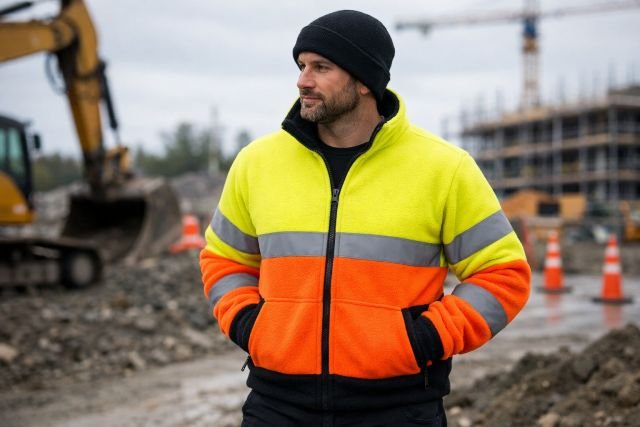
A hi vis fleece jacket is one of the smartest pieces of workwear you can invest in if your job exposes you to cold conditions, moving vehicles, or heavy machinery. It delivers warmth without the stiffness and bulk of heavy outerwear, while also improving visibility in environments where being seen can prevent serious incidents. Whether you work construction, road maintenance, warehousing, logistics, utilities, or airport ground operations, the right jacket can keep you comfortable, reduce distractions caused by the cold, and help you stay compliant with safety expectations on site.
- What Is a Hi Vis Fleece Jacket?
- Why High Visibility Workwear Matters
- The Biggest Benefits of a Hi Vis Fleece Jacket
- Understanding ANSI/ISEA 107 Classes for Hi Vis Fleece Jackets
- How to Choose the Best Hi Vis Fleece Jacket for Your Work
- Real-World Work Scenarios Where Hi Vis Fleece Jackets Excel
- Hi Vis Fleece Jacket vs Hi Vis Hoodie vs Hi Vis Softshell
- What Makes a High-Quality Hi Vis Fleece Jacket?
- How to Care for Your Hi Vis Fleece Jacket
- Frequently Asked Questions About Hi Vis Fleece Jackets
- Conclusion: The Hi Vis Fleece Jacket That Helps You Work Better and Safer
What Is a Hi Vis Fleece Jacket?
A hi vis fleece jacket is a safety-focused work jacket made from fleece fabric, typically polyester, and designed to improve visibility using fluorescent colors such as yellow-green or orange. Many versions also include retroreflective tape that reflects light back toward its source, making the wearer easier to spot in low-light conditions and at night. The fleece material provides thermal insulation by trapping warm air close to the body, helping you stay warm without the heavy feel of thick insulated coats.
This type of jacket often works as a mid-layer under a waterproof shell, but many workers wear it as a standalone jacket in mild winter conditions, cold mornings, or windy afternoons.
Why High Visibility Workwear Matters
Visibility isn’t just about looking professional; it directly reduces risk. In environments with moving vehicles, forklifts, cranes, loaders, or highway traffic, a worker blending into the background is more likely to be involved in a struck-by incident. Safety research and guidance consistently point to struck-by hazards as a major cause of serious injuries in construction and similar industries, which is why high-visibility apparel is widely recommended as a feasible prevention measure.
OSHA guidance and interpretations highlight visibility as part of protecting workers exposed to traffic and equipment hazards, especially in roadway environments where seeing workers quickly is critical for driver reaction time.
A fleece jacket becomes even more important in cold weather, because workers tend to layer up. If the outer layer isn’t high visibility, it can cancel the safety benefit of the hi-vis vest underneath. A hi vis fleece jacket solves this by keeping the high visibility layer on the outside while still delivering warmth and comfort.
The Biggest Benefits of a Hi Vis Fleece Jacket
The first major advantage is warmth without bulk. Fleece provides thermal insulation while staying flexible enough for lifting, bending, climbing, and overhead work. It’s less restrictive than thick padded jackets, which helps movement-heavy roles such as construction, warehousing, and utilities.
The second advantage is comfort during long shifts. Cold exposure increases fatigue and reduces concentration. A jacket that maintains warmth while staying breathable can help workers remain focused and productive, especially during early starts or night shifts.
The third advantage is versatility in layering. Fleece works well as part of a three-layer system, which is one of the most effective ways to stay warm in changing conditions. A moisture-wicking base layer manages sweat, fleece retains heat, and a shell protects against wind and rain.
The final advantage is improved visibility across lighting conditions. ANSI/ISEA standards recognize that day and night visibility are different challenges. Fluorescent fabric helps in daytime and cloudy conditions, while reflective elements help at night when illuminated by headlights or work lighting. ANSI/ISEA 107 addresses these performance requirements for high-visibility apparel.
Understanding ANSI/ISEA 107 Classes for Hi Vis Fleece Jackets
If you’ve ever shopped for safety apparel, you’ve likely seen references to ANSI/ISEA 107. This is the widely used U.S. standard that defines requirements for high-visibility safety garments, including what materials qualify, how reflective striping must perform, and how designs should be configured.
These garments are generally categorized by classes based on how much visible background material and reflective material is present, along with the overall design. Class 1 is typically used in low-risk environments with lower vehicle speeds. Class 2 is common for roadway work, warehouse operations, and moderate-risk environments. Class 3 offers the highest level of visibility and is often recommended for workers exposed to high-speed traffic or low visibility conditions, including night work.
If your job involves traffic exposure, heavy equipment zones, or night shifts, it’s important to know whether your employer requires a specific ANSI class. Buying the wrong class could mean the jacket doesn’t meet safety expectations on your site.
How to Choose the Best Hi Vis Fleece Jacket for Your Work
Start by matching your work environment to the level of visibility you need. In warehouse and logistics environments with forklift traffic, a Class 2 garment is often appropriate, but roadway work or high-speed traffic zones may demand Class 3. If you’re unsure, check your site policy or supervisor guidance, because many companies align visibility requirements to industry standards.
Next, pay attention to reflective tape placement. It’s not enough for a jacket to include reflective tape; it should also be positioned so drivers and equipment operators can identify the shape of a person quickly. Jackets with 360-degree reflective striping around the torso, plus sleeve or shoulder striping, tend to perform better in real-world visibility conditions because they remain effective from multiple angles.
Fleece weight also matters. Lightweight fleece can be ideal for active indoor work or transitional weather, but it may not be warm enough for cold outdoor shifts. Midweight fleece is usually the best all-around option because it balances warmth and breathability. Heavy fleece works well in colder climates or for workers who aren’t moving much, but it can feel too warm for physically demanding tasks.
Wind resistance is another crucial factor. Traditional fleece is not windproof. In exposed environments, cold wind can cut through fleece and reduce its warmth. If you work outdoors in open areas, a wind-resistant fleece, a fleece-softshell hybrid, or a fleece with a bonded membrane can provide significantly better protection.
You should also consider breathability and moisture management. Physical work creates sweat, and sweat trapped in clothing can quickly lead to chilling when activity slows. Fleece is naturally breathable, but some wind-resistant materials are less so. Look for a balance based on your typical work intensity and weather conditions.
Real-World Work Scenarios Where Hi Vis Fleece Jackets Excel
In roadwork and utility roles, early shifts often begin in cold air and low light. A hi vis fleece jacket is especially valuable here because it keeps the high visibility layer visible while warming the worker without restricting movement. These roles also tend to require higher ANSI classes due to vehicle exposure.
In warehouses and loading docks, cold air entering through open bays can make working conditions uncomfortable. Workers may also spend time outside while loading or unloading. A fleece jacket provides warmth and keeps workers visible around forklifts and other equipment.
On construction sites, layering flexibility is important because workers move between tasks and conditions. A fleece jacket supports mobility while also maintaining visibility in varied lighting conditions, including indoor-outdoor transitions, dusty conditions, and shaded areas.
Airport ground crews often work in windy, open environments, and high visibility is usually mandatory due to moving vehicles and aircraft operations. Fleece provides warmth with enough flexibility to handle physical work.
Hi Vis Fleece Jacket vs Hi Vis Hoodie vs Hi Vis Softshell
A hi vis fleece jacket offers the best balance of warmth, comfort, and mobility, especially as part of a layering system. A hoodie can be comfortable but may look less professional and often provides weaker wind resistance. A softshell is typically better in wind and light rain but may not be as breathable as fleece and can be more expensive. For most workers, fleece is the best “daily-driver” option, while softshell is ideal for exposed, windy environments.
What Makes a High-Quality Hi Vis Fleece Jacket?
Quality comes down to durability, safety performance, and comfort. A strong hi-vis jacket should feature durable stitching, a heavy-duty zipper, and fleece that doesn’t pill easily. Pilling is important because it affects appearance and can reduce comfort over time. You also want pockets that are deep enough for gloves and tools, and ideally zippers so items don’t fall out during movement.
Reflective tape should be securely stitched or bonded and positioned to remain visible even when you bend or twist. If your job is especially hard on clothing, look for reinforced shoulders and elbows, which are common abrasion points.
How to Care for Your Hi Vis Fleece Jacket
A hi vis fleece jacket is only effective if it stays bright and reflective. Dirt, oil, dust, and harsh washing can degrade both the fluorescent fabric and reflective tape. Reflective materials function by retroreflection, which means they bounce light back toward the source, such as headlights. When tape gets damaged, contaminated, or worn out, its performance drops.
To keep your jacket performing well, wash it in cold or warm water and avoid harsh detergents. Fabric softener should be avoided because it can interfere with reflective materials. Turning the jacket inside out reduces abrasion during washing, and air drying can prevent heat damage that may shorten the lifespan of reflective striping.
You should also inspect your jacket regularly. If the tape is peeling, cracking, or dull, or if the fluorescent color has noticeably faded, replacement may be necessary, especially if your job requires ANSI compliance.
Frequently Asked Questions About Hi Vis Fleece Jackets
What is a hi vis fleece jacket used for?
A hi vis fleece jacket is used to provide warmth and high visibility for workers in cold environments where being seen is essential. It’s common in construction, roadwork, utilities, warehouses, and industrial settings where workers face traffic or moving equipment.
Are hi vis fleece jackets ANSI compliant?
Some are ANSI compliant and some are not. If your job requires ANSI compliance, look for a jacket labeled ANSI/ISEA 107 and the visibility class listed on the garment. ANSI/ISEA 107 outlines design and material performance requirements for high-visibility apparel.
Which is better for winter, fleece or an insulated hi-vis jacket?
Fleece is better for active work and layering because it provides warmth with breathability and flexibility. Insulated jackets are better for extremely cold conditions or low-activity work where you need maximum warmth. Many workers combine fleece with a protective shell for the best results.
Does reflective tape work in daylight?
Reflective tape is designed to improve visibility in low-light and night conditions when it reflects light back toward the source. In daylight, fluorescent fabric is the primary visibility factor. ANSI/ISEA 107 considers both performance needs.
How long does a hi vis fleece jacket last?
A quality jacket can last one to three seasons depending on how often it’s worn, how frequently it’s washed, and how harsh your jobsite conditions are. Frequent exposure to abrasion, cement dust, oil, paint, and harsh detergents can shorten lifespan. Regular inspection helps you decide when it needs replacement.
Conclusion: The Hi Vis Fleece Jacket That Helps You Work Better and Safer
A hi vis fleece jacket is one of the best workwear choices for cold conditions because it delivers warmth without unnecessary weight, supports mobility, and keeps you visible in high-risk environments. When selected correctly, it becomes a daily essential that improves comfort, reduces cold-related fatigue, and supports site compliance expectations.
If you want the best results, focus on the ANSI class you need, choose a jacket with effective reflective placement, match fleece weight to your weather and activity level, and care for it properly so it stays bright and reflective. In the long run, the right hi vis fleece jacket isn’t just a comfort upgrade — it’s a practical safety decision that helps you stay warm, seen, and ready to work.