Automotive cleaning brushes are more than just accessories. They directly affect how safely you clean your car’s paint, wheels, and interior surfaces. Many swirl marks and micro-scratches come from improper washing tools and contaminated brushes or towels, not from the soap itself. That’s why detailing professionals emphasize using surface-appropriate tools and avoiding shared brushes that trap grit.
- What Are Automotive Cleaning Brushes?
- How to Choose Automotive Cleaning Brushes: The Core Rule
- Bristle Materials Explained: Which One Is Right for You?
- Brush Stiffness: Soft, Medium, and Stiff in Plain English
- The Most Important Areas to Match Brushes With (Interior, Wheels, Engine Bay)
- Key Features to Look for When Buying an Automotive Brush Set
- Which Brush Set Is Best for Your Vehicle Type?
- How to Use Automotive Cleaning Brushes Without Scratching Your Car
- Brush Maintenance: How to Make Your Set Last Longer
- Common Mistakes People Make When Buying Automotive Cleaning Brushes
- What Brushes Should Be in Every Starter Kit?
- Quick Surface Matching Guide
- Frequently Asked Questions About Automotive Cleaning Brushes
- Conclusion
A properly chosen brush set helps you clean faster, reach tight spaces, reduce friction, and protect sensitive finishes like piano-black trim, clear-coated wheels, and soft-touch interiors.
What Are Automotive Cleaning Brushes?
Automotive cleaning brushes are specialized detailing tools designed to clean different vehicle surfaces using bristles tailored to specific tasks. They’re made for areas that microfiber mitts can’t reach easily, such as emblems, air vents, wheel spokes, lug nut holes, leather seams, and textured plastics. They vary by bristle material, stiffness, head size, and handle design, and the best sets include multiple brush types so you can match the tool to the surface.
How to Choose Automotive Cleaning Brushes: The Core Rule
The simplest rule is that soft brushes are for delicate surfaces and stiff brushes are for heavy grime. The more delicate the surface, the softer and more flexible the bristles should be. The more contamination and buildup you’re dealing with, such as brake dust and road film, the firmer the brush needs to be to break through it.
Your buying decision becomes easy when you ask three questions. First, what surface are you cleaning? Second, what kind of dirt is on it? Third, what chemicals will you use? Those three factors determine whether you need natural hair, soft synthetics, heavy-duty nylon, or chemical-resistant scrub brushes.
Bristle Materials Explained: Which One Is Right for You?
Natural Hair Brushes (Boar Hair or Horsehair)
Natural hair brushes are known for being gentle and effective for light dirt. They’re commonly used for interior detailing and delicate surfaces where scratch risk is high. Many detailing guides recommend boar hair brushes for dashboards, vents, leather seams, and trim because they agitate without harsh abrasion.
They’re excellent for dusting and light cleaning, but they’re not ideal for heavy grease or harsh wheel chemicals because strong cleaners can break down natural fibers over time. These brushes work best when paired with a mild interior cleaner or a dedicated leather-safe product and used with light pressure.
Synthetic Brushes (Nylon or Polypropylene)
Synthetic bristle brushes are the workhorses of car detailing because they’re more durable and typically more chemical resistant. They’re the preferred choice for wheels, tires, wheel wells, and engine bays where grime is stubborn and cleaners can be aggressive.
These brushes last longer and can handle strong wheel cleaners and degreasers, but the tradeoff is that they can scratch delicate surfaces if you use the wrong stiffness. That’s why it’s critical to keep synthetic wheel brushes separate from interior brushes and to avoid using stiff bristles near paint and gloss trim.
Ultra-Soft Detail Brushes (Faux Wool or Microfiber Heads)
Ultra-soft brushes are designed for extremely delicate interior surfaces, including infotainment screens, instrument clusters, piano-black trim, and glossy plastics. These brushes are less about deep agitation and more about safe dusting and gentle wiping. They are ideal for “no pressure” zones where even a soft natural hair brush might leave fine marks if used incorrectly.
Brush Stiffness: Soft, Medium, and Stiff in Plain English
Soft brushes are your safest option for interior detailing, delicate trim, and light cleaning. Medium brushes are good for textured plastics, seams, cupholders, and areas that need a bit more agitation but still require caution. Stiff brushes are designed for tires, rubber mats, and wheel wells where the surface is robust and grime is heavy.
The biggest mistake people make is assuming a brush is “safe” because the listing says it is. Safety isn’t just about the label; it depends on bristle stiffness, contamination, lubrication, and how much pressure you apply.
The Most Important Areas to Match Brushes With (Interior, Wheels, Engine Bay)
Interior Detailing: Where Soft Brushes Shine
Interior detailing is the best place to use natural hair brushes. Vents, trim seams, stitched leather edges, and buttons collect dust that a cloth can’t pull out easily. A soft brush loosens debris and allows a vacuum to pull it away. This method reduces the risk of rubbing grit into plastic, which is a common cause of interior micro-scratches over time.
If you want a professional-grade result, use your brush in one hand and a vacuum nozzle in the other. Brush gently while vacuuming so dust leaves the surface immediately rather than being redistributed.
Wheels and Tires: The Real Test of a Brush Set
Wheels collect brake dust and road grime, which is abrasive. That’s why wheel brushes must be strong, durable, and ideally chemical resistant. Experts also warn against shared foam brushes at self-serve washes because they trap grit and can cause marring on paint and clear-coated surfaces.
For wheel barrels, you need a barrel brush that fits behind spokes. For lug nuts, you need a small detail brush. For tires, you need a stiff tire scrub brush that can restore the dark finish by scrubbing away the oxidized layer and old dressing buildup.
Wheel cleaning is also where cross-contamination causes the most damage. If you use a wheel brush on your paintwork, you’re essentially dragging brake dust across your finish.
Engine Bay: Chemical Resistance and Reach Matter Most
Engine bay detailing requires brushes that can handle degreasers and grime. Synthetic brushes work best here, especially medium-stiff options that can agitate plastic covers, rubber hoses, and textured surfaces. Avoid natural hair in this area because degreasers and heavy contaminants degrade natural fibers and can cause them to shed.
Long handles are also useful because engine bays have tight gaps that short brushes can’t reach comfortably.
Key Features to Look for When Buying an Automotive Brush Set
A great brush set isn’t just about bristles. It’s about build quality, design, and how safe it is in real-world use.
First, look for brushes that have no exposed metal near the head. Exposed metal ferrules or staples can scratch paint, wheel faces, and delicate trim. Second, prioritize ergonomic handles with a secure grip. Slipping while cleaning is one of the easiest ways to cause accidental scratches.
Third, choose sets that include multiple sizes. Detailing is a game of access: large brushes cover area quickly, while small brushes reach seams and tight spaces. Finally, consider chemical resistance. Wheel cleaners, degreasers, and iron removers are harsh. A brush that can’t tolerate those chemicals will warp, crack, or shed quickly.
Which Brush Set Is Best for Your Vehicle Type?
If you drive a daily-use sedan or hatchback, you usually need a basic mix of soft interior brushes and durable wheel/tire brushes. If you own an SUV or truck, you’ll benefit from longer-handled brushes for wheel wells and roof-level areas. Off-road vehicles often require stiffer brushes because mud, sand, and heavy debris create more buildup in wheel wells and undercarriage areas.
If you own a luxury car or a vehicle with dark paint, you should be even more careful. Dark paint shows swirl marks more easily, and glossy trims scratch fast. In those cases, choose ultra-soft brushes for sensitive areas and keep your wheel brushes completely separate.
How to Use Automotive Cleaning Brushes Without Scratching Your Car
Safe brushing starts before you even touch the surface. Always pre-rinse or mist the area first. Dry brushing is one of the biggest scratch risks because dust acts like sandpaper. After pre-rinsing, use lubrication. This could be a quality car shampoo or a rinseless solution designed for safe cleaning. Detailing guidance consistently emphasizes that lubrication reduces friction and lowers the chance of micro-marring.
Clean in the correct order as well. Start with clean areas like interiors, then move outward to the body and finally to the dirtiest zones like wheels, tires, and engine bays. This workflow prevents transferring harsh contaminants to more delicate surfaces.
While brushing, use light pressure and let the bristles do the work. If you scrub harder, you usually don’t clean better; you simply increase friction and risk. Rinse and inspect the brush frequently during use so trapped dirt doesn’t turn your brush into an abrasive tool.
Brush Maintenance: How to Make Your Set Last Longer
A brush set can last years if you maintain it correctly. After each wash, rinse your brushes thoroughly under running water. Use mild soap if needed, especially for wheel brushes that may hold chemical residue. Shake out excess water and let brushes air dry fully. Damp storage encourages mildew and weakens fibers.
Once a week or once a month, depending on use, you can deep clean your brushes by soaking them in warm water with a gentle detergent and then rinsing until the water runs clear. Detailing communities commonly recommend proper rinsing to remove trapped contaminants and preserve performance.
Common Mistakes People Make When Buying Automotive Cleaning Brushes
The most common mistake is using one brush for everything. Wheel grime should never touch interior trim or paintwork. Another mistake is buying extremely cheap sets with weak handles and exposed metal parts. These brushes often shed quickly and can scratch surfaces due to poor construction.
People also underestimate the danger of public car wash foam brushes. Even if they look clean, they often contain grit from previous users. That grit can cause visible scratches on paint and gloss surfaces.
What Brushes Should Be in Every Starter Kit?
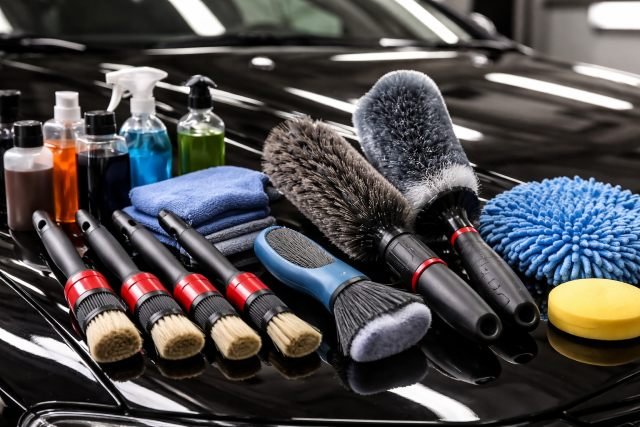
A good starter kit includes a mix of soft, medium, and stiff brushes. You need soft interior detailing brushes for vents and trim, a medium brush for seams and cupholders, a wheel barrel brush for inside wheels, and a stiff tire brush for scrubbing rubber. If possible, include a long brush for wheel wells and a very soft brush for screens and piano-black trim.
The key is not the number of brushes but the coverage of use-cases. The more correctly you match brush to surface, the safer and faster your detailing becomes.
Quick Surface Matching Guide
For dashboards, vents, and delicate interior trim, natural hair brushes are best. For leather seams, choose soft bristles and a leather-safe cleaner. For carpets and mats, medium-stiff synthetic brushes work well, especially when paired with vacuuming. For wheels, synthetic barrel brushes and detail brushes help clean spokes and lug nuts. For tires, stiff brushes remove buildup and restore the rubber’s clean finish. For engine bays, use chemical-resistant synthetic brushes.
Frequently Asked Questions About Automotive Cleaning Brushes
What are automotive cleaning brushes used for?
Automotive cleaning brushes are used to remove dust, grime, and debris from hard-to-reach areas like vents, seams, wheel barrels, emblems, and textured plastics. They help clean more effectively while reducing the risk of scratching when used correctly.
Are boar hair brushes safe for car paint?
Boar hair brushes are generally safe for delicate surfaces when used with lubrication and light pressure. They are most commonly recommended for interiors and light exterior detailing rather than heavy grime removal.
What brush is best for cleaning wheels?
A synthetic wheel barrel brush is ideal for wheel barrels and spokes because it is durable and more resistant to wheel cleaners and harsh contaminants.
How do you prevent swirl marks while using brushes?
To prevent swirl marks, always pre-rinse, use lubrication, choose the correct brush stiffness, apply light pressure, and rinse your brush frequently during use. Avoid shared car wash brushes because they can trap grit and cause marring.
Can I use the same brushes on the interior and wheels?
No. Wheels collect abrasive brake dust, and using those brushes inside can scratch interior trim and transfer grime. Keep separate brush sets for interior, wheels, and engine bay.
Conclusion
Choosing the right automotive cleaning brushes is about matching the tool to the surface. Soft brushes protect delicate interiors and glossy trims, medium brushes handle textured plastics and seams, and stiff brushes tackle tires and heavy grime. The biggest difference between a professional-level clean and a “good enough” wash is using the correct brush in the correct area and preventing cross-contamination.
If you want a simple rule to follow, keep this in mind: use soft brushes where scratch risk is high, stiff brushes where grime is heavy, and always keep wheel brushes separate from interior and paint tools. When you choose a quality brush set and maintain it properly, you’ll clean faster, protect your finishes, and keep your vehicle looking newer for longer.