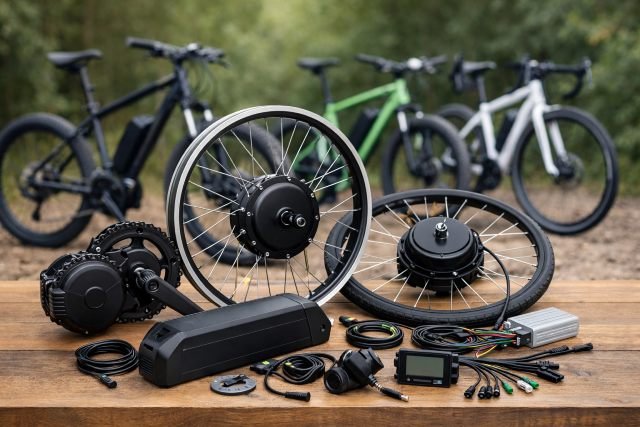
An electric bike conversion kit is one of the fastest and most affordable ways to turn a normal bicycle into an e-bike. Instead of spending thousands on a new factory e-bike, you can upgrade the bike you already know and love, while choosing the motor type, power level, and battery range that fits your budget.
- What Is an Electric Bike Conversion Kit?
- Hub Motor vs Mid-Drive vs Friction Drive: Key Differences
- How to Choose the Best Electric Bike Conversion Kit for Your Needs
- Best Electric Bike Conversion Kit Options Under $300
- Best Electric Bike Conversion Kit Options From $300 to $700
- Best Electric Bike Conversion Kit Options From $700 to $1,500
- Best Electric Bike Conversion Kit Options From $1,500 to $3,000+
- Best Electric Bike Conversion Kit by Rider Type
- Legal and Safety Considerations You Must Know
- Installation Advice That Saves Time and Prevents Mistakes
- Battery Buying Tips
- Realistic Cost Breakdown: What You’ll Actually Spend
- FAQ: Electric Bike Conversion Kit Questions
- Conclusion: The Best Electric Bike Conversion Kit Is the One That Matches Your Bike and Budget
Modern conversion kits come in several styles, including front and rear hub motors for simple commuting builds, mid-drive systems for steep hills and cargo riding, and lightweight commuter kits designed for easy installation. Popular review sources frequently mention Bafang mid-drive systems, high-performance CYC kits, and commuter-focused solutions like Swytch as strong options depending on your riding goals.
What Is an Electric Bike Conversion Kit?
An electric bike conversion kit is a set of components that adds electric assistance to an existing bicycle. Most kits include a motor, a controller, wiring, a pedal-assist system, and a display. Some kits include a battery, but many require you to buy the battery separately.
The biggest advantage is customization. You can decide whether you want a simple assist for commuting, strong torque for hills, or a lightweight setup for portability. A conversion kit also lets you keep your preferred bike geometry, saddle, and fit — something many riders struggle to replicate with an off-the-shelf e-bike.
Hub Motor vs Mid-Drive vs Friction Drive: Key Differences
Hub motor kits install a motor in either the front or rear wheel. They are generally easier to install and are popular for commuters who want a smooth, reliable boost. Front hub motors are usually cheaper and simpler, but rear hub motors offer better traction and control.
Mid-drive kits install at the bottom bracket and drive the chainring. This makes mid-drives especially effective on hills because they use your bike’s gears. Mid-drives feel more natural, but installation is more complex and they can increase drivetrain wear if you ride aggressively or neglect maintenance.
Friction drive kits are lightweight systems that add power by pressing a roller against the tire. They’re often used for city riding and minimal builds, but they can wear tires faster and don’t provide the same torque as other motor types.
How to Choose the Best Electric Bike Conversion Kit for Your Needs
Before choosing a kit, you need to match it to your bike, your terrain, and your expectations. Compatibility issues are the most common reason conversion projects fail, so it’s worth checking a few essentials early.
Start with your bike’s wheel size if you’re considering a hub motor kit. Common sizes include 26-inch, 27.5-inch, 29-inch, and 700C. If your bike has disc brakes, verify the hub supports disc rotor mounting. For rear hub kits, you also need to confirm whether your bike uses a cassette or freewheel.
If you’re choosing a mid-drive, your bottom bracket type matters. Most mid-drive kits are designed for standard threaded bottom brackets, and some bikes require extra adapters or may not be compatible at all. Frame clearance is also important because the motor housing must fit without interfering with chainstays.
Next, define your riding goal. Flat commuting needs less torque and can be handled well by a hub motor kit. Frequent steep hills, cargo loads, and off-road terrain generally favor a mid-drive. If you want a simple “assist feel” for city rides, lightweight commuter kits can be a strong solution.
Finally, think about battery range. A practical real-world estimate is that riders use around 10 to 15 watt-hours per mile under light assist and flat terrain, while hillier rides or heavier loads can push usage to 15 to 25 watt-hours per mile. That means a 500Wh battery often supports around 20 to 35 miles, depending on speed, terrain, rider weight, and assist level.
Best Electric Bike Conversion Kit Options Under $300
In this budget category, most riders choose basic front hub motor kits. These kits are popular because they’re relatively easy to install and can provide a noticeable speed and effort boost for flat or gently rolling routes. Typically, you’ll find motors in the 250W to 500W range, paired with a basic controller, throttle, and a cadence-based pedal assist sensor.
However, the biggest limitation under $300 is that batteries are usually not included, and the quality of batteries you’ll find at this price range is inconsistent. The best strategy is often to buy a basic motor kit and then invest in a safer, better-quality battery from a reputable seller.
Used kits can also be a great value if you’re comfortable inspecting parts and replacing connectors. Many riders upgrade their systems and sell perfectly functional kits second-hand, which can make the under-$300 tier much more competitive.
Best Electric Bike Conversion Kit Options From $300 to $700
This is the price tier where conversion kits start to feel reliable and well-supported, especially for daily commuting. Rear hub motor kits in this category offer better traction and stability than front hub kits and are often the preferred choice for city riders who deal with wet streets or moderate hills.
This tier is also where mid-drive kits begin to shine, particularly the Bafang BBS02B. It’s frequently recommended in conversion kit roundups because it offers strong power, solid reliability, and broad aftermarket support, making it a favorite for riders who want better hill climbing without spending premium money.
If your goal is simplicity and portability rather than raw torque, commuter-focused kits like Swytch are often recommended for their lightweight design and easier installation. Cycling Electric’s reviews have highlighted Swytch as a practical option for riders who want a quick, clean conversion for urban use.
Best Electric Bike Conversion Kit Options From $700 to $1,500
If you want a conversion that rivals a factory e-bike in performance, this budget range is where you’ll find the most satisfying builds. Mid-drive systems become the primary choice for riders who deal with hills, heavy cargo, or mixed terrain.
The Bafang BBSHD is widely recommended for durability and torque. It’s commonly used for cargo bikes, heavier riders, and demanding commutes because it handles sustained load well and has a strong community of DIY support.
Another standout in this range is the Tongsheng TSDZ2B, which appeals to riders who want torque-sensing pedal assist. Torque sensing gives you a more natural ride feel because the motor responds to how hard you pedal rather than simply whether you’re pedaling. Many mid-drive comparisons include it as a value-oriented torque-sensing option.
Best Electric Bike Conversion Kit Options From $1,500 to $3,000+
This premium category is for riders who want maximum power, advanced tuning, and high-performance components, often for off-road or specialist builds. One of the best-known high-performance kits in this class is the CYC X1 Pro, which is often listed in performance conversion kit roundups due to its output and configurability.
For advanced builders who want fine control over motor behavior and monitoring, Grin Technologies is often respected for its ecosystem. Tools like the Phaserunner controller and Cycle Analyst system allow detailed tuning, diagnostics, and efficiency optimization. If you enjoy technical control or want an ultra-reliable setup for long-distance commuting, this ecosystem can be a strong premium choice.
Best Electric Bike Conversion Kit by Rider Type
If you want strong value and versatile performance, the Bafang BBS02B is frequently considered one of the best overall conversion kits.
If your priority is hauling cargo, climbing steep hills, or supporting heavier loads, the Bafang BBSHD is often the most recommended choice for durability and torque.
If you want a lightweight commuter solution with minimal installation effort, Swytch remains a popular pick in reviews focused on convenience.
If you want the highest performance and don’t mind advanced installation and legal limitations, performance-oriented kits like CYC are often recommended for off-road builds.
Legal and Safety Considerations You Must Know
E-bike laws vary, but most regions define legal e-bikes based on motor wattage, assisted speed limits, and throttle rules. In the United States, many e-bike regulations reference the class system that separates e-bikes into categories based on throttle and top assisted speed.
A commonly referenced federal definition for low-speed electric bicycles includes operable pedals, a motor under 750W, and a top speed under 20 mph under motor power alone, while state-level rules expand on these classifications.
In the EU and UK, typical street-legal limits are 250W and assistance cut-off at 25 km/h, with compliance expectations often tied to EN 15194 standards for EPAC systems.
It’s important to understand that some conversion kits, especially premium systems, can exceed these limits depending on configuration. When that happens, your converted bike may be categorized differently, such as a moped, which can trigger registration, insurance, and licensing requirements.
Installation Advice That Saves Time and Prevents Mistakes
Hub motor kits are generally simpler because you’re replacing a wheel and mounting a controller and battery. Mid-drive kits take longer because you need to remove cranks and the bottom bracket, mount the motor securely, and confirm chainline alignment.
A smart approach is to do a short test ride right after installation and then re-check all motor mounts, bolts, and wiring. Loose mounting hardware is one of the most common causes of long-term reliability issues.
Cable routing matters as much as installation. Keep wiring away from the chain and crank area, and avoid tight bends near connectors. If you ride in wet conditions, add dielectric grease to connections and ensure your battery case is properly sealed.
Battery Buying Tips
Battery quality affects safety, reliability, and performance more than most riders expect. Many conversion issues come from low-quality battery packs, poor BMS systems, or cheap chargers.
If you’re buying a battery, choose a reputable seller, confirm voltage compatibility with your controller, and make sure the battery mounting method is secure. Downtube mounts usually offer better handling because the weight stays centered and low. Rear racks are convenient but can feel unstable at speed, especially on smaller frames.
In some regions, certification standards like UL-related compliance are becoming more relevant for safety expectations in apartments, shared storage facilities, and insurance policies. If your building rules mention certification, verify compliance before buying.
Realistic Cost Breakdown: What You’ll Actually Spend
While conversion kits are cheaper than new e-bikes, most riders underestimate the cost of batteries and accessories. The battery often becomes the most expensive component in the entire build, especially if you choose a high-capacity pack for long-range commuting.
At a minimum, expect to spend a few hundred dollars for a basic kit and then additional cost for a quality battery. Mid-drive builds often require extra tools or professional help if you’re unfamiliar with bottom bracket work. High-performance builds may also need drivetrain upgrades, stronger brakes, and better tires to handle speed and load safely.
FAQ: Electric Bike Conversion Kit Questions
What is the best electric bike conversion kit?
The best electric bike conversion kit depends on your riding style. Bafang BBS02B is commonly recommended for balanced value and performance, while BBSHD is often favored for heavy-duty hill climbing and cargo use. Lightweight riders often prefer commuter-friendly kits like Swytch for easy setup.
Are e-bike conversion kits legal?
Yes, but legality depends on motor power, speed limits, and throttle rules. In the U.S., class-based regulations often define how fast and how powerful an e-bike can be while staying street legal. In the EU/UK, limits are typically 250W with assist cut-off at 25 km/h, with EN 15194 compliance expectations.
Is a hub motor or mid-drive better?
Hub motors are usually cheaper and easier to install, making them great for commuting on flat or moderate terrain. Mid-drives are typically better for climbing and feel more natural because they use your bike’s gears, but they can cost more and require more installation work.
How fast will a conversion kit make my bike?
Speed depends on motor power, wheel size, controller settings, and legal limitations. Many legal e-bikes are designed to assist up to 20 mph or 28 mph depending on class in the U.S., while EU/UK systems typically cut off at 25 km/h.
How hard is it to install an electric bike conversion kit?
Hub kits are the easiest, often requiring only wheel replacement and basic mounting. Mid-drives require more mechanical work, including removing cranks and the bottom bracket, but many DIY riders complete them successfully with the right tools and careful alignment.
Conclusion: The Best Electric Bike Conversion Kit Is the One That Matches Your Bike and Budget
Choosing the best electric bike conversion kit comes down to matching the system to your terrain, your bike’s compatibility, and how you actually ride. Hub motor kits are cost-effective and straightforward for commuting, while mid-drives deliver better torque and climbing performance for hills, cargo, and mixed terrain. Lightweight commuter kits offer convenience, and premium systems deliver serious power for advanced builds.
No matter which option you choose, prioritize compatibility and battery quality. A well-matched kit with a reliable battery will feel smooth, safe, and dependable for years — making your conversion one of the best-value upgrades you can do for daily transportation.