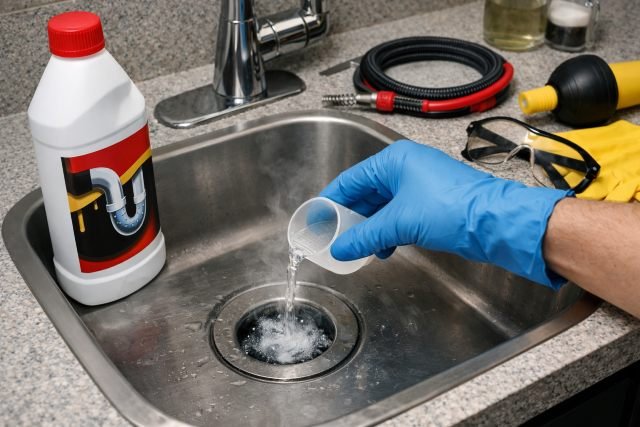
One shot drain cleaner is a powerful chemical drain opener made to dissolve clogs caused by grease, soap buildup, paper, and organic debris. It is often positioned as a professional-grade solution that works quickly when plungers, hot water, and gentler enzyme cleaners fail.
- Quick Answer: How to Use One Shot Drain Cleaner Safely
- What Makes One Shot Drain Cleaner Effective?
- Safety First: What You Must Do Before Using One Shot
- Step-by-Step: How to Use One Shot Drain Cleaner Safely and Correctly
- What Types of Clogs Does One Shot Work Best On?
- How Long Does It Take to Work?
- Is One Shot Drain Cleaner Safe for Pipes?
- Can You Use One Shot in Toilets?
- Is One Shot Septic Safe?
- The Biggest Mistakes People Make With One Shot Drain Cleaner
- First Aid: What to Do if Exposure Happens
- How to Prevent Clogs So You Don’t Need One Shot Often
- Should You Use One Shot Monthly?
- When You Should NOT Use One Shot Drain Cleaner
- One Shot vs Other Drain Clearing Methods
- FAQ: One Shot Drain Cleaner
- Conclusion: The Safe, Smart Way to Use One Shot Drain Cleaner
However, it is important to understand that many One Shot formulations are classified as corrosive, meaning they can cause severe skin burns and serious eye damage if used improperly. Safety Data Sheets (SDS) for One Shot products typically emphasize this risk and include strict handling and PPE requirements.
Quick Answer: How to Use One Shot Drain Cleaner Safely
To use one shot drain cleaner safely, wear chemical-resistant gloves and eye protection, ventilate the room, and keep children and pets away. Remove standing water if possible, then pour the recommended amount slowly into the drain without splashing. Allow it to work for the time listed on the product label, and flush thoroughly with water. Never mix One Shot with bleach, acids, ammonia products, or other drain openers, because dangerous chemical reactions and fumes may occur. Always follow your specific product label and SDS because different One Shot formulations can have different ingredients and safety requirements.
What Makes One Shot Drain Cleaner Effective?
One Shot drain cleaners are designed to break down common clog material quickly by using strong corrosive or caustic chemistry. Depending on the exact product version, SDS documents may list strong acids such as sulfuric acid or other corrosive components. This variation is one reason the SDS for your specific bottle matters; two products sold under similar branding can behave differently and carry different hazard profiles.
Some formulations may also generate heat when reacting with water, which can accelerate clog breakdown but also increases splash risk and may stress weaker plumbing materials.
Safety First: What You Must Do Before Using One Shot
Before using one shot drain cleaner, treat it as a hazardous chemical and prepare accordingly. Many medical references warn that caustic and corrosive agents, including drain cleaners, can cause serious tissue damage and potentially life-threatening complications if ingested or splashed into the eyes.
At minimum, you should wear chemical-resistant gloves, safety goggles or a face shield, and clothing that covers your arms. Many SDS documents for corrosive cleaners explicitly require protective gloves, protective clothing, and eye or face protection.
Ventilation matters just as much as PPE. Open windows, turn on fans, and avoid using this product in an enclosed bathroom without airflow. Keep children and pets out of the area until the process is complete, the drain is flushed, and the product is stored securely.
Finally, never mix One Shot with bleach, toilet bowl cleaners, vinegar, ammonia-based products, or any other drain opener. Mixing chemicals is one of the most common causes of serious injuries during drain cleaning and can generate dangerous fumes or violent reactions.
Step-by-Step: How to Use One Shot Drain Cleaner Safely and Correctly
Start by reading the label on your bottle and skimming the Safety Data Sheet. This may feel unnecessary, but it is essential because One Shot formulations can differ by manufacturer, and SDS documents confirm ingredient differences across versions.
Next, prepare the area. Remove any drain cover if possible, wipe away excess water, and clear the sink cabinet or surrounding area so you can work safely without bumping into items. If there is standing water, remove it if you can. Many strong drain cleaners work better when they make direct contact with the clog rather than being diluted.
When pouring the one shot drain cleaner, do it slowly and carefully to prevent splashes. Keep your face and hands away from the drain opening, and do not squeeze or shake the bottle while hovering over the drain. Once poured, step back and allow the product to work for the time listed on your label. Because some formulations can generate heat during reaction, you should avoid leaning over the drain during the waiting period.
After the waiting time passes, flush thoroughly with water as instructed. SDS guidance for corrosive products and cleanup processes often emphasizes flushing contaminated surfaces and areas with plenty of water, and flushing is also essential after drain treatment to ensure the chemical is cleared from the plumbing system.
If the clog persists, do not keep adding more chemical repeatedly. Some products allow a second treatment, but only if explicitly stated on the label. Overuse can increase the risk of pipe damage and chemical exposure.
What Types of Clogs Does One Shot Work Best On?
One Shot is commonly marketed for clogs caused by grease, soap buildup, paper, and organic debris, and some product instruction sheets promote fast action for those clog types.
It tends to work best in kitchen sinks with grease-related slow drains and in bathroom drains with soap residue and organic buildup. It is generally less effective for clogs caused by solid objects, heavy root intrusion, or severe mainline blockages. If you suspect your drain is blocked by a foreign object or tree roots, mechanical methods like snaking or professional inspection are a better option.
How Long Does It Take to Work?
Work time depends on the formulation, the amount used, the degree of blockage, and whether the clog is reachable without dilution. Many products are marketed as fast-acting and may work in minutes, but the only reliable instruction is the timing on your specific label. If you wait longer than recommended, you are not necessarily improving performance, and you may be increasing risk.
Is One Shot Drain Cleaner Safe for Pipes?
Used correctly and occasionally, One Shot can be safe for many plumbing systems, but it is still a corrosive chemical that must be treated carefully. The risk of pipe damage rises when it is overused, poured repeatedly without flushing, used on fragile or old plumbing, or used in systems with weak seals. Some formulations can generate heat during reaction, which may stress certain plastics or older pipe joints.
If you have older plumbing, if you have had frequent leaks, or if you are unsure of the pipe material, it may be safer to use a drain snake or call a plumber.
Can You Use One Shot in Toilets?
Toilet drains behave differently than sink drains, and the splash risk is higher. Some products may be labeled for toilet use, but many are not. The safest rule is to use One Shot in toilets only if the label explicitly states it is appropriate. Otherwise, a toilet auger is often the safest and most effective choice.
Is One Shot Septic Safe?
Septic safety varies by product and formulation. Many harsh chemical drain cleaners are not recommended for septic tanks because they can disrupt the bacteria needed to break down waste. Some sources caution against using strong chemical drain openers in septic systems, but your best guidance should come from your specific product label and manufacturer instructions.
If you have a septic system and want to avoid risk, enzyme-based maintenance cleaners and mechanical methods are safer options.
The Biggest Mistakes People Make With One Shot Drain Cleaner
The most dangerous mistake is mixing chemicals, especially combining drain cleaners with bleach or other household cleaners. Another common mistake is plunging immediately after pouring chemical, which can splash corrosive liquid onto the face or skin. Fast pouring, lack of eye protection, and leaving the product unattended around children are also frequent causes of injury.
Poison Control organizations report millions of exposure cases annually in the U.S., with a significant proportion involving children, reinforcing how important storage and supervision are when using hazardous household chemicals.
First Aid: What to Do if Exposure Happens
If One Shot gets in your eyes, rinse cautiously with water for several minutes and seek urgent medical attention. SDS guidance for corrosive products typically includes immediate eye irrigation and removing contact lenses if easy to do.
If it gets on skin, remove contaminated clothing and rinse skin thoroughly with water. If swallowed, do not delay. Caustic ingestion is a medical emergency, and medical literature repeatedly highlights the severe injury potential of caustic agents, including drain cleaners. Contact emergency services and Poison Control immediately.
How to Prevent Clogs So You Don’t Need One Shot Often
The best way to reduce reliance on chemical drain openers is to prevent clogs from forming. Grease should never be poured down kitchen drains. Hair catchers can dramatically reduce shower clogs. A regular hot-water flush after heavy dishwashing, combined with safe routine maintenance methods, often prevents buildup from reaching the “emergency clog” stage. If your drains slow frequently, mechanical cleaning and inspection are better long-term fixes than frequent chemical use.
Should You Use One Shot Monthly?
Some One Shot instruction sheets suggest monthly preventative use to reduce serious clogs and avoid professional service calls.
However, monthly chemical use may not be ideal for older plumbing or septic systems and can be unnecessary for well-maintained drains. A more balanced approach is to use strainers, good habits, and occasional mechanical cleaning, saving chemical treatments only for stubborn clogs.
When You Should NOT Use One Shot Drain Cleaner
Avoid using One Shot if your drain is overflowing, if you suspect a solid obstruction, if you recently used another chemical product in the same drain, or if the problem appears to be a main line sewer backup. In those cases, using a chemical product may worsen the situation, increase exposure risk, and make professional repair more difficult. A plumber, drain snake, or camera inspection may be the safer solution.
One Shot vs Other Drain Clearing Methods
One Shot is typically fastest for grease and organic buildup, but it carries greater safety risk and requires PPE and ventilation. Enzyme cleaners are slower but safer and often useful as preventative maintenance. Plungers can work well but should never be used after chemicals have been poured. Drain snakes and augers are often the best mix of safety and effectiveness for recurring clogs. Professional plumbers are the best choice for main line backups, tree root issues, or repeated failures.
FAQ: One Shot Drain Cleaner
Is One Shot drain cleaner safe?
It can be safe when used exactly as directed, with proper PPE and ventilation. Many One Shot SDS documents classify it as corrosive and warn it can cause severe burns and eye damage if mishandled.
Can One Shot drain cleaner damage pipes?
It may damage older or fragile plumbing if overused, left too long, or repeatedly applied without flushing. Some formulations can generate heat during reaction, which may stress weak materials or joints.
How long should I leave it in the drain?
Always follow the time listed on your product label. Many formulations work in minutes, but this varies by product and clog severity.
Can I use it with standing water?
It may be less effective when diluted by standing water. Removing standing water helps the chemical contact the clog more directly.
What if I get it in my eyes?
Rinse cautiously with water for several minutes and seek medical help. SDS guidance for corrosive products recommends immediate irrigation and removing contact lenses if easy.
Conclusion: The Safe, Smart Way to Use One Shot Drain Cleaner
One shot drain cleaner can be highly effective for stubborn grease and organic clogs, but it is not a casual household product. Safety sheets consistently describe these formulas as corrosive and capable of causing severe burns and eye injuries.
The best approach is simple: use proper PPE, ventilate, pour slowly, avoid mixing chemicals, flush thoroughly, and treat it as an occasional solution rather than a routine habit. When used responsibly, One Shot can restore flow quickly and safely. When used carelessly, it can create serious health risks and plumbing damage.