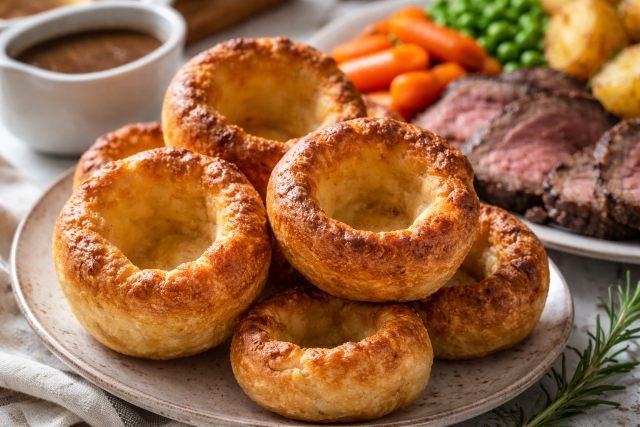
If you’ve ever tried making gluten free Yorkshire pudding and ended up with a flat, dense, or chewy result, it’s not because gluten free baking is impossible — it’s because Yorkshire puddings rely heavily on heat, steam, and structure. Traditional Yorkshire pudding uses wheat flour, and wheat contains gluten, a protein that helps batter stretch and hold shape while it rises. When gluten is removed, you have to create the same structure using a flour blend that supports lift and crispness while still staying light.
- What Is Yorkshire Pudding and Why It’s Usually Not Gluten Free?
- Why Gluten Free Yorkshire Pudding Matters for Coeliac-Friendly Meals
- The Science Behind a Perfect Gluten Free Yorkshire Pudding
- Best Gluten Free Flour for Yorkshire Pudding
- Gluten Free Yorkshire Pudding Recipe (Crispy, Classic, and Reliable)
- Top Tips to Get Gluten Free Yorkshire Pudding to Rise Every Time
- Troubleshooting Gluten Free Yorkshire Pudding Problems
- Cross-Contamination Tips for Coeliac-Safe Gluten Free Yorkshire Pudding
- Best Sunday Roast Pairings for Gluten Free Yorkshire Pudding
- Make Ahead, Storage, and Reheating Without Losing Crispness
- FAQ: Gluten Free Yorkshire Pudding Questions
- Conclusion: Gluten Free Yorkshire Pudding That Brings Back the Sunday Roast Joy
The good news is that gluten free Yorkshire pudding can rise beautifully and taste just like the classic version if you understand a few key principles. In this guide, you’ll learn what makes Yorkshire puddings puff up, which gluten free flour works best, how to get the oil temperature right, and how to avoid common mistakes that cause them to collapse.
For readers managing coeliac disease, it’s important to remember that the only treatment is a strict gluten-free diet for life, so success is not only about taste but also about safety and avoiding cross-contamination.
What Is Yorkshire Pudding and Why It’s Usually Not Gluten Free?
Yorkshire pudding is a traditional British side dish made from a simple batter of flour, eggs, and milk. The batter is poured into hot fat in a preheated tin and baked at a high temperature until it rises dramatically, forms crisp edges, and creates a hollow center. It’s most famously served with roast beef and gravy as part of a classic Sunday roast, but it also pairs well with chicken, lamb, sausages, and vegetarian roasts.
The reason Yorkshire pudding is usually not gluten free is that the classic recipe uses wheat flour. Gluten is naturally present in wheat, as well as barley and rye. This makes standard Yorkshire puddings unsuitable for people who need to avoid gluten, including those diagnosed with coeliac disease.
Why Gluten Free Yorkshire Pudding Matters for Coeliac-Friendly Meals
For many people, gluten free Yorkshire pudding is not a lifestyle preference but a required part of staying healthy. Coeliac disease is an autoimmune condition where gluten triggers an immune response that damages the small intestine. In the UK, it affects at least one in one hundred people, yet many are still undiagnosed, which means a significant number of households are quietly trying to adapt traditional foods to gluten-free versions.
Because the only treatment is complete gluten avoidance, bringing back familiar foods like Yorkshire pudding can make family meals feel normal again. It also reduces the feeling of being left out during shared cultural meals like Sunday roasts, holiday dinners, and celebrations.
The Science Behind a Perfect Gluten Free Yorkshire Pudding
A successful Yorkshire pudding isn’t achieved through flour alone. The rise happens because a thin batter contains moisture that turns into steam rapidly in a very hot oven. That steam inflates the pudding, while the outside cooks into a crisp shell that holds the shape.
In wheat-based Yorkshire puddings, gluten contributes elasticity. It stretches and traps steam. In gluten free Yorkshire pudding, that structure comes from a combination of eggs, starch content in the flour blend, and proper hydration through resting the batter. If the flour blend absorbs liquid too aggressively, or if the batter is too thick, steam cannot expand properly and you get a dense result instead of the classic hollow rise.
High heat is essential because Yorkshire pudding is one of those recipes where the oven must do the work quickly. If the heat is too low, the batter sets before it expands, and the puddings don’t rise.
Best Gluten Free Flour for Yorkshire Pudding
Choosing the right flour is one of the biggest success factors. Not all gluten free flours behave the same, and some are too heavy or absorb too much liquid to allow proper puffing. A gluten-free plain flour blend designed for baking is usually the most reliable option because it typically contains a mix of rice flour and starches like potato starch or tapioca starch.
Rice flour tends to produce a lighter texture and crisp edge, while starches help create an airy interior. Sorghum flour blends can provide better structure and a slightly richer flavor, while buckwheat can add a more traditional, nutty taste that some people love in Yorkshire pudding, especially for roast dinners.
If your flour blend does not contain a binder such as xanthan gum, adding a very small amount can help the batter hold shape. However, too much binder can lead to gummy texture, so the amount should stay minimal.
Gluten Free Yorkshire Pudding Recipe (Crispy, Classic, and Reliable)
This recipe aims to mimic the traditional Yorkshire pudding ratio while using gluten free flour that delivers rise and crispness. You can make these in a Yorkshire pudding tin or a standard muffin tray, although metal tins usually perform best because they retain heat and help create an instant sizzle when batter hits the fat.
To make approximately eight to ten puddings, you’ll need 100 grams of gluten-free plain flour blend, two large eggs, 200 milliliters of milk, and half a teaspoon of salt. You’ll also need oil or beef dripping for the tin. If you want extra crispness, you can replace half the milk with water.
Start by preheating the oven to 220°C or 425°F, or 200°C fan. Place your tray inside the oven while it heats so the metal becomes extremely hot.
To make the batter, whisk the eggs and milk together until smooth. Add the gluten-free flour and salt and whisk again until you have a smooth batter. At this stage, resting the batter matters more than you might expect. Leave it at room temperature for at least thirty minutes, or up to an hour if possible. This allows the gluten free flour to hydrate properly and improves the final texture.
When the batter is resting, add oil or beef dripping into each compartment of the tin. Place the tin back into the oven for about eight to ten minutes until the fat is visibly hot and shimmering. It should look like it’s moving slightly and may even begin to smoke lightly, which is a good sign.
When the fat is hot enough, remove the tray carefully and immediately pour the batter into each compartment. You should hear a loud sizzle as it hits the oil. Return the tray to the oven and bake for twenty to twenty-five minutes without opening the oven door. The puddings should puff up dramatically, turning deep golden with crisp edges.
Once baked, serve immediately for the best texture. Like all Yorkshire puddings, gluten free versions are at their peak within minutes because they are crisp and airy before steam softens the interior.
Top Tips to Get Gluten Free Yorkshire Pudding to Rise Every Time
The easiest way to improve gluten free Yorkshire pudding is to focus on heat and timing. The tin must be hot, the oil must be hot, and the batter must be rested. Many people skip resting because traditional recipes sometimes still work without it, but gluten free flour tends to benefit greatly from hydration and settling.
Another common issue is opening the oven door too early. Yorkshire puddings are sensitive to temperature drops. If the oven loses heat, the structure collapses before it fully sets, which leads to flat or sunken puddings.
Using a thin batter also helps. If your batter seems too thick, it may need an extra splash of milk or water. Thin batter expands more easily and produces a lighter interior, which is exactly what you want.
Troubleshooting Gluten Free Yorkshire Pudding Problems
If your gluten free Yorkshire pudding doesn’t rise, the most likely reason is that the oil wasn’t hot enough. This is the biggest failure point because the batter needs instant heat contact to create steam. Another cause is that the batter is too thick, which prevents expansion.
If your puddings rise but feel gummy inside, the flour blend may contain too much binder, or the puddings may be underbaked. Gluten free batter sometimes needs an extra few minutes to set properly. It’s better to bake slightly longer than to remove them too early.
If the puddings rise well but collapse quickly, they may have been overfilled or removed before they were fully crisp. Filling the compartments halfway gives better stability than filling them too high.
Cross-Contamination Tips for Coeliac-Safe Gluten Free Yorkshire Pudding
For someone with coeliac disease, gluten free Yorkshire pudding needs to be both delicious and safe. NHS guidance stresses that coeliac disease requires strict gluten avoidance, and educational resources highlight that even small amounts can cause harm.
This means you should use clean mixing bowls, whisks, and tins that haven’t been coated in wheat flour residue. Avoid placing gluten free batter on a countertop covered in flour dust. Use separate utensils, and check ingredients like stock cubes, gravy granules, and sauces because gluten often appears in processed foods.
If you’re shopping for packaged ingredients, it also helps to understand labeling standards. In the U.S., foods labeled gluten-free must contain less than 20 parts per million of gluten, which can guide safer ingredient choices.
Best Sunday Roast Pairings for Gluten Free Yorkshire Pudding
The classic pairing is roast beef and gravy, but gluten free Yorkshire pudding works beautifully with roast chicken, lamb, turkey, or vegetarian roast options. It also pairs perfectly with onion gravy and roasted vegetables, and it can be used creatively as a base for mini roast dinner bites for parties.
Some people love using Yorkshire pudding as a filling dish, adding pulled beef, horseradish, roasted mushrooms, or even sausage and mash-style fillings. If you enjoy comfort food, you can also adapt the batter to make gluten free toad in the hole by baking sausages in the tin and pouring the batter around them.
Make Ahead, Storage, and Reheating Without Losing Crispness
Gluten free Yorkshire pudding is best fresh, but it can still be prepared ahead of time. Batter can be made in advance and kept in the fridge for up to twenty-four hours, which is useful for roast dinner planning. Before baking, whisk it again because gluten free flour can settle.
Cooked puddings should be cooled completely before storing. They keep in the fridge for two to three days and can be frozen for up to two months. For reheating, the oven or air fryer is the best choice because it restores crispness. The microwave is not ideal because it softens the exterior and creates a chewy result.
FAQ: Gluten Free Yorkshire Pudding Questions
Gluten free Yorkshire pudding is possible because the rise comes mainly from steam and heat rather than gluten alone. Using a gluten-free flour blend with starch content helps the structure form and allows the pudding to puff and crisp.
The best flour choice is typically a gluten-free plain flour blend designed for baking. Many people also get excellent results using rice flour mixed with cornstarch for crispness.
The most important step is heating the tin and oil properly. If the fat is not hot enough, the batter won’t sizzle and rise correctly.
You can make batter ahead of time and store it in the fridge for up to a day, then bake as usual.
You can also freeze baked gluten free Yorkshire puddings and reheat them in the oven for best results.
Conclusion: Gluten Free Yorkshire Pudding That Brings Back the Sunday Roast Joy
A well-made gluten free Yorkshire pudding is proof that you don’t need wheat flour to enjoy the traditional Sunday roast experience. With the right gluten-free flour blend, a rested batter, and properly heated oil, you can achieve the same crisp golden edges, airy rise, and classic flavor you remember.
Most importantly, gluten free Yorkshire pudding helps people with coeliac disease and gluten intolerance enjoy cultural comfort foods safely, without compromising on texture or taste. Since the only treatment for coeliac disease is a strict gluten-free diet, having reliable recipes like this makes everyday meals more inclusive and enjoyable.