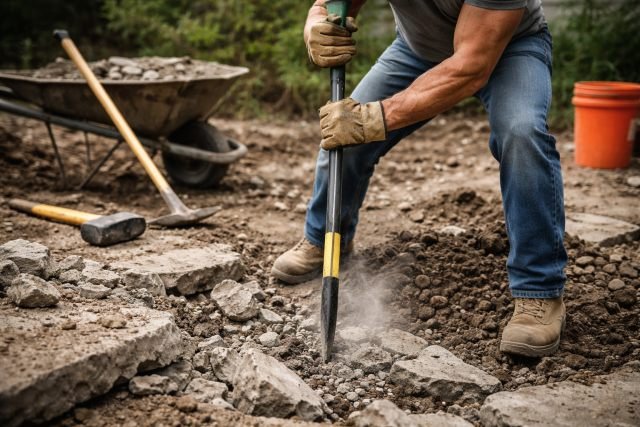
A digging bar is one of the most effective hand tools for breaking hard ground, loosening compacted soil, and prying stubborn materials loose when shovels and picks can’t do the job. If you’ve ever tried to dig in dry clay, gravel-heavy ground, or soil that has been compacted for years, you know how quickly progress slows down. The digging bar works because it combines weight, leverage, and a narrow impact point, allowing you to concentrate force exactly where the ground needs to fracture.
- What Is a Digging Bar?
- Why a Digging Bar Works So Well on Hard Ground
- Digging Bar Types and Which One You Should Choose
- Best Digging Bar Size for Breaking Concrete and Hard Soil
- Safety First: The Biggest Hazards When Using a Digging Bar
- Digging Bar Techniques for Breaking Hard Ground
- Digging Bar Techniques for Breaking Concrete Without Power Tools
- Digging Bar vs Jackhammer: Which Is Better?
- How to Avoid Back Pain and Fatigue While Using a Digging Bar
- Real-World Example: Removing a Fence Post Set in Concrete
- Common Mistakes That Make Digging Bar Work Harder
- FAQs About Digging Bar Techniques
- Conclusion: Mastering the Digging Bar for Faster Concrete and Ground Breaking
This guide explains how to use a digging bar correctly for both hard soil and concrete breaking, what types of bars work best, how to improve speed and efficiency, and how to stay safe and compliant — especially when dealing with concrete dust exposure risks.
What Is a Digging Bar?
A digging bar is a long, solid steel bar designed to break and loosen soil, clay, rocks, and even small concrete pieces. It is commonly used in construction, landscaping, fencing, and general ground preparation. Depending on the region and design, it may also be called a spud bar, San Angelo bar, tamping bar, or pinch point bar. Most digging bars have two working ends, one shaped for breaking and one shaped for tamping or prying, which makes the tool versatile for both demolition and soil work.
Why a Digging Bar Works So Well on Hard Ground
Hard ground breaks most efficiently when force is concentrated into a small surface area. A digging bar’s chisel end focuses weight into a narrow edge, allowing the surface to crack under repeated impact. Unlike a shovel, which spreads your effort across a wider blade, the digging bar targets one small point at a time, which is exactly what tough soil requires. The long handle then gives you leverage, allowing you to widen cracks, pry out compacted chunks, and loosen rocks without needing power tools for every small job.
Digging Bar Types and Which One You Should Choose
Most digging bars come with a chisel end, a blunt tamping end, or a pinch point design. Chisel-point bars are excellent for breaking clay, compacted soil, and thinner concrete sections because they cut into the surface and start fractures quickly. Blunt or tamping ends are better for compacting soil after a hole is dug and can also help break loose debris where you need broader impact. Pinch point ends are designed for prying and lifting and are especially useful for removing rocks and shifting fragments after breaking. Many professionals prefer chisel and tamping combinations because they offer the widest range of uses without needing extra tools.
Best Digging Bar Size for Breaking Concrete and Hard Soil
Digging bars usually range from four to six feet and often weigh from about fifteen to thirty pounds. A five-foot bar is a common choice for most people because it delivers solid leverage while still being manageable for repeated lifting and striking. A six-foot bar can generate more force and deeper leverage, but it causes faster fatigue. A four-foot bar is easier to control in tight spaces and may be better for short users or homeowners working occasionally rather than daily.
When choosing size, think about the balance between force and endurance. Heavier bars break faster but tire you quicker, while lighter bars require more repetitions but are easier on the body.
Safety First: The Biggest Hazards When Using a Digging Bar
A digging bar is simple, but it is also heavy enough to cause severe injuries if dropped, mishandled, or used with poor posture. One of the most common problems is lower back strain caused by lifting and twisting repeatedly. Another risk is hand injury from impact vibration, slips, or pinched fingers during prying. Foot injuries are common when a bar falls or when broken concrete shifts unexpectedly. Eye injury is also a serious concern because concrete chips can fly unpredictably, especially when struck repeatedly.
Concrete work adds another layer of risk because breaking or striking concrete can create dust containing respirable crystalline silica. OSHA regulates silica exposure in construction under 29 CFR 1926.1153 because long-term inhalation can lead to serious lung disease. When working on concrete, controlling dust and using respiratory protection when needed is a key part of safe technique.
Digging Bar Techniques for Breaking Hard Ground
Breaking hard ground is not about swinging wildly or exhausting yourself. The fastest results come from controlled repeated impact and then using leverage to open and loosen fractures.
The most reliable method is the vertical drop technique. This approach works best when the soil is compacted and dry. The bar should be held upright, lifted to a comfortable height, and dropped straight down so gravity does the work. The goal is repeated fractures in a small area rather than one huge strike. After a few strikes, the bar can be pushed into the crack and rocked or twisted to widen it, loosening chunks that can be removed with a shovel.
For clay and layered hard soil, a slight angle strike method often works better. Instead of striking perfectly vertical, you strike at a shallow angle, then drive the bar forward into the split. Once inserted, you twist the bar side to side to widen the fracture. This combination of impact and torque breaks clay much faster than impact alone.
If you are working across a wide area such as a garden bed or trench line, it is more efficient to treat the job as a pattern instead of fighting one spot at a time. Breaking at regular intervals and returning to pry prevents wasted energy and helps avoid overworking your body in one stubborn section.
Digging Bar Techniques for Breaking Concrete Without Power Tools
A digging bar can break concrete effectively when the concrete is thin, cracked, old, or already separated into manageable pieces. The best opportunities are around fence posts, damaged walkways, small pads, and chunks left behind after larger demolition work.
A reliable technique is to start at an edge or crack because concrete is weakest there. Repeated strikes with the chisel end widen an existing crack until a fragment separates. Once separation begins, you use the bar’s length to pry, using a rock or wood block as a fulcrum for extra leverage. This reduces strain and prevents bending the bar or damaging surrounding surfaces.
If the concrete is continuous and unbroken, you can create a controlled break line by striking repeatedly along a single path. Over time, a groove forms and concentrates stress, making the slab more likely to crack along your chosen line. This technique is similar to how saw cuts work, but it relies on repeated impact rather than a blade.
When the slab is near soil, undercutting is highly effective. Removing soil support from beneath the edge makes it easier for the slab to lift slightly and crack. Once loosened, you can use the digging bar to rock the slab until it fractures naturally under stress.
Concrete breaking also increases dust exposure risk, and OSHA recognizes silica dust as a significant hazard in construction work. Even small jobs should avoid creating unnecessary dust clouds, especially in enclosed spaces.
Digging Bar vs Jackhammer: Which Is Better?
A digging bar is often the better choice when you are working in tight spaces, breaking hard soil, or dealing with small concrete fragments that do not justify a power tool. It is inexpensive, portable, and does not require electricity or fuel. It also produces less noise and less dust than heavy demolition equipment.
A jackhammer is better when you are breaking thick slabs, reinforced concrete, or working on large-scale demolition where speed is critical. However, jackhammers and other vibrating power tools can increase risk of vibration-related health problems over time. NIOSH explains that prolonged exposure to vibration can affect circulation and nerves in the hands and fingers, which is why work practices and tool choice matter for long-term safety.
How to Avoid Back Pain and Fatigue While Using a Digging Bar
The best way to avoid strain is to let gravity do the work. Raising the bar too high leads to fatigue and loss of control. Keeping your stance stable and your spine neutral reduces the risk of back injury. It is also important to avoid twisting while lifting. Instead, reposition your feet and turn your whole body when changing direction. Taking short breaks improves performance because the tool is heavy and repeated strikes compound fatigue quickly. Some digging bar use guides also recommend using the tool’s length to reduce bending and improve leverage rather than forcing movements with your lower back.
Real-World Example: Removing a Fence Post Set in Concrete
A common real-world job is removing an old fence post anchored in concrete. The most efficient way is to first loosen the surrounding soil and clay using controlled digging bar strikes. Once the soil is loosened, the concrete plug becomes easier to move and fracture. The concrete should be struck at the edges to weaken it, then pried outward using leverage rather than pulling straight up. When done correctly, this method removes the post faster than digging alone and avoids unnecessary damage to the surrounding ground.
Common Mistakes That Make Digging Bar Work Harder
One common mistake is treating the bar like a sledgehammer and swinging wildly. This reduces accuracy and increases injury risk. Another mistake is trying to break thick reinforced concrete with a digging bar, which wastes time and can lead to dangerous rebound strikes. Many people also skip eye protection, assuming chips won’t fly, but concrete and rock fragments can travel fast and unexpectedly. Finally, ignoring dust control is a critical mistake when working on concrete, especially because silica dust is a recognized hazard regulated under OSHA’s construction standards.
FAQs About Digging Bar Techniques
A digging bar is used to break and loosen compacted soil, clay, rocky ground, and small concrete pieces. It is also useful for prying rocks, shifting debris, and tamping backfill.
A digging bar can break concrete, but it works best on thin or already cracked concrete. For thicker slabs and reinforced concrete, power tools like rotary hammers and jackhammers are more appropriate.
A five-foot digging bar is typically the best option for most people because it delivers strong leverage without becoming exhausting too quickly. A six-foot bar is more powerful but increases fatigue and requires more space.
To avoid hurting your back, use controlled vertical drops, keep your spine neutral, lift with your legs, and reposition your feet instead of twisting. Taking frequent breaks helps maintain safe form.
Concrete dust can be dangerous because it may contain respirable crystalline silica. OSHA regulates silica exposure in construction under 29 CFR 1926.1153 due to serious long-term health risks.
Conclusion: Mastering the Digging Bar for Faster Concrete and Ground Breaking
A digging bar remains one of the most reliable and cost-effective tools for breaking hard ground and handling small concrete demolition work. When used with correct technique, it reduces time, improves control, and helps you avoid unnecessary reliance on power tools. The best results come from controlled impact, smart leverage, and consistent pacing rather than brute force. If you combine those methods with basic safety practices, proper posture, and dust awareness, you can safely and efficiently break stubborn soil and concrete using nothing more than a digging bar.