A pouf is one of those rare furniture pieces that looks stylish and solves real functional problems at the same time. It can work as a footrest after a long day, offer quick extra seating when guests arrive, and even double as a soft side table when paired with a tray. Because it’s lightweight and compact, a pouf is especially useful for smaller living spaces where furniture needs to be flexible and easy to move.
- What Is a Pouf
- Best Uses for a Pouf
- Pouf Size Guide: How to Choose the Right Dimensions
- Pouf Shapes: Which One Fits Your Space?
- Pouf Materials: Pros, Cons & Best Uses
- Filling Matters: What’s Inside Your Pouf?
- Durability Checklist: How to Buy a Pouf That Lasts
- Safety & Indoor Air Quality: What to Know Before Buying
- How to Style a Pouf Like a Designer
- Pouf Care & Cleaning Guide
- Buying a Pouf Online: Smart Checks Before You Purchase
- Pouf Buying Scenarios
- FAQ: Pouf Buying Questions
- Conclusion: Choose the Right Pouf for Comfort, Style & Function
But choosing the right pouf isn’t as simple as picking a color you like. The best choice depends on the size of your room, the height of your seating, the material that matches your lifestyle, and whether you want it mainly for comfort, decor, or daily use. This guide walks you through every decision point so you can buy confidently and choose a pouf that lasts.
What Is a Pouf
A pouf is a soft, cushion-like piece of furniture commonly used for casual seating or as a footrest. It typically comes in round, cube, or cylindrical shapes and often has a softer structure than a traditional ottoman. Ottomans tend to be more structured, sometimes supported by legs, and often include storage. Poufs, by contrast, focus more on flexible use, texture, and decorative impact, although many modern poufs are firm enough to support a tray or light sitting.
The main reason poufs remain popular is versatility. A pouf can be moved from a living room to a bedroom or reading corner in seconds. It also brings warmth and texture, which makes it a favorite in interior design styles that rely on layered materials and soft contrast.
Best Uses for a Pouf
The most common and most comfortable use for a pouf is as a footrest. When the pouf height is close to your sofa seat height, it creates the perfect lounging position without taking up the space a full ottoman would require. In living rooms, a pouf can also serve as extra seating for casual gatherings, especially in family homes where kids or teens often prefer soft, movable seating.
A pouf can also function as a side table if it has a firm top and you add a sturdy tray. This is a popular styling method in modern living rooms because it creates a flexible surface for books, candles, or mugs. In bedrooms, poufs work beautifully near a vanity, beside a chair, or at the foot of the bed to add softness and “finished” design. In nurseries or kids’ rooms, a pouf is especially useful because it’s soft, low to the ground, and easy to reposition, though you’ll want to choose a material that cleans easily.
Pouf Size Guide: How to Choose the Right Dimensions
Sizing is the single most important factor when buying a pouf online, because photos can be misleading. A pouf that looks generously sized in a staged photo may arrive closer to the size of a floor cushion if you don’t check the measurements. In general, many popular round poufs fall within a 24–30 inch diameter range, which tends to work well for most living rooms and bedrooms.
To choose the right height, think about how the pouf will be used. If it’s primarily a footrest, it usually feels best when it sits one to three inches lower than your sofa seat. If you want a pouf that works as seating for adults, you’ll generally want something closer to chair-seat height, often in the 16–20 inch range depending on the design and fill. If you plan to use it as a side table, stability and firmness become more important than height alone.
Pouf Size Chart (Best Match by Use)
| Pouf Size | Typical Dimensions | Best For |
|---|---|---|
| Small | 16–20″ diameter, 12–16″ height | Accent decor, kids’ seating, tight spaces |
| Medium | 20–26″ diameter, 14–18″ height | Footrest, occasional seating |
| Large | 26–30″+ diameter, 16–20″ height | Extra seating, sectional lounging |
| Cube Pouf | 16–20″ wide x 16–20″ high | Side table styling, modern spaces |
Pouf Shapes: Which One Fits Your Space?
Round poufs are the most common because they soften the hard lines of sofas, coffee tables, and rectangular rugs. They also tuck into corners easily and look natural in both modern and boho interiors. Cube poufs tend to look more structured and minimal, which makes them a good choice for modern spaces and for households that want a stable surface for trays.
Cylindrical poufs are often narrower and can be taller, which makes them useful in tight spaces like bedrooms or small apartments. Oversized poufs are a great option if you want a lounge-style feel, especially in family rooms or media rooms, where comfort and flexibility matter most.
Pouf Materials: Pros, Cons & Best Uses
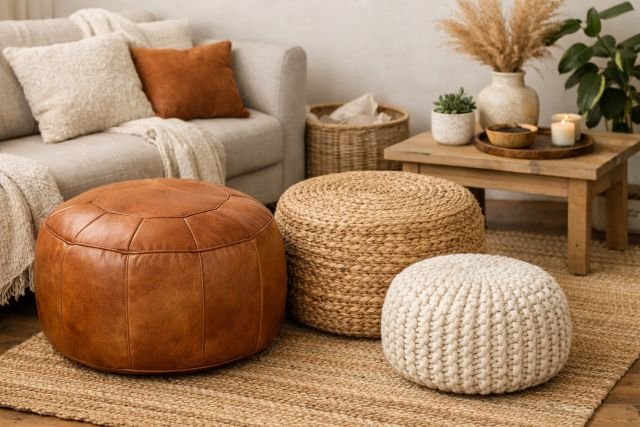
Material determines almost everything about a pouf: durability, ease of cleaning, comfort, and the overall style it brings into your room. Leather poufs are popular because they look premium and tend to last a long time. They also clean easily with a wipe, but they can scratch, and real leather requires occasional conditioning. If you want a pouf that feels timeless and works in many interior styles, leather is a strong choice.
Fabric poufs, including cotton blends and upholstery fabrics, are softer and often more affordable. They come in a wide range of colors and patterns, which makes them easy to match with your decor. The downside is that fabric can stain more easily, so cleaning requirements matter a lot for families with kids or pets.
Woven poufs, including jute and braided natural fibers, add rich texture and are often featured in boho, coastal, and earthy decor trends. These poufs tend to be durable but can feel rougher than fabric and may require spot-cleaning only. They’re a great choice when you want texture to stand out in your room, and they often work well with layered rugs and neutral palettes.
Knitted poufs provide a cozy, modern look and are commonly used in Scandinavian-inspired or warm minimalist interiors. However, knit can snag and may lose shape if the filling is soft or underpacked. Velvet poufs are elegant and visually rich, but they can show wear and pressure marks more easily, and they require more careful cleaning. Design media frequently includes velvet and leather poufs when highlighting stylish ottoman trends.
Filling Matters: What’s Inside Your Pouf?
A pouf’s comfort depends heavily on the filling. High-density foam tends to keep its shape and offers the best support for sitting. Polyfill is softer and plush, but it can flatten over time. Bead fillings are lightweight and moldable, which can be comfortable for lounging, but they may compress and require refilling eventually. Mixed fill designs often offer a good balance, combining supportive foam cores with softer outer layers.
If you want a pouf primarily for seating or as a side table with a tray, firmness matters far more than you might expect. A pouf that collapses when someone sits on it will not hold up well for daily use, and a tray will wobble on top.
Durability Checklist: How to Buy a Pouf That Lasts
A pouf can look stunning in product photos but fall apart quickly if it’s not well-made. The most reliable signs of durability are tight seams, strong stitching, and a filling that feels dense rather than airy. Refillable poufs are also worth considering because they allow you to restore shape over time. Materials matter too, but construction quality often determines whether a pouf becomes a long-term piece or a short-lived decor item.
If you are buying a fabric pouf, some brands provide durability information such as abrasion ratings. One common test is the Martindale rub test, which helps evaluate how well fabric withstands wear. Higher rub counts generally indicate better wear resistance. If a brand doesn’t provide this information, you can still make a smart choice by looking for tightly woven fabric, reinforced seams, and verified reviews that mention long-term use.
Safety & Indoor Air Quality: What to Know Before Buying
Some poufs contain foam, adhesives, dyes, or finishes that may emit VOCs, especially when new. If you are furnishing a nursery, bedroom, or a space for someone sensitive to smells, it’s worth considering low-emission certifications. UL GREENGUARD Gold certification is commonly used to identify products that meet stricter chemical emission limits, supporting healthier indoor air.
If certification isn’t available, you can reduce exposure by airing out new furniture for a few days, choosing natural fibers where practical, and avoiding products that smell strongly chemical during unboxing.
How to Style a Pouf Like a Designer
A pouf can transform a room quickly when you treat it as both function and decor. One of the easiest ways to get it right is to match the pouf to the mood of your space. Leather, neutral cube poufs tend to blend well in modern interiors, while woven jute or patterned textile poufs add character to boho spaces. Velvet poufs work best as statement accents in formal or low-traffic rooms, while knitted poufs bring cozy softness to bedrooms and reading nooks.
Balance is another key design principle. If your room has lots of sharp angles — rectangular coffee tables, squared-off sofas, and straight-lined shelving—a round pouf adds shape contrast that makes the layout feel more relaxed. Poufs also look best when grounded, usually placed on or near a rug so they feel connected to the room rather than floating. If you want to use your pouf as a side table, adding a rigid tray gives structure and makes the top surface functional.
Pouf Care & Cleaning Guide
Leather poufs are generally easy to maintain when you wipe spills quickly and condition them occasionally. Direct sunlight can cause fading and drying, so placing leather poufs away from harsh sunlight helps preserve their finish. Fabric poufs usually need regular vacuuming to remove dust and crumbs, and spot-cleaning for stains. Some fabric poufs include removable covers, which makes cleaning far easier, especially in homes with kids.
Woven and jute poufs usually require gentle vacuuming and spot-cleaning only. Excess moisture can warp natural fibers, so they’re best for dry indoor spaces. Knit poufs require careful spot-cleaning and occasional rotation to prevent uneven wear. Velvet poufs should be cleaned gently and protected from heavy daily use to avoid crushing the pile.
Buying a Pouf Online: Smart Checks Before You Purchase
Online shopping is convenient, but it’s also where people most often misjudge size and firmness. Before buying, check the exact dimensions and compare them to your sofa seat height. Consider whether the pouf is firm enough for your intended use, especially if you want it for seating or as a table with a tray. It’s also worth checking whether it’s refillable, what cleaning method it requires, and how well it holds shape based on real customer photos.
A small detail that matters more than most people expect is weight. If you plan to move the pouf often, lightweight is an advantage. But if you want the pouf to stay put as a stable table-like surface, a heavier and firmer build is usually better.
Pouf Buying Scenarios
If you have kids, you’ll usually be happiest with a pouf that can handle spills and frequent use, which often means wipeable finishes or tightly woven fabric. If you have pets, it’s smart to avoid loose knit designs that can snag, and instead choose materials like leather, faux leather, or durable woven textiles. If you live in a small apartment, a medium-size pouf often offers the best balance of function and space efficiency, especially if it can serve as both a footrest and occasional seating.
If your goal is a statement piece, look for rich textures and bold materials like velvet or patterned textiles. Design publications often highlight leather, jute, and velvet poufs as strong decor choices depending on the interior style.
FAQ: Pouf Buying Questions
What is a pouf used for?
A pouf is used as a footrest, extra seat, soft side table with a tray, or decorative accent. It’s compact, flexible, and easy to move from room to room.
What size pouf should I buy?
For most homes, a medium pouf works best. Many popular round poufs fall in the 24–30 inch diameter range, making them suitable for living rooms and bedrooms.
Can a pouf be used as a coffee table?
A pouf can work as a coffee table substitute if it has a firm structure and a wide top. Adding a rigid tray improves stability and makes it more functional.
What is the best material for a pouf?
The best material depends on lifestyle. Leather is durable and easy to clean, fabric is cozy and versatile, woven jute adds texture and a natural look, knitted poufs feel warm and modern, and velvet brings a luxurious accent but needs more care.
Are poufs safe for nurseries?
Many poufs are safe for nurseries, especially when made with low-emission materials. If you want extra reassurance, look for UL GREENGUARD Gold certified options, which indicate stricter chemical emission limits.
Conclusion: Choose the Right Pouf for Comfort, Style & Function
A pouf is one of the most practical and stylish furniture pieces you can add to your home because it delivers comfort, flexibility, and design impact in a small footprint. The best way to choose the right pouf is to start with purpose, then match the size to your room and seating height, and finally select a material that fits your lifestyle. When you do that, your pouf won’t just be a decorative accessory — it will become an everyday piece that adds function and warmth to your space.