In modern metalworking, the term aluminum charge is one of the most important—but often misunderstood—concepts in the aluminum melting and casting process. Whether you’re running a foundry, producing aluminum ingots, making automotive castings, or operating a secondary recycling facility, your aluminum charge directly impacts metal quality, yield, safety, cost, and sustainability.
- What Is Aluminum Charge?
- Why Aluminum Charge Matters in Manufacturing
- Aluminum Charge Materials: What Goes Into the Furnace?
- Aluminum Charge Composition: How Manufacturers Calculate It
- Aluminum Charge Losses: Understanding Yield, Dross, and Oxidation
- Key Factors That Affect Aluminum Charge Performance
- Aluminum Charge in Secondary Aluminum Manufacturing
- Practical Example: Aluminum Charge Planning for an Automotive Casting
- Best Practices to Optimize Aluminum Charge
- Aluminum Charge and Manufacturing Costs: Why Small Improvements Matter
- Aluminum Charge Standards and Compliance
- Common Questions About Aluminum Charge (FAQ)
- Conclusion: Aluminum Charge Is the Foundation of Efficient Manufacturing
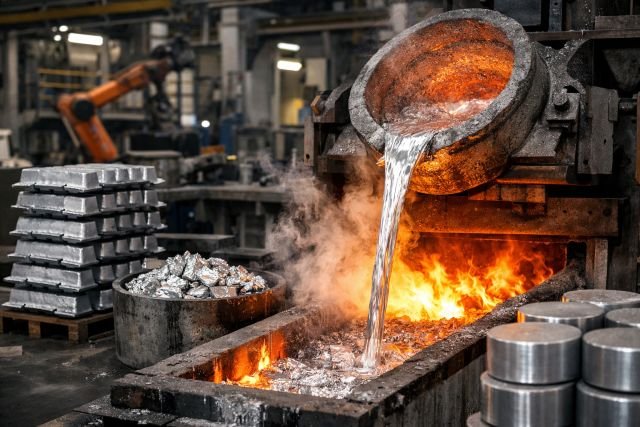
Simply put, aluminum charge refers to the materials loaded into a furnace to produce molten aluminum or an aluminum alloy. This can include primary aluminum, recycled scrap, returns, sow, ingots, and alloying additions. The quality and composition of the aluminum charge will determine how much metal you recover, how much you lose to oxidation and dross, and whether your final product meets required standards.
In this complete guide, you’ll learn exactly what aluminum charge is, how it’s calculated, what materials it can include, how charge composition affects defects and yield, and what manufacturers must do to improve efficiency and safety. Along the way, you’ll also see practical examples, key statistics, and expert tips to help you optimize aluminum charge management in real-world operations.
What Is Aluminum Charge?
Aluminum charge is the complete mix of aluminum-bearing materials loaded into a melting furnace to create molten metal for casting, alloying, or further processing. The charge may include clean primary aluminum, recycled aluminum scrap, internal returns (gates, risers, sprues), alloy ingots, master alloys, and additives used for chemistry correction.
In manufacturing, aluminum charge is not random. It’s carefully designed so the molten metal meets a specific alloy composition and impurity limit, while maximizing yield and minimizing cost. In secondary aluminum production (recycled aluminum), charge planning becomes even more critical because scrap quality and contamination can vary widely.
Why Aluminum Charge Matters in Manufacturing
An aluminum charge controls four outcomes that define profitability and product quality.
First, it determines whether the final chemistry meets industry alloy standards. Many production lines depend on precise chemical composition limits for alloys registered with organizations like the Aluminum Association.
Second, aluminum charge affects melt losses. During melting, oxidation and dross formation can reduce usable metal. The U.S. Department of Energy has reported that oxidative melt loss averages around 4% of input material in typical aluminum melting operations, representing a major cost and energy inefficiency.
Third, charge quality affects casting defects. Contaminants such as moisture, oils, plastics, and mixed alloys can increase porosity, inclusions, and unwanted intermetallic phases that weaken cast parts.
Finally, charge design impacts sustainability. Recycled aluminum requires dramatically less energy than primary production. The International Aluminium Institute reports that recycled aluminum consumed about 8.3 GJ/tonne versus 186 GJ/tonne for primary aluminum, a savings of 95.5%.
Aluminum Charge Materials: What Goes Into the Furnace?
In aluminum manufacturing, the charge is usually a blend of materials, selected based on target alloy chemistry, cost, and available supply.
Primary aluminum is the most consistent input. It has relatively predictable chemistry and is used when strict impurity limits are needed.
Recycled aluminum scrap is used to reduce cost and emissions, but scrap can be highly variable. Scrap needs sorting, decoating, and preparation to reduce contamination, especially in secondary aluminum operations.
Internal returns such as runners, gates, sprues, and rejects are often clean and chemically compatible, so they are frequently reincorporated into the charge.
Sow and ingot materials are common for foundry and die casting operations. These may be alloy-specific ingots designed to match specifications.
Alloying additions and master alloys are used to fine-tune chemistry. This is where the charge becomes strategic: you’re not only melting metal—you’re engineering the final composition.
Aluminum Charge Composition: How Manufacturers Calculate It
A properly designed aluminum charge is planned backward from the target alloy specification.
Manufacturers start with a required alloy chemistry and allowable impurity limits. Industry standards such as alloy designation systems and published composition limits provide the boundaries for these requirements.
Next, engineers calculate how much aluminum-bearing material is needed to achieve the final melt volume after accounting for melt losses, oxidation, and dross.
Then they build a charge “recipe” using available inputs, often balancing primary metal, scrap, and returns.
Finally, adjustments are made for burn-off of alloying elements. Some elements oxidize or volatilize more easily during melting, so charge recipes must compensate for losses. Research and industrial studies highlight the importance of dynamic charge optimization when scrap quality and melt conditions change.
Aluminum Charge Losses: Understanding Yield, Dross, and Oxidation
One of the biggest cost drivers in aluminum melting is metal loss through oxidation and dross formation.
The U.S. Department of Energy has documented that oxidative melt loss averages around 4% of input material during melting. That means for every 1,000 kg of aluminum charge, about 40 kg may be lost to oxidation-related byproducts if melt practices are not optimized.
Other sources describe dross losses more broadly, noting that dross formation can range depending on furnace type, scrap cleanliness, and temperature control. Industry references note that, depending on process efficiency, 1% to 10% of the aluminum charge may end up as dross in some cases.
ICSOBA technical publications also quantify typical dross generation in casthouse melting as roughly 15–25 kg per tonne of molten aluminum, emphasizing that even well-controlled operations experience unavoidable losses.
This is why charge management is never just about selecting materials. It’s also about melting practices that protect the charge from unnecessary oxidation.
Key Factors That Affect Aluminum Charge Performance
Charge Cleanliness and Contamination
Charge cleanliness is a major factor in both safety and metal quality. Oils, paint, coatings, plastics, and moisture can produce gases and residues that create inclusions, porosity, and dangerous reactions in the furnace.
Moisture is especially risky. If wet or cold metal is introduced into molten aluminum, steam expansion can cause violent explosions. The Aluminum Association’s safety guidelines emphasize preventing charging explosions caused by wet, cold, or contaminated aluminum being charged into melting furnaces.
Alloy Compatibility and Sorting
Different aluminum alloys contain different levels of silicon, magnesium, copper, zinc, and iron. If scrap isn’t properly sorted, the wrong alloying elements may exceed specification limits, causing product failures or rejection.
This is why advanced scrap sorting has become a major industry focus, particularly for high-value applications where impurity control is strict.
Furnace Type and Charging Method
Furnace design influences oxidation rates and how efficiently the charge melts. Practices such as charging lightweight scrap directly into the melt surface can increase oxidation losses if scrap is exposed to flame and dross formation accelerates.
Induction melting, reverberatory furnaces, and side-well systems all affect heat transfer and oxidation differently. Technology providers highlight that modern induction systems can improve efficiency through precise temperature control and controlled melting conditions.
Aluminum Charge in Secondary Aluminum Manufacturing
Secondary aluminum production revolves around scrap-based charge design.
Unlike primary aluminum, scrap can contain variable alloying elements and contaminants. That means secondary operations must invest in sorting, pre-treatment, and chemistry correction to meet customer specifications.
The reward for managing this complexity is enormous. According to the International Aluminium Institute, recycled aluminum requires about 95.5% less energy than primary production, making secondary aluminum one of the most impactful pathways for industrial decarbonization.
The Aluminum Association also notes that recycled aluminum can be produced using roughly 5% of the energy needed for primary aluminum, reinforcing the sustainability advantage.
This is why aluminum charge strategy is now tightly connected to corporate sustainability goals. When manufacturers improve charge quality and yield, they’re not only lowering costs—they’re reducing emissions and improving circularity.
Practical Example: Aluminum Charge Planning for an Automotive Casting
Imagine a manufacturer needs to produce an automotive casting alloy with strict silicon and magnesium ranges. They want to minimize cost, so they want high scrap use.
They begin with a base of compatible clean scrap that matches the alloy family, then add a controlled amount of primary aluminum to dilute impurities, and finish by adding master alloys to adjust chemistry precisely.
During melting, they monitor temperature to reduce oxidation and use fluxing or filtration practices to minimize inclusions. Oxidative melt loss still occurs, but by controlling charging practices and keeping scrap clean and dry, they reduce losses closer to industry averages.
This is the “real-world” value of charge engineering: it bridges cost control and product reliability.
Best Practices to Optimize Aluminum Charge
The simplest way to improve aluminum charge efficiency is to control three things: cleanliness, chemistry, and process discipline.
Clean, dry, and well-sorted charge materials reduce both safety risks and defects. This is strongly emphasized by the Aluminum Association’s charging guidelines, especially when preventing moisture-related explosions.
Charge chemistry should be designed with predictable inputs and adjusted based on real melt analysis. Modern charge optimization research even explores automated systems that can adjust charge composition in real time as scrap supply changes.
Finally, melting discipline matters. Temperature overshoot, poor stirring, and improper scrap feeding can increase oxidation and dross formation, which directly reduces yield.
Aluminum Charge and Manufacturing Costs: Why Small Improvements Matter
Because aluminum charge is the largest material input, even small improvements in yield can produce meaningful cost savings.
If you reduce oxidative losses from 4% to 3% on a high-volume line, you are effectively recovering an extra 10 kg per tonne of aluminum processed. That can translate into major savings when multiplied across thousands of tonnes.
Charge optimization also reduces downtime and quality rejects. Cleaner charge materials mean fewer inclusions and fewer rejected castings. It also reduces furnace cleaning time and equipment wear.
Aluminum Charge Standards and Compliance
For manufacturers producing alloy-specific products, charge design must align with standards and alloy composition rules.
The Aluminum Association maintains a system of alloy designations and composition limits for registered alloys. These standards are essential references when designing charge recipes to ensure compliance.
In real production, compliance also requires testing and sampling. Charge materials are often tested for chemistry and contamination before entering the furnace, especially for high-value applications such as aerospace, automotive, and precision electronics.
Common Questions About Aluminum Charge (FAQ)
What is aluminum charge in manufacturing?
Aluminum charge is the mixture of aluminum-bearing materials loaded into a furnace for melting, including scrap, ingot, returns, and alloying additions, designed to meet a target alloy chemistry.
Why is aluminum charge important?
Aluminum charge affects metal quality, melt yield, cost, safety, and environmental performance. Poor charge design can cause defects, excess dross, and failed alloy compliance.
What causes aluminum charge losses?
Losses occur mainly through oxidation and dross formation. The U.S. Department of Energy reports an average oxidative melt loss of about 4% in aluminum melting operations.
How does aluminum scrap affect charge quality?
Scrap lowers cost and emissions, but it can introduce contamination and unpredictable chemistry unless it is sorted and cleaned. Proper scrap preparation is essential in secondary aluminum production.
Is recycled aluminum better for sustainability?
Yes. Recycled aluminum requires about 95.5% less energy than primary production, according to the International Aluminium Institute, making it a major sustainability advantage.
Conclusion: Aluminum Charge Is the Foundation of Efficient Manufacturing
In manufacturing, aluminum charge isn’t just what you load into a furnace — it’s the foundation of your entire production outcome. A properly designed aluminum charge improves yield, reduces defects, protects workers, and ensures your alloy meets specification requirements. It also supports sustainability goals by enabling increased use of recycled aluminum, which can save around 95.5% of the energy compared to primary production.
The most successful manufacturers treat aluminum charge as a strategic engineering input, not a basic operational step. When you control charge quality, chemistry, and charging discipline, you reduce waste, improve reliability, and unlock meaningful cost savings — especially at scale.
If you’re building content around aluminum manufacturing, focusing on aluminum charge is one of the best ways to demonstrate real technical expertise while giving readers actionable insights they can apply immediately.