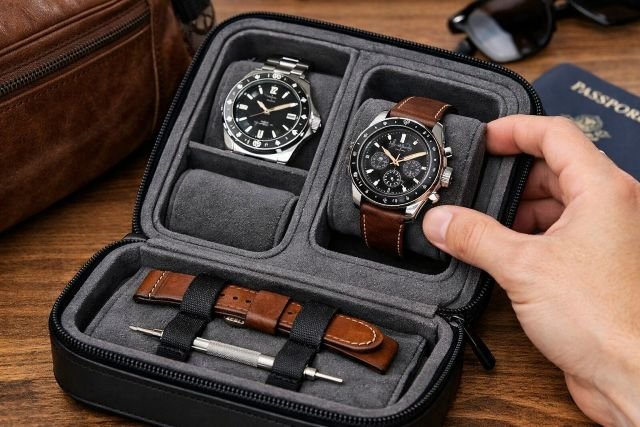
A watch travel case is designed to isolate your watch from external pressure, friction, and movement. The key function is not just padding but controlled positioning. When a watch stays fixed in place, it avoids the repeated micro-impacts that cause scratches, misalignment, and wear over time. Good travel cases also prevent metal-to-metal contact, which is one of the most common causes of bracelet and clasp damage during travel.
- Why Packing a Watch Safely Matters During Travel
- Choosing the Right Watch Travel Case for Your Trip
- How to Pack a Watch Safely Using a Watch Travel Case
- Airport Security and Watch Safety
- Real Travel Scenarios and Practical Packing Choices
- Common Travel Damage and How to Avoid It
- Frequently Asked Questions About Watch Travel Cases
- Conclusion
Different travel cases exist for different needs, but all effective designs share the same purpose. They protect the crystal and bezel, stabilize the watch head, and shield vulnerable parts such as the crown and pushers. Without this protection, even short trips can gradually degrade a watch’s appearance and performance.
Why Packing a Watch Safely Matters During Travel
Most watch damage during travel does not come from dramatic accidents. It comes from repeated minor stress. A bag being set down too hard, a charger pressing against a case, or a zipper rubbing against polished steel can slowly leave marks that never come out. These small incidents accumulate over time and often go unnoticed until the damage becomes obvious.
There is also the issue of loss. Travel authorities such as the Transportation Security Administration advise passengers to keep valuable items like watches and jewelry in carry-on bags rather than checked luggage. Even though global baggage handling has improved in recent years, mishandled and delayed luggage remains a real risk. Keeping your watch secured in a watch travel case inside your personal bag dramatically reduces that exposure.
Choosing the Right Watch Travel Case for Your Trip
The right watch travel case depends on how you travel and how many watches you carry. A padded pouch works well for minimalist travelers who carry a single watch and want something slim and flexible. These cases are easy to slip into backpacks and briefcases and are popular for short trips where space matters.
Zippered single-watch cases provide a balance between structure and portability. They offer more protection than soft pouches while remaining compact enough for everyday travel. For most travelers, this style is the safest and most practical option.
Watch rolls are designed for people traveling with multiple watches. They allow several watches to be stored together while remaining separated. This style is common among enthusiasts, but fit matters greatly. If the compartments are too tight, pressure can be applied to the case or bracelet, which defeats the purpose of using a travel case.
Hard-shell watch cases provide the highest level of protection and are best for long-haul travel or situations where luggage may experience heavy handling. While bulkier, they offer superior resistance to crushing and impact. Even with hard cases, watches are safest when kept in carry-on bags rather than checked luggage.
How to Pack a Watch Safely Using a Watch Travel Case
Before placing your watch inside a travel case, take a moment to clean it. Dust and sand particles act like abrasives when trapped in enclosed spaces. A quick wipe with a soft cloth reduces scratch risk immediately. Make sure the bracelet clasp is fully closed or the strap is secured so it does not move freely.
Positioning the watch correctly inside the case is essential. The crystal should not press against seams or zippers, and the watch should rest evenly on its cushion. If the case allows movement, adding a microfiber cloth inside creates extra stability without harming the finish.
After closing the case, gently shake it. If you feel movement, the watch is not secure enough. A properly packed watch travel case should feel solid, with no internal shifting. This simple test prevents most travel-related damage.
Placement inside your bag matters just as much as the case itself. In backpacks, the safest position is the center, surrounded by soft clothing. In duffel bags, the middle area is best, away from the ends that absorb impact. In carry-on suitcases, placing the watch case near the top and away from wheels helps reduce vibration and shock. If a watch must be placed in a checked suitcase, it should be deeply cushioned by clothing, though this is still not ideal for valuable timepieces.
Airport Security and Watch Safety
Many travelers worry about airport scanners damaging their watches, but physical handling remains the greater risk. Modern airport screening systems are designed to be safe for everyday personal items, including watches. The real danger occurs when watches are removed and placed loosely in security bins where they can be scratched, forgotten, or knocked against other items.
If you remove your watch during screening, placing it directly into a watch travel case or padded pouch before putting it in the bin significantly reduces risk. Keeping the watch protected even during security checks maintains consistent protection throughout the journey.
Real Travel Scenarios and Practical Packing Choices
For business travelers carrying a single watch in a backpack, a zippered watch travel case placed in the center of the bag offers reliable protection without added bulk. Vacation travelers who switch between a sport watch and a dress watch benefit from either two separate pouches or a compact watch roll, allowing one watch to remain protected while the other is worn.
Collectors traveling with multiple watches should prioritize fit and structure. A well-designed watch roll placed in a carry-on bag offers both organization and protection, provided each watch is secured and not compressed.
Common Travel Damage and How to Avoid It
Scratches usually result from contact with harder objects or trapped grit. Preventing this requires strict separation and secure placement. Shock damage comes from drops and impacts, which structured cases handle best. Crown and pusher damage occurs when pressure is applied from the side, often by heavy items packed nearby. Loss remains the biggest risk when watches are placed in checked luggage instead of personal bags.
Frequently Asked Questions About Watch Travel Cases
The safest way to travel with a luxury watch is either wearing it or placing it in a watch travel case inside your carry-on bag. This minimizes both physical damage and loss risk. Packing a watch in a checked suitcase is possible but not recommended for valuables, even when using a hard case. Watch rolls are safe for mechanical watches as long as the fit is correct and there is no excessive pressure. Whether a hard case is necessary depends on travel conditions, but increased structure always increases protection.
Conclusion
A watch travel case is not a luxury accessory; it is a practical safeguard against the most common forms of travel damage. When used correctly, it prevents scratches, absorbs shock, and keeps your watch secure no matter what type of bag you use. By choosing the right case, positioning it properly, and keeping your watch with you during travel, you dramatically reduce the risk of damage or loss. Developing this habit ensures your watch arrives exactly as it left, trip after trip.