If you’ve been searching for liver ds diet guidance, you’re not alone. Liver disease is common and often tied to everyday factors like weight, alcohol, blood sugar, and overall diet quality. In the U.S., the CDC estimates 4.5 million adults have diagnosed liver disease and reports 52,222 deaths from chronic liver disease and cirrhosis (mortality data referenced as 2023 via CDC WONDER).
- What “liver ds” means and why diet matters
- Liver ds diet basics: the best overall eating pattern
- Best foods to prioritize for liver health
- Foods and habits to limit
- Liver ds diet tips by condition
- Common questions
- A simple “start this week” plan that doesn’t feel extreme
- Conclusion: building a sustainable liver ds eating plan
The encouraging part: for many people, food choices and eating patterns can meaningfully reduce liver fat, inflammation, and the risk of progression — especially when paired with medical care. This guide breaks down what to eat, what to limit, and how to adapt your diet based on common liver conditions such as fatty liver disease (now often referred to as MASLD/MASH), viral hepatitis, and cirrhosis.
What “liver ds” means and why diet matters
“Liver ds” is a broad label people use for many liver conditions, including fatty liver disease, alcohol-associated liver disease, hepatitis (viral or autoimmune), and cirrhosis. While each diagnosis is different, the liver’s job stays the same: it processes nutrients, helps regulate blood sugar and fat metabolism, produces bile, and filters toxins.
Diet matters because it directly influences:
- Fat accumulation in liver cells (common in MASLD/NAFLD/MASLD)
- Inflammation and oxidative stress
- Muscle loss and malnutrition risk (especially in cirrhosis)
- Fluid retention and complications like ascites (in advanced disease)
Globally, liver disease is a major health burden — one widely cited hepatology review notes around two million deaths annually and about 4% of all deaths worldwide.
Liver ds diet basics: the best overall eating pattern
If you only remember one principle, make it this: choose an eating pattern that improves cardiometabolic health. For many patients—especially those with fatty liver—the Mediterranean diet is one of the most consistently recommended patterns.
Mayo Clinic specifically recommends the Mediterranean diet for MASLD and notes that losing 5% to 10% of body weight can significantly improve MASLD. This is powerful because MASLD is tightly linked with insulin resistance, high triglycerides, and abdominal weight.
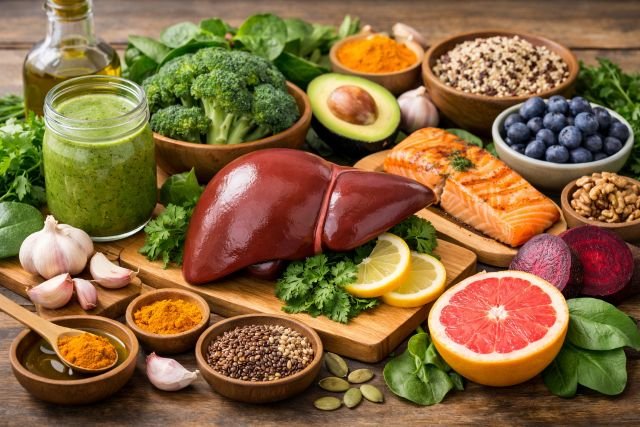
A Mediterranean-style approach typically emphasizes vegetables, fruit, legumes, whole grains, nuts, olive oil, fish, and lean proteins—without turning meals into a restrictive “clean eating” contest. The real win is sustainability.
A practical example day (not perfection, just direction)
Breakfast might be eggs with sautéed vegetables and whole-grain toast, or plain yogurt with fruit and nuts. Lunch could be a big salad with beans or chicken plus olive oil and lemon. Dinner might be grilled fish, roasted vegetables, and brown rice. Snacks can be fruit, nuts, or yogurt — simple options that reduce the urge for ultra-processed foods.
Best foods to prioritize for liver health
Fiber-forward plants (vegetables, legumes, fruit)
Fiber helps regulate blood sugar and supports a healthier gut microbiome — both relevant for fatty liver and inflammation. If bloating is an issue, start smaller and increase gradually rather than quitting.
Healthy fats (especially olive oil, nuts, fatty fish)
Replacing saturated and trans fats with unsaturated fats can support lipid control. Fatty fish also provides omega-3s, which can be helpful for triglycerides—often elevated in fatty liver.
Lean and adequate protein
Protein is where liver diet advice can get confusing. Some people mistakenly think liver disease means “avoid protein.” For cirrhosis, modern guidelines emphasize the opposite: adequate protein helps prevent muscle loss (sarcopenia), which is strongly linked to worse outcomes.
EASL nutrition guidelines state that the recommended protein intake in cirrhosis is 1.2–1.5 g/kg/day to prevent or reverse muscle loss. They also note that normal-to-high protein intake does not precipitate hepatic encephalopathy in typical management and may even improve mental status in some contexts.
If you’re not sure what target fits you, a registered dietitian (ideally one familiar with liver disease) can personalize it—especially if you have complications like encephalopathy or kidney issues.
Coffee (yes, really — within reason)
A large body of research links coffee intake with lower risk of liver scarring and cirrhosis. One meta-analysis found coffee consumption was associated with reduced risk of hepatic fibrosis and cirrhosis. Coffee isn’t a “cure,” but if you already tolerate it well, it’s a reasonable, evidence-supported habit to discuss with your clinician (especially if you also have reflux, anxiety, or heart rhythm issues).
Foods and habits to limit
Alcohol (the clearest “no” in many liver conditions)
Alcohol can worsen nearly every liver condition and is a common driver of progression. WHO reports 2.6 million deaths per year attributable to alcohol (based on 2019 data summarized in their report). If alcohol played any role in your diagnosis—or if your clinician recommends abstinence—treat that as a medical priority, not a lifestyle preference.
Added sugars and sugar-sweetened drinks
Sugary drinks deliver a fast glucose/fructose load without satiety. For people with fatty liver, this is one of the highest-leverage changes.
For a concrete benchmark, the American Heart Association suggests limiting added sugar to no more than 36 g/day for men and 25 g/day for women. You don’t have to count forever, but tracking for 1–2 weeks can be eye-opening.
Ultra-processed foods (especially those combining refined carbs + fats)
These foods are engineered for overconsumption. The liver feels the downstream effects: weight gain, insulin resistance, and worse triglycerides.
Sodium, especially if you have swelling or ascites
If you have cirrhosis with fluid retention, sodium becomes a clinical lever. An AASLD educational resource notes that in patients with ascites, dietary sodium restriction to <2 grams/day should be considered, while balancing the risk of malnutrition. The key nuance is important: don’t slash sodium so hard that you stop eating enough overall.
Liver ds diet tips by condition
Fatty liver (MASLD/MASH): focus on weight, insulin, and triglycerides
For many people, the best “liver diet” is the one that improves metabolic health. A Mediterranean-style pattern plus gradual weight loss is a strong foundation. As Mayo Clinic summarizes, 5%–10% weight loss can significantly improve MASLD.
A realistic scenario: if you typically drink two sodas daily, swapping to unsweetened tea or sparkling water can be a bigger liver win than obsessing over “detox foods.”
Viral hepatitis (B or C): protect the liver, avoid risky foods, stay nourished
Diet doesn’t replace antiviral therapy, but it supports resilience. If you have cirrhosis or advanced disease, food safety matters more. NIDDK advises people with cirrhosis to avoid raw or undercooked shellfish, fish, and meat, and unpasteurized milk products, due to higher infection risk.
Cirrhosis: prioritize nourishment, protein, and smart meal timing
With cirrhosis, under-eating can be as harmful as eating the “wrong” thing. EASL guidelines highlight strategies that reduce long fasting periods, including a protein-containing breakfast and a late evening snack to shorten overnight fasting. This isn’t a trendy hack — it’s about metabolism and preserving muscle.
If you struggle with appetite, smaller, more frequent meals often work better than forcing big plates.
Common questions
What is the best diet for liver ds?
For many people with liver ds—especially fatty liver—the best overall pattern is a Mediterranean-style diet emphasizing vegetables, legumes, whole grains, healthy fats (like olive oil), and lean protein, while limiting alcohol and added sugars.
Can the liver heal with diet alone?
Sometimes liver fat and inflammation improve substantially with diet and weight loss, but healing depends on the diagnosis and stage. For example, MASLD can improve with 5%–10% weight loss, while viral hepatitis typically requires medical treatment, and cirrhosis often needs long-term clinical management.
Should I cut out protein if I have cirrhosis or encephalopathy?
Not automatically. EASL guidance recommends 1.2–1.5 g/kg/day protein in cirrhosis to prevent or reverse muscle loss, and notes that normal-to-high protein intake does not generally precipitate encephalopathy when managed appropriately.
Is coffee good for liver ds?
Research consistently associates coffee consumption with lower risk of liver fibrosis and cirrhosis in multiple populations. It’s not a treatment on its own, but it may be a supportive habit if you tolerate it well.
What foods should people with cirrhosis avoid?
Beyond alcohol (often complete abstinence), food safety matters: avoid raw or undercooked seafood/meat and unpasteurized dairy due to infection risk, and limit sodium if you have fluid retention/ascites per your clinician’s advice.
A simple “start this week” plan that doesn’t feel extreme
Try thinking in swaps, not bans. Replace sugar-sweetened drinks with unsweetened options. Add one extra serving of vegetables daily. Choose a protein you’ll actually eat consistently (fish, eggs, chicken, legumes, yogurt, tofu). Build meals around whole foods most of the time, and aim for steadier routines rather than periodic “detox resets.”
If you have cirrhosis or unintended weight loss, treat calories and protein as medicine — because they often are.
Conclusion: building a sustainable liver ds eating plan
The most effective liver ds diet is rarely a short-term cleanse. It’s a repeatable way of eating that reduces liver fat and inflammation, protects muscle, and supports long-term metabolic health. For many people, a Mediterranean-style pattern, less added sugar, and (when medically appropriate) complete alcohol avoidance can shift liver health in a measurable direction. If you’re dealing with cirrhosis or complications like ascites, the goal expands: adequate nutrition, sufficient protein, and smart sodium control become central to staying stable and strong.