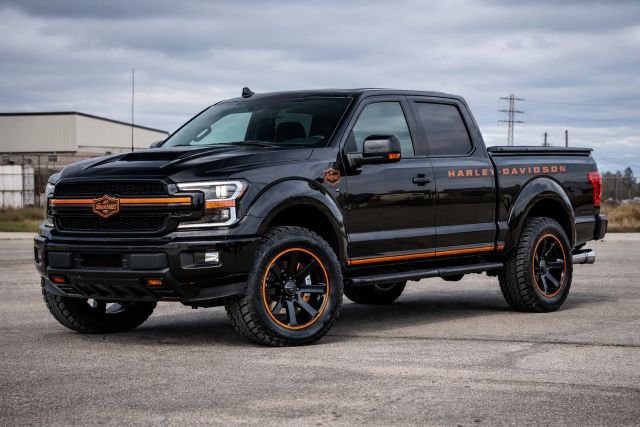
If you’ve been searching for a harley davidson truck, you’re probably noticing two things at once: people talk about them like collectible Americana, and pricing can swing wildly depending on year, condition, and how “untouched” the truck is. That’s because the term usually refers to the Ford F-Series Harley-Davidson Edition pickups—limited, co-branded special editions built during Ford and Harley-Davidson’s partnership era. These trucks weren’t just sticker packages; many came with unique wheels, trim, interiors, and, in some years, meaningful performance upgrades.
- What is a “harley davidson truck,” exactly?
- Harley Davidson truck years and the models people mean most
- Harley Davidson truck specs that matter most
- How much is a harley davidson truck? Real-world price ranges
- What makes the harley davidson truck so rare?
- Buying a harley davidson truck: what to check before you pay
- Frequently asked questions
- Conclusion: Is a harley davidson truck worth it?
This guide breaks down what the harley davidson truck actually is, the most important specs, what you can expect to pay today, and the real reasons they’ve become rare.
What is a “harley davidson truck,” exactly?
A “harley davidson truck” most commonly means a Ford F-150 Harley-Davidson Edition (and, for some years, a Harley-Davidson Edition Super Duty). Ford and Harley-Davidson collaborated starting around the 2000 model year, with Ford unveiling the first truck at the Sturgis Rally—an event deeply tied to Harley culture.
These editions stood out because they targeted the overlap between Harley riders and full-size truck buyers, blending premium interiors, bold monochrome styling, Harley-branded details, and limited production runs. Ford ultimately discontinued the Harley-branded F-Series editions in the early 2010s, which adds to the “end of an era” collector appeal.
Harley Davidson truck years and the models people mean most
Most shoppers and collectors focus on these two families:
F-150 Harley-Davidson Edition (especially 2000–2003, and later high-power years)
The early 2000–2003 trucks are often treated as the “original run” that established the look and the badge cachet. Marketplace data sites track these models closely because they trade like modern classics.
Super Duty Harley-Davidson Edition (mid-2000s era)
The Super Duty versions appeal to buyers who want heavy-duty presence and towing capability with Harley styling and upscale trim.
Harley Davidson truck specs that matter most
Specs vary by year, but buyers usually care about: engine, drivetrain, wheel/tire uniqueness, interior trim, and whether the truck is a “true” Harley edition with original parts.
2000 Ford F-150 Harley-Davidson Edition specs (a common baseline)
For many enthusiasts, the 2000 model is the cornerstone because it kicked off the run and introduced some “firsts” in Ford-truck history.
The 2000 F-150 Harley-Davidson Edition is widely listed with a 5.4L V8, producing about 260 horsepower depending on source/trim documentation, paired with an automatic transmission and rear-wheel-drive format on the original release.
One detail collectors love: Ford highlighted the 20-inch wheels as a major deal—often cited as the first 20″ wheels fitted to a production Ford truck. That kind of “first” matters in collector circles because it makes the truck historically distinctive, not just cosmetically different.
2002 F-150 Harley-Davidson Edition specs (where the “limited + numbered” story gets louder)
By 2002, the Harley branding was fully part of the truck’s identity—often including a numbered sequence in listings and collector discussions. On the market side, listings sometimes cite approximate production totals for that year, reinforcing the “limited” narrative. For example, a Bring a Trailer listing notes a truck numbered within an approx. 12,500-unit production figure for the 2002 model year.
For year-specific technical specs and factory-style breakdowns, sources that reference Ford press material can help anchor details. BlueOvalTech maintains year pages that explicitly cite Ford Motor Company press release sourcing for the 2002 Harley F-150 specs.
Super Duty Harley-Davidson Edition specs (example: 2004 F-250/F-350 Harley trim)
In the Super Duty line, Harley editions were typically paired with heavy-duty engines and drivetrains. Spec aggregators list trims like the 2004 Super Duty F-250 Crew Cab Harley-Davidson 4WD, including engine outputs and configurations by trim (commonly showing a V10 option around that year in some spec listings).
If you’re shopping Super Duty Harley trucks, the “specs that matter” are often less about 0–60 and more about: drivetrain (4WD vs 2WD), engine choice, maintenance history, and whether the Harley-specific interior and exterior pieces are intact.
How much is a harley davidson truck? Real-world price ranges
Pricing depends heavily on year, mileage, originality, rust, and whether the truck still wears its correct Harley-specific parts (wheels, badging, interior trim).
Market averages (2000–2003 F-150 Harley editions)
Market tracking for 10th-gen F-150 Harley-Davidson Editions shows average sale figures in the low-to-mid five figures, with spread based on condition and mileage. Classic.com’s model page, for example, shows an average sale price around the low-$20k range with recorded sales and volume that help illustrate the market baseline.
High-condition and low-mileage examples can break the “normal” range
At the collector end, low-mileage examples can command strong money. Bring a Trailer recorded a sale of a 2000 F-150 Harley-Davidson Edition at $40,000 (sold October 17, 2025), which demonstrates how condition and “time capsule” mileage can reset expectations.
What you might pay today (practical guidance)
In practice, shoppers often see three price bands:
Entry driver: These are higher-mileage trucks with cosmetic wear, some mods, or incomplete Harley-specific parts. They can look “cheap” until you price the cost of returning them to stock.
Clean original: These are the sweet spot: documented, mostly stock, healthy interiors, good paint, and intact Harley trim. They tend to track the market averages more closely.
Collector-grade: Low miles, strong documentation, minimal mods, and pristine Harley-specific components. Auction results show these can jump far above average.
If you want a second opinion on fair pricing in your area, mainstream valuation sources like Kelley Blue Book list pricing frameworks for the 2000 Harley-Davidson F-150 trim.
What makes the harley davidson truck so rare?
Rarity here isn’t only about “how many exist.” It’s about how many exist in correct, stock, well-preserved condition.
1) Limited production announcements and year-specific totals
Ford’s own communications leaned into limited production. A Ford of Canada announcement (carried by Ford-Trucks.com) stated it would produce up to 7,500 limited-edition Harley-Davidson F-150 pickups, reinforcing that these were not mass-market trims.
Year-to-year totals can vary, and listings sometimes cite approximate figures (like the ~12,500 number referenced for 2002 in an auction listing).
2) The parts that define the truck are the parts that go missing
What makes one Harley truck “feel real” is usually a bundle of specifics: correct wheels, Harley badging, unique interior materials, and trim pieces that aren’t cheap to replace. Over time, trucks get modified, repainted, lifted, re-wheeled, or “de-badged.” That shrinks the pool of truly original examples, even if the raw production numbers were higher.
3) The partnership era ended, which locked the story in time
Ford and Harley-Davidson’s co-branded F-Series run ended in the early 2010s, and retrospectives note the discontinuation around 2012. Once production stops, every year that passes tends to convert more survivors into “projects” or “modified drivers,” and originality becomes the scarcity factor.
4) They became culturally collectible, not just “used trucks”
Motor Trend’s history piece frames the Harley trucks as a continuing lineage born from the Sturgis unveiling, which matters because collector value often follows narratives as much as mechanicals.
Buying a harley davidson truck: what to check before you pay
If you want one because it’s rare, buy it like a collector—even if you plan to drive it.
Verify it’s a real Harley edition (not a tribute)
Start with the basics: VIN checks, trim verification, and consistent paperwork. Real Harley editions tend to have identifying interior cues and year-correct parts. If the wheels, badges, seats, and console details are “almost right,” treat it like a red flag until proven otherwise.
Watch for expensive-to-fix issues that kill value
On early-2000s F-150s, condition drives price more than almost anything. Rust, frame issues, neglected suspension, and electrical problems can turn a “deal” into a money pit. The reason is simple: you’re not just restoring a truck—you’re restoring a limited-edition identity.
Be cautious with heavy modifications
A tasteful exhaust or mild suspension refresh might not matter. But extreme lifts, aftermarket wheels, deleted Harley branding, or interior swaps usually hurt collector appeal. Many buyers will pay a premium for a truck that still looks and feels like the co-branded edition it’s supposed to be.
Use recent auction comps to sanity-check asking prices
Even if you don’t plan to buy at auction, public results help anchor reality. The October 2025 $40,000 sale for a low-mileage 2000 model is a useful “top end” reference point, not a baseline for average examples.
Frequently asked questions
What is the “harley davidson truck” called?
Most people mean the Ford F-150 Harley-Davidson Edition, a co-branded special edition produced across multiple years during Ford and Harley-Davidson’s partnership.
How much does a harley davidson truck cost?
It depends on year and condition. Market tracking shows average sales for early (2000–2003) F-150 Harley editions around the low-$20,000s, while exceptional low-mileage examples can sell far higher at auction.
Why are Harley-Davidson edition trucks rare?
They’re rare because production was limited and—more importantly—because many survivors are modified or missing the Harley-specific parts that define the edition. Ford communications also positioned them as limited runs (for example, “up to 7,500” in a 2000 announcement).
Were there Harley-Davidson Super Duty trucks too?
Yes. Harley-Davidson branding appeared on some Super Duty trims in the mid-2000s era, and spec listings show dedicated Harley-Davidson trims for models like the Super Duty F-250/F-350.
Conclusion: Is a harley davidson truck worth it?
A harley davidson truck is worth it if you value the blend of limited-run Americana, distinctive factory styling, and the collector story behind the Ford–Harley partnership. The best buys usually aren’t the cheapest listings — they’re the trucks with clean histories, intact Harley-specific parts, and minimal irreversible modifications. If you shop with a collector’s mindset and verify year-correct details, you’re far more likely to land a truck that holds its appeal (and value) long after the novelty wears off.