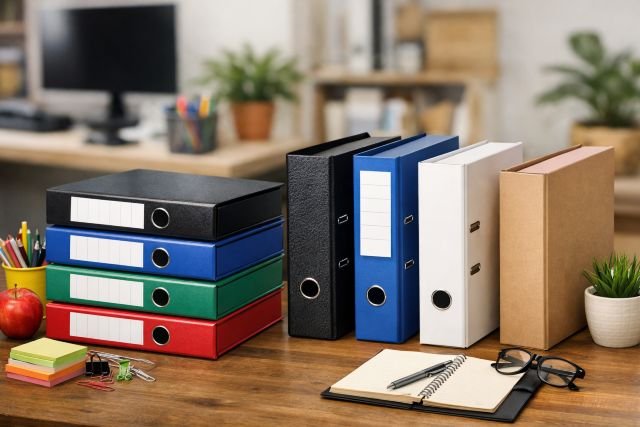
Paper documents are still an essential part of everyday life, even in a digital-first world. Offices rely on printed contracts and invoices, students use physical notes and handouts, and households store important records like insurance papers and warranties. Without a proper system, paperwork quickly becomes overwhelming. This is where box files play a crucial role, offering a simple and reliable way to store, protect, and retrieve documents.
- What Are Box Files?
- Why Choosing the Right Box Files Matters
- Box Files for Office Use
- Box Files for School and University
- Box Files for Home Organization
- How to Choose the Right Box Files
- Box Files for Small Businesses and Freelancers
- Common Mistakes When Buying Box Files
- Frequently Asked Questions About Box Files
- Conclusion
According to research shared by McKinsey, employees spend nearly 19 percent of their working time searching for information rather than using it productively. Well-organized box files can significantly reduce this wasted time by keeping documents structured and easy to locate. Choosing the right box files is not just about storage; it is about efficiency, clarity, and peace of mind.
What Are Box Files?
Box files are structured filing tools designed to store paper documents in an upright, organized manner. They are commonly used in offices, schools, and homes to keep papers protected and accessible. The term “box files” often refers to lever arch files, but it can also include ring binders, expanding files, and box-style folders.
Lever arch box files are known for their rigid build and high capacity, making them ideal for storing large volumes of paperwork. Ring binders offer flexibility, allowing users to add or remove pages easily. Expanding box files are suitable for sorting documents without punching holes, while open-top box files are often used for quick-access storage. Understanding these variations is the first step toward choosing the right option.
Why Choosing the Right Box Files Matters
The right box files directly affect how efficiently you manage documents. Poor-quality or mismatched files can lead to clutter, damaged papers, and wasted time. In contrast, well-chosen box files encourage consistent filing habits and make retrieval faster.
There is also a cost and sustainability factor. Paper handling and storage consume resources, and studies from the Environmental Protection Agency show that paper and paperboard account for a significant portion of municipal waste. By using box files effectively, users can keep only necessary documents, store them properly, and recycle outdated papers responsibly.
Box Files for Office Use
In office environments, box files are essential for maintaining order and compliance. The first consideration is whether documents are active or archived. Active documents require frequent access, while archived files prioritize capacity and long-term protection.
Lever arch box files are commonly used in offices because they stand upright, hold large volumes, and fit neatly into cabinets. For teams that frequently update documents, ring binders provide easier page management. Durability also matters in offices where files are handled daily. Strong board material, reinforced edges, and reliable mechanisms ensure that box files last longer and remain functional.
For organizations that store legal or financial records, long-term document preservation is important. Standards such as ISO 9706 outline requirements for permanent paper, highlighting the importance of quality materials when storing critical documents for extended periods.
Box Files for School and University
Students have unique needs when it comes to box files. Portability, flexibility, and ease of use are often more important than maximum capacity. School paperwork usually includes a mix of handouts, worksheets, and printed notes, making adaptable storage essential.
Ring binders are popular among students who regularly reorganize their notes, as they allow easy rearrangement. Expanding box files work well for collecting loose papers without damaging them. Slim lever arch box files can also be useful for organizing a single subject over a semester.
A practical approach for students is to use a lightweight system that reduces backpack weight while keeping materials organized. For example, active subjects can be stored in ring binders, while completed topics are transferred to box files kept at home.
Box Files for Home Organization
At home, box files help manage documents that are not accessed daily but become critical when needed. These include bills, tax records, insurance policies, medical documents, and property papers. Without a proper filing system, locating these documents during emergencies can be stressful.
Durability is especially important for home storage, as files may be exposed to dust, humidity, or infrequent handling. Closed box files with sturdy covers offer better protection. Clear spine labeling ensures that documents can be found quickly without opening multiple files.
A simple and effective home system involves dedicating one or two box files to household administration and reviewing them monthly. This habit prevents paperwork from piling up and keeps important documents secure.
How to Choose the Right Box Files
Selecting the right box files starts with choosing the correct size. A4 and Letter are the most common formats, and mismatched sizes often lead to folded or damaged papers. Capacity is another key factor. Overfilled box files become difficult to use and discourage proper filing, so it is better to split documents into multiple files if necessary.
The filing mechanism should match how often documents are updated. Ring binders are ideal for frequent changes, while lever arch box files suit stable collections. Material quality also matters, particularly for long-term storage. High-quality board or plastic provides better protection and longevity.
Labeling is often overlooked but plays a critical role in organization. Clearly labeled spines make it easy to identify contents at a glance, encouraging consistent use of box files.
Box Files for Small Businesses and Freelancers
For small offices and home-based businesses, box files offer a low-cost yet effective way to manage records. Using separate box files for clients, administration, and templates creates a simple system that supports compliance and efficiency.
Disorganization can lead to costly errors and wasted time. Studies on workplace productivity consistently show that time spent searching for information reduces overall performance. Well-organized box files help minimize this issue by keeping documents structured and accessible.
Common Mistakes When Buying Box Files
One common mistake is choosing box files that are too large, which encourages unnecessary paper retention and makes files cumbersome to handle. Another issue is ignoring storage space, such as shelf depth or cabinet height, leading to poorly fitting files.
Focusing solely on appearance rather than mechanism quality is also problematic. A visually appealing box file that does not close properly quickly becomes frustrating. Finally, many people fail to establish a routine for maintaining their files, causing even the best system to break down over time.
Frequently Asked Questions About Box Files
Box files are often preferred for office documents because they provide structured storage and clear spine labeling. Lever arch box files are particularly effective for large volumes, while ring binders suit frequently updated files.
Compared to simple folders, box files offer better organization and long-term storage. Choosing the correct size, usually A4 or Letter, prevents document damage and improves usability. The number of sheets a box file can hold depends on its design, but usability should always take priority over maximum capacity.
For important documents, using quality materials and considering permanence standards such as ISO 9706 can help ensure long-term preservation.
Conclusion
Box files remain an essential tool for organizing documents in offices, schools, and homes. The right choice depends on how documents are used, how often they are accessed, and how long they need to be stored. Lever arch box files are ideal for office archives, ring binders suit students and active projects, and durable, labeled box files work best for home organization.
By selecting box files based on size, capacity, mechanism, material quality, and labeling, you can create a filing system that saves time, reduces stress, and keeps important papers secure.