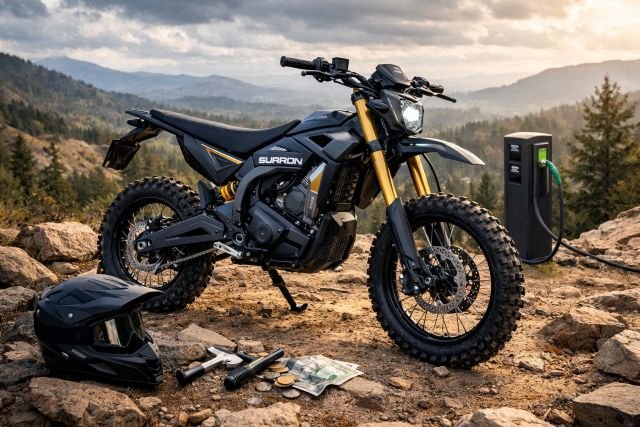
The Surron Ultra Bee has quickly become one of the most talked-about electric dirt bikes in the mid-size category. Riders looking for more power and stability than lightweight e-motos — but without stepping into the price and weight of full motocross electric bikes — often land here. On paper, the Ultra Bee looks nearly perfect. In real-world ownership, however, there are trade-offs, additional expenses, and practical considerations that most reviews gloss over.
- What the Surron Ultra Bee really is
- Surron Ultra Bee specs overview
- Performance and ride experience
- The real advantages of the Surron Ultra Bee
- The drawbacks most buyers overlook
- Hidden ownership costs most reviews ignore
- Pros and cons summary
- Common upgrade paths and spending traps
- Frequently asked questions about the Surron Ultra Bee
- Conclusion: should you buy the Surron Ultra Bee?
This in-depth Surron Ultra Bee review breaks down what you actually get, what you’ll likely spend beyond the sticker price, and whether this bike truly fits your riding style, terrain, and expectations.
What the Surron Ultra Bee really is
The Surron Ultra Bee occupies a unique middle ground between small electric trail bikes and full-size electric dirt machines. It is significantly more powerful and stable than the Light Bee, yet far more manageable and affordable than larger electric motocross bikes. Riders coming from gas-powered 250cc trail bikes often describe the Ultra Bee as surprisingly familiar, while riders upgrading from smaller electric bikes notice an immediate improvement in planted feel and control.
Rather than targeting beginners or professional racers exclusively, Surron designed the Ultra Bee for riders who want versatility. It can handle technical trails, faster fire roads, and moderate jumps while remaining quiet, low-maintenance, and relatively lightweight.
Surron Ultra Bee specs overview
Depending on market and model year, specifications can vary slightly. Most Ultra Bee HP variants are commonly listed with peak power outputs reaching up to 21 kW and a top speed of approximately 95 km/h. The battery is typically rated around 74V 60Ah, equating to roughly 4.07 kWh of usable energy. Weight is often cited near 88.5 kilograms, making it lighter than many gas bikes in its performance class. MSRP in the U.S. is frequently listed around $6,499 to $6,500, though real-world pricing varies based on dealer fees and location.
Performance and ride experience
Power delivery and throttle control
One of the strongest points in any Surron Ultra Bee review is how refined the power delivery feels. The bike offers multiple ride modes that change throttle response and output characteristics. In lower modes, power comes on smoothly and predictably, making technical trail riding less fatiguing and more controlled. In higher-performance modes, torque delivery becomes aggressive enough to lift the front wheel with ease and accelerate rapidly out of corners.
This tunability makes the Ultra Bee suitable for a wide range of riders. Newer electric riders benefit from manageable response, while experienced riders still have access to serious performance.
Handling and chassis feel
The Ultra Bee feels far more like a traditional dirt bike than smaller electric models. The longer wheelbase and sturdier frame improve stability at speed and inspire confidence on rough terrain. Suspension performance is generally considered good for trail and recreational riding, although heavier or more aggressive riders may eventually want professional tuning.
On tight trails, the bike remains agile enough to maneuver easily, but it truly shines when the pace increases and the terrain opens up. Riders transitioning from gas bikes often remark that it feels “proper” rather than toy-like.
The real advantages of the Surron Ultra Bee
The most obvious advantage is the balance between power, size, and cost. At its price point, the Ultra Bee delivers performance numbers that rival significantly more expensive electric bikes. Routine maintenance is another major benefit. Without oil changes, clutch replacements, or fuel system upkeep, ownership becomes simpler and more predictable.
Noise reduction is another understated advantage. Being able to ride without disturbing nearby homes or wildlife opens up riding opportunities that gas bikes often cannot. Many riders also appreciate the instant torque and lack of shifting, which reduces fatigue during long technical rides.
The drawbacks most buyers overlook
Range remains the most common concern. Manufacturer range figures are usually achieved under ideal conditions at steady speeds. In aggressive trail riding, range drops noticeably. Fast riding, steep climbs, sand, cold temperatures, and heavier riders all reduce real-world distance.
Another drawback is that the Ultra Bee is typically sold as an off-road-only machine. Street legality depends entirely on local regulations, and converting it for road use may require lighting kits, mirrors, inspections, and registration costs that vary by region.
Some riders also find that the stock setup does not perfectly match their terrain or riding style. While the bike is very capable out of the box, tires, suspension adjustments, and ergonomic changes are common ownership realities.
Hidden ownership costs most reviews ignore
Purchase and dealer-related costs
The advertised price is rarely the final number. Shipping, dealer setup, destination fees, taxes, and import duties can significantly raise the out-the-door price. Buyers should always request a full itemized quote before committing.
Protective gear expenses
Many new owners underestimate the cost of proper riding gear. A quality helmet, boots, knee protection, gloves, and body armor can easily add several hundred dollars to the initial investment. Skimping on protection is false economy, especially given the torque and speed the Ultra Bee is capable of producing.
Tire wear and consumables
Electric torque is hard on tires. Riders who enjoy aggressive acceleration or ride on abrasive terrain will go through rear tires faster than expected. Brake pads, chains, and sprockets also wear at normal motorcycle rates, and those costs should be planned for annually.
Battery lifecycle considerations
The battery is one of the most expensive long-term components. While daily charging costs are low, battery degradation over several years eventually leads to replacement or reduced performance. Proper charging habits, temperature management, and avoiding extreme charge states help extend battery life, but eventual replacement is part of long-term ownership.
Charging cost reality
With a battery capacity of roughly 4.07 kWh, charging the Ultra Bee is inexpensive compared to fueling a gas bike. In the United States, where average residential electricity rates are around the mid-to-high teens per kWh, a full charge usually costs well under one dollar. In Pakistan, using NEPRA’s average tariff figures, a full charge typically costs roughly Rs130 to Rs150, depending on losses and local rates. Charging cost is rarely a deciding factor, but it does highlight the efficiency advantage of electric ownership.
Pros and cons summary
| Aspect | Strength | Limitation |
|---|---|---|
| Performance | Strong torque and selectable ride modes | Reduced range at aggressive pace |
| Handling | Stable, motorcycle-like feel | Stock suspension may need tuning |
| Ownership | Low routine maintenance | Tires and gear add cost |
| Cost | Competitive MSRP for power | Fees and upgrades raise real price |
| Practicality | Quiet and trail-friendly | Street legality varies |
Common upgrade paths and spending traps
Most riders eventually personalize their Ultra Bee. Protection upgrades such as handguards and skid plates are practical and relatively inexpensive. Tire changes often provide the biggest improvement in traction and confidence. Ergonomic adjustments like handlebars and foot pegs improve comfort but are not strictly necessary.
The biggest spending trap is chasing performance upgrades before fully understanding riding needs. Many riders find that proper setup and tire choice deliver more benefit than expensive electronics or suspension components.
Frequently asked questions about the Surron Ultra Bee
Is the Surron Ultra Bee worth the money?
For riders seeking a powerful, mid-size electric dirt bike with low maintenance and strong trail capability, the Surron Ultra Bee offers excellent value. It becomes truly worth it when buyers budget realistically for gear, setup, and consumables.
How fast is the Surron Ultra Bee?
Most specifications list a top speed of around 95 km/h, which is more than sufficient for trail riding and open terrain use.
How much does it cost to charge?
Charging typically costs less than one U.S. dollar per full charge in most regions and roughly Rs130 to Rs150 in Pakistan, depending on electricity tariffs.
What are the biggest hidden costs?
The most commonly overlooked expenses include protective riding gear, tire replacements, dealer fees, and long-term battery considerations.
Conclusion: should you buy the Surron Ultra Bee?
The Surron Ultra Bee succeeds because it delivers serious performance without the intimidation, weight, or cost of full-size electric motocross bikes. It rewards riders who understand that true ownership cost goes beyond MSRP and who are willing to set the bike up properly for their terrain and riding style.
If you value quiet power, low routine maintenance, and a versatile platform that grows with your skills, the Ultra Bee is one of the most compelling electric dirt bikes currently available. Go in informed, budget realistically, and it can be one of the most satisfying electric motorcycles you’ll ever own.