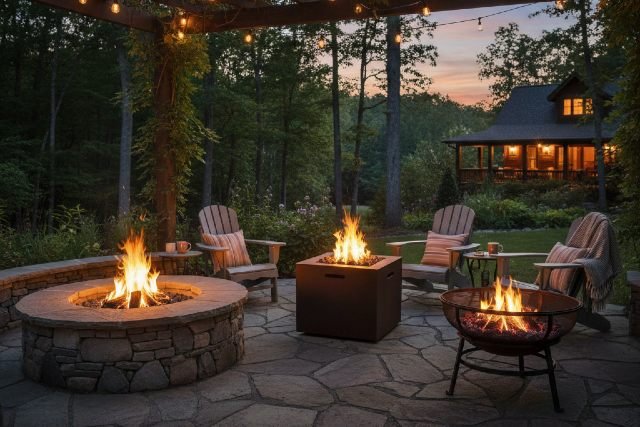
Fire pits are one of the most popular additions to modern outdoor living spaces. Homeowners increasingly choose fire pits to create warmth, visual appeal, and a welcoming atmosphere in their backyards. Whether installed on a patio, in a garden, or as part of a complete outdoor kitchen, fire pits allow people to enjoy their outdoor areas long after the sun goes down.
As outdoor living continues to grow in popularity, fire pits have become a symbol of comfort and connection. They serve both practical and aesthetic purposes, making them a valuable feature for homes of all sizes and styles.
What Are Fire Pits?
Fire pits are outdoor structures designed to safely contain fire for heating, ambiance, or cooking. They are typically made from stone, concrete, metal, or brick and are fueled by wood, propane, natural gas, or gel fuel. Fire pits can be portable or permanently installed, depending on the homeowner’s needs and available space.
Because fire pits are designed specifically for outdoor use, they include safety features that help control flames and reduce the risk of accidental fires when used properly.
Benefits of Fire Pits for Outdoor Living
Fire pits significantly enhance the overall atmosphere of an outdoor space. The soft glow of flames creates a calming and inviting environment that encourages relaxation and conversation. Many homeowners find that a fire pit becomes the natural focal point of their backyard or patio.
Another major benefit of fire pits is their ability to extend the outdoor living season. By providing warmth during cooler evenings, fire pits allow homeowners to use their outdoor spaces in early spring, fall, and even winter. According to housing and design experts, outdoor fire features increase the usability of outdoor areas throughout the year.
Fire pits also encourage social interaction. Friends and family naturally gather around a fire, making it easier to connect and spend quality time together. Whether hosting a casual gathering or enjoying a quiet night outdoors, fire pits help create memorable experiences.
In addition to lifestyle benefits, fire pits can increase a home’s perceived value. Outdoor living upgrades are highly attractive to potential buyers, and a well-designed fire pit can enhance both curb appeal and resale potential.
Types of Fire Pits
Wood-Burning Fire Pits
Wood-burning fire pits are the most traditional option and are often chosen for their authentic campfire experience. The crackling sound and natural aroma of burning wood create a rustic atmosphere that many homeowners enjoy. These fire pits are usually more affordable upfront but require regular maintenance, including ash cleanup and proper wood storage.
Gas Fire Pits
Gas fire pits, which run on propane or natural gas, are popular for their convenience and clean-burning performance. They ignite quickly, produce minimal smoke, and allow users to control flame height easily. Natural gas fire pits are typically permanent installations, while propane models offer more flexibility. Although they tend to cost more initially, gas fire pits require less ongoing maintenance.
Portable Fire Pits
Portable fire pits are designed for flexibility and ease of movement. They are ideal for renters or homeowners who want the option to rearrange their outdoor setup. These fire pits come in both wood-burning and propane varieties and are commonly used for patios, camping, or temporary outdoor gatherings.
Tabletop Fire Pits
Tabletop fire pits are compact and primarily decorative, making them suitable for small patios, balconies, or outdoor dining areas. While they do not produce as much heat as larger fire pits, they add warmth and ambiance without taking up much space.
Built-In Fire Pits
Built-in fire pits are permanent outdoor features often incorporated into custom patio designs. They offer a seamless look and can be customized in size, shape, and materials. Built-in fire pits are typically fueled by natural gas and are considered a long-term investment in outdoor living.
How to Choose the Right Fire Pit
Choosing the right fire pit depends on available space, intended use, and local regulations. Homeowners should consider how much heat they need, whether they plan to cook over the fire, and how often the fire pit will be used. It is also important to check local fire codes, as some areas restrict wood-burning fire pits or require specific safety clearances.
The location of the fire pit should allow for proper ventilation and distance from buildings, fences, and trees. Safety and comfort should always guide the decision-making process.
Fire Pit Safety Tips
Fire pit safety is essential for protecting people and property. Fire pits should always be placed on a stable, fire-resistant surface and kept a safe distance from flammable materials. The National Fire Protection Association recommends maintaining at least ten to twenty feet of clearance from structures.
Only the appropriate fuel should be used for each type of fire pit. Substituting fuels or using accelerants can lead to dangerous flare-ups. Fire pits should never be left unattended, and children and pets should be supervised at all times.
It is also wise to keep basic fire safety equipment nearby, such as a fire extinguisher or a bucket of water, in case the fire needs to be controlled quickly.
Fire Pit Maintenance and Care
Regular maintenance helps ensure that fire pits remain safe and functional. Wood-burning fire pits should be cleaned of ash and debris after use, while gas fire pits should be inspected periodically for leaks or damaged connections. Using a protective cover when the fire pit is not in use can prevent weather damage and extend its lifespan.
Proper care not only improves safety but also preserves the appearance of the fire pit over time.
Common Questions About Fire Pits
Many homeowners ask whether fire pits are safe for backyard use. When installed correctly and used responsibly, fire pits are considered safe and effective outdoor features. Others wonder if fire pits add value to a home, and real estate professionals generally agree that outdoor fire features enhance buyer appeal.
Another common question involves using fire pits on decks. Only fire pits specifically designed for deck use should be placed on wooden or composite surfaces, and additional fire-resistant protection is recommended.
Conclusion
Fire pits are a powerful addition to any outdoor living space, offering warmth, beauty, and functionality. From traditional wood-burning designs to modern gas-powered options, fire pits provide a versatile way to enjoy the outdoors throughout the year. By choosing the right type of fire pit and following essential safety guidelines, homeowners can create an inviting outdoor environment that enhances both lifestyle and property value.
When thoughtfully selected and properly maintained, fire pits become more than just an outdoor feature — they become the heart of outdoor living.