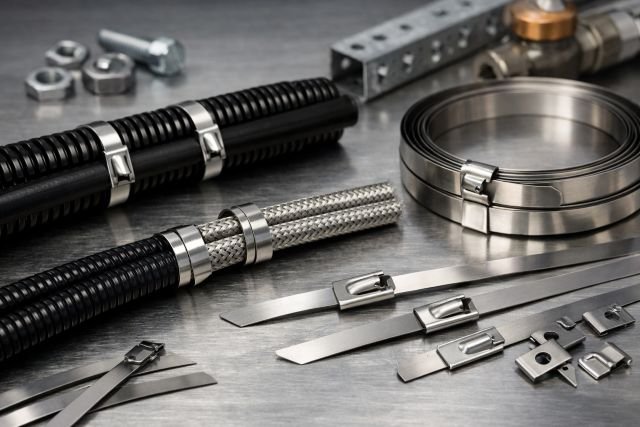
Metal cable ties are high-strength fastening solutions designed to secure cables, hoses, and wiring in environments where standard plastic ties can fail. They are typically made from stainless steel, most commonly grades 304 or 316, and are chosen for their durability under extreme conditions. In industries where heat, UV exposure, moisture, chemicals, or vibration are common, metal cable ties provide dependable bundling and long service life. Some manufacturer specifications list non-coated stainless steel ties with operating temperature capability up to around 1000°F (538°C), which makes them suitable for demanding industrial zones.
- Quick Definition
- Why Metal Cable Ties Matter in Modern Installations
- Common Uses of Metal Cable Ties
- Key Benefits of Metal Cable Ties
- Metal Cable Ties vs Nylon Cable Ties
- Types of Metal Cable Ties
- Choosing the Right Stainless Steel Grade: 304 vs 316
- How to Choose Metal Cable Ties
- UL 62275 and Why It Matters for Electrical Installations
- Installation Tips for Metal Cable Ties
- Real-World Scenario: Solar Farm Reliability Upgrade
- FAQ: Metal Cable Ties
- Conclusion: Why Metal Cable Ties Are Worth It
This guide will help you understand what metal cable ties are, where they work best, what benefits they offer over nylon, and how to choose the right one for your installation.
Quick Definition
Metal cable ties are fastening straps made from metal, usually stainless steel, used to bundle and secure cables and components. They are preferred in harsh environments because they resist heat, corrosion, UV exposure, and many chemicals better than plastic cable ties.
Why Metal Cable Ties Matter in Modern Installations
Cable management plays an important role in safety, reliability, and compliance. When cables are loosely routed, they are more likely to wear, snag, or become damaged. In high-risk environments, poor cable management can contribute to hazards such as trips, mechanical stress failures, and equipment downtime. OSHA safety resources emphasize safe installation and maintenance practices for cable support systems like cable trays, reinforcing that proper cable organization is part of broader workplace safety efforts.
Metal cable ties help improve reliability by offering stronger retention, longer life, and better environmental resistance than many polymer alternatives. This is why they are widely used in industrial plants, energy infrastructure, transportation systems, and outdoor telecom installations.
Common Uses of Metal Cable Ties
Metal cable ties are widely used in industries where long-term performance matters more than short-term cost. In industrial and manufacturing facilities, they are used around machinery where vibration and elevated heat can weaken traditional nylon ties. In power plants, substations, control rooms, and cable tray systems, stainless steel ties provide secure bundling that holds up under temperature fluctuations and long service requirements. Electrical installation environments sometimes require compliance testing under standards like UL 62275, which covers cable ties for electrical installations and aligns with IEC 62275.
In marine and coastal environments, metal cable ties are especially valuable because salt exposure can rapidly degrade plastics. In these locations, 316 stainless steel is commonly preferred because it generally offers stronger corrosion resistance than 304 stainless steel under high-salt conditions.
Oil and gas sites, petrochemical facilities, and heavy infrastructure projects also rely on metal ties because they withstand harsh chemicals and outdoor weather while remaining durable for long periods. Telecom towers, outdoor enclosures, and infrastructure cabling also benefit from stainless steel ties due to UV stability and weather resistance.
Key Benefits of Metal Cable Ties
The first major advantage of metal cable ties is temperature resistance. Many stainless steel cable ties are rated for significantly higher temperatures than nylon ties, and manufacturer documentation commonly highlights performance in extremely hot environments. Some technical brochures list non-coated stainless ties capable of operating up to 538°C (1000°F), a range that makes them suitable near engines, furnaces, and high-heat industrial equipment.
A second major benefit is corrosion resistance. Stainless steel does not “rust” the way plain steel does, and corrosion performance improves significantly depending on the grade. 304 stainless steel provides strong general corrosion resistance and performs well in many indoor and outdoor environments. 316 stainless steel is typically the better option for marine or coastal installations because of enhanced resistance to chlorides and salt exposure. Sources discussing stainless steel performance in salt spray tests commonly show 316 performing better than 304 under harsher salt conditions.
Metal cable ties also provide excellent UV and weather resistance because they do not become brittle under sunlight in the same way many plastics can. Several manufacturers note that stainless steel ties are highly resistant to UV exposure and environmental aging.
Another advantage is chemical and fire resistance. Stainless steel ties are often described in manufacturer literature as non-flammable and resistant to many industrial chemicals and solvents. This makes them useful in petrochemical environments where material stability is important.
Finally, metal cable ties often deliver long service life. Certain stainless steel tie product brochures estimate outdoor service life up to several decades under defined conditions, sometimes around forty years, depending on grade selection, environment, and installation quality. This longevity can reduce maintenance, replacement costs, and downtime.
Metal Cable Ties vs Nylon Cable Ties
When comparing metal cable ties to nylon cable ties, metal generally wins in extreme environments. Metal ties offer higher heat resistance, better UV performance, stronger corrosion resistance in outdoor conditions, and improved chemical stability. Nylon ties remain useful for low-cost, light-duty indoor applications where environment is stable. However, in outdoor installations or high-heat areas, nylon ties are more likely to degrade, stretch, or break over time, especially if not UV stabilized.
Metal cable ties are more expensive, but their longevity and strength often make them a better investment when failure would result in downtime or safety risk.
Types of Metal Cable Ties
Several designs exist, and each serves a slightly different purpose. Ball-lock metal cable ties use a locking mechanism that grips tightly and is resistant to vibration. These are common in industrial settings where equipment movement is continuous. Ladder-style stainless steel ties provide strong mechanical hold and are often used in cable trays and large bundles. Coated metal cable ties contain a stainless steel core with a protective coating such as polyester or epoxy. They help reduce abrasion on cable jackets and can provide a layer of insulation, though coated ties typically have lower temperature tolerance compared to uncoated stainless versions based on manufacturer specifications.
Releasable metal ties also exist, designed for temporary applications or setups requiring frequent adjustments, though they are less common than standard locking versions.
Choosing the Right Stainless Steel Grade: 304 vs 316
Choosing between 304 and 316 stainless steel is one of the most important buying decisions. 304 stainless steel cable ties are suitable for general industrial use, indoor and outdoor applications, and environments without heavy salt exposure. They are strong, reliable, and widely available.
316 stainless steel cable ties are typically preferred for marine, offshore, coastal, or high-chemical exposure installations because they deliver improved resistance against chlorides and salt exposure. Multiple sources highlight that 316 is generally the better option when corrosion risk is high.
If a project is near saltwater or in a highly corrosive environment, choosing 316 can reduce the risk of premature failure and lower replacement costs over time.
How to Choose Metal Cable Ties
The best way to buy metal cable ties is to start with your environment. If the installation is outdoors, near water, near chemicals, or exposed to intense heat, metal ties are usually the safest option. If the installation is indoors, dry, and low heat, nylon may still work.
Next, confirm the stainless steel grade. Use 304 stainless for general conditions and 316 stainless for high salt or corrosive environments. Then decide whether coated or uncoated ties are better. If you are tying cables with delicate insulation or need abrasion protection, coated ties help. If you need maximum temperature performance and harsh-environment durability, uncoated stainless is often better. Manufacturer literature commonly lists different operating temperature ranges for coated and uncoated variants.
After that, evaluate temperature ratings and tensile strength. Some stainless steel ties are rated for wide operating ranges, and product specifications may list ranges such as -80°C to 538°C depending on material and configuration. Ensure the tie width, thickness, and loop tensile strength match the bundle size and expected load.
Finally, check compliance requirements. If the installation is in electrical panels, industrial electrical systems, or projects subject to inspection, selecting ties aligned with UL 62275 or IEC 62275 can strengthen compliance and reliability.
UL 62275 and Why It Matters for Electrical Installations
UL 62275 is a widely referenced standard for cable ties used in electrical installations, harmonized with IEC 62275 and CSA equivalents. It defines testing and classification requirements and helps buyers and inspectors understand the performance expectations of cable ties in regulated applications.
If you work in power distribution, industrial control systems, building electrical installations, or panel manufacturing, using cable ties that align with recognized standards can reduce risk and help meet quality requirements.
Installation Tips for Metal Cable Ties
Installing metal cable ties correctly is essential because their strength can also become a drawback if they are over-tightened. Over-tensioning can damage cable jackets, especially in sensitive instrumentation cabling. Using proper tensioning tools helps apply consistent force while preventing over-tightening. Flush cutting is also important because sharp edges can cause injuries or damage cables during maintenance.
Some manufacturers highlight smooth edge designs and safety considerations, which can be valuable if ties will be handled frequently during inspections.
Also remember that cable ties support bundling, not always structural load. For large bundles or long-distance runs, pairing ties with mounts, clamps, and cable tray supports improves safety and reduces stress on cables.
Real-World Scenario: Solar Farm Reliability Upgrade
Outdoor solar farm installations often experience cable tie failures when nylon ties degrade under UV exposure and heat cycles. In many cases, brittle ties break, allowing cables to sag or rub against structures. This can increase wear and create safety hazards. Switching to stainless steel metal cable ties improves cable retention and reduces replacement cycles. In places where cable jacket protection is needed, coated metal ties can be used for a balance of strength and protection, though temperature ratings must be checked based on manufacturer guidelines.
This scenario demonstrates why metal cable ties are often a better long-term solution despite higher upfront cost.
FAQ: Metal Cable Ties
Metal cable ties are often better than plastic ties for harsh environments because they resist heat, corrosion, UV exposure, and chemicals more effectively. Stainless steel cable ties can corrode depending on environment, but they generally resist rust, and 316 stainless steel performs better than 304 in marine and high-salt conditions.
Many stainless steel ties can be used in high temperatures, and manufacturer documentation often lists non-coated versions capable of operating up to around 538°C (1000°F).
UL 62275 refers to a cable tie standard based on IEC 62275 used in electrical installations, defining testing and performance expectations that can be useful for compliance and inspection readiness.
Conclusion: Why Metal Cable Ties Are Worth It
Metal cable ties are one of the most reliable cable management solutions for high-heat, outdoor, marine, and industrial environments. Their corrosion resistance, UV stability, tensile strength, and long service life make them ideal where plastic ties would degrade or fail. To choose the right tie, focus on the environment first, select the right stainless steel grade such as 304 or 316, confirm the temperature range, and ensure compliance standards like UL 62275 if required.
When installed correctly, metal cable ties reduce maintenance costs, improve safety, and deliver long-term performance that justifies the investment.